
Kenya’s Largest Ethnic Group, from Origins to Independence
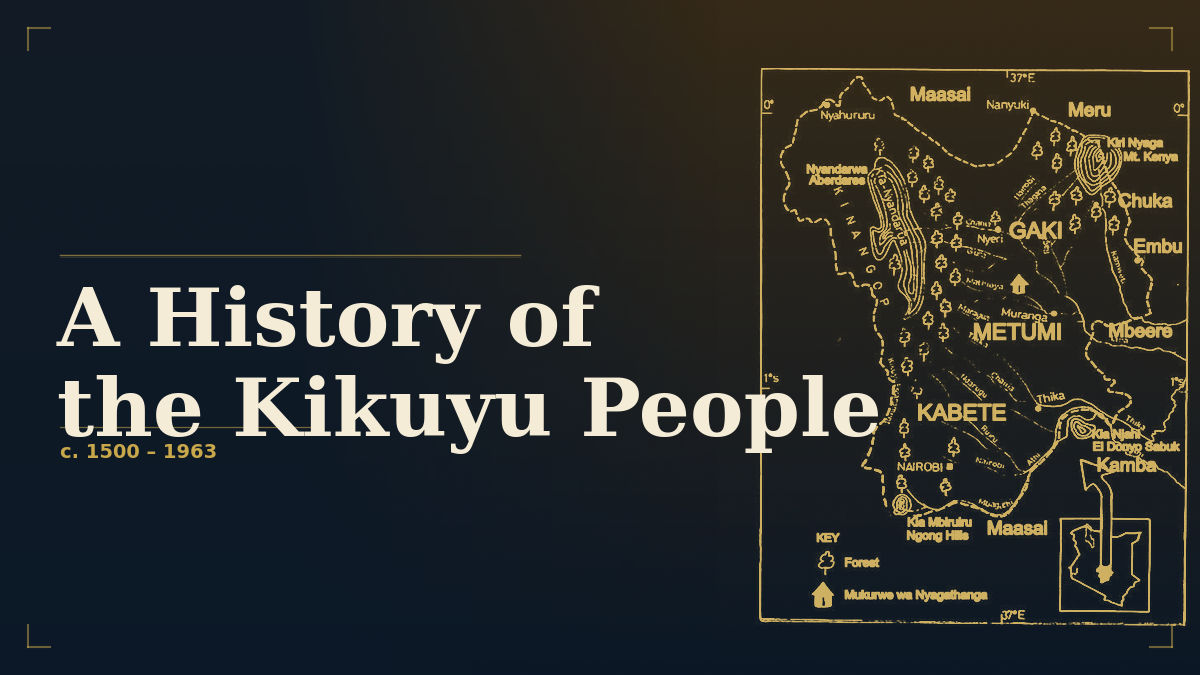
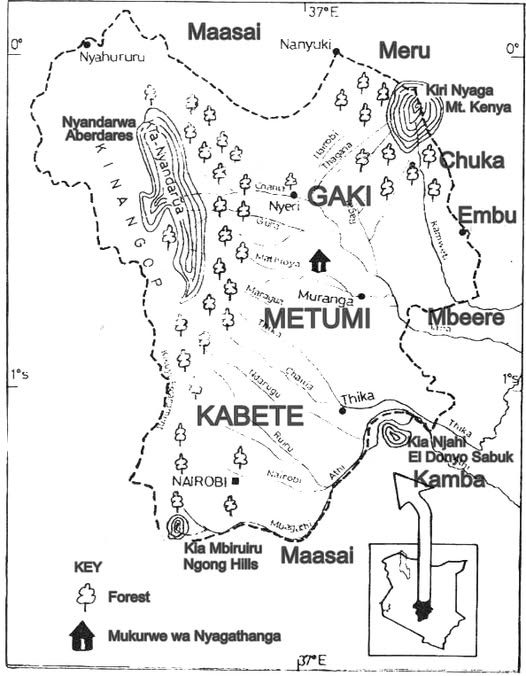
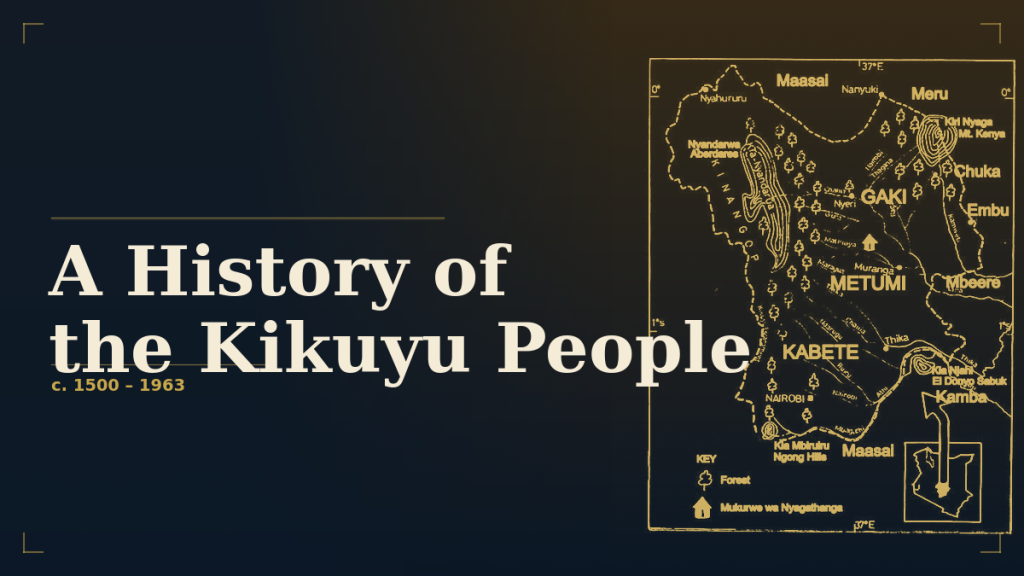
The Kikuyu — also written Gikuyu, and known to themselves as the Agikuyu — are the largest ethnic group in Kenya, accounting for roughly seventeen percent of the country’s population. They inhabit the fertile Central Province highlands, spreading across the slopes of the Aberdare Range and around the base of Mount Kenya, which they call Kere-Nyaga, “the mountain of brightness.” Their homeland is a dissected plateau approximately 160 kilometres from north to south and 50 kilometres wide — divided into the three districts of Nyeri (Gaki) in the north, Murang’a or Fort Hall (Metumi) in the centre, and Kiambu (Kabete) in the south — and its deep red volcanic soils made it, as the historian Godfrey Muriuki records, the granary for the Maasai, Kamba, and the European and Swahili caravans that traversed the highlands in the nineteenth century.
To understand the Kikuyu is to understand Kenya itself. Their story encompasses some of the richest pre-colonial social institutions in East Africa, the most severe land dispossession of the colonial period, and the most dramatic anticolonial uprising on the continent in the decade before independence. Above all it is a story shaped by land — the land they cleared, named, and held in the githaka system; the land progressively stripped from them by colonial legal instruments; and the land they fought to recover. This article traces that story from the earliest evidence of Kikuyu settlement to the achievement of Kenyan independence in 1963, drawing on Godfrey Muriuki’s systematic analysis of oral traditions, L.S.B. Leakey’s ethnographic record of pre-colonial society, M.P.K. Sorrenson’s study of colonial land policy, Cora Ann Presley’s research on women’s political roles, David Sandgren’s account of the missionary encounter, and the first-person memoir of R. Mugo Gatheru.
Origins and Migration, c. 1500–1800
The Founding Tradition: Gikuyu and Mumbi
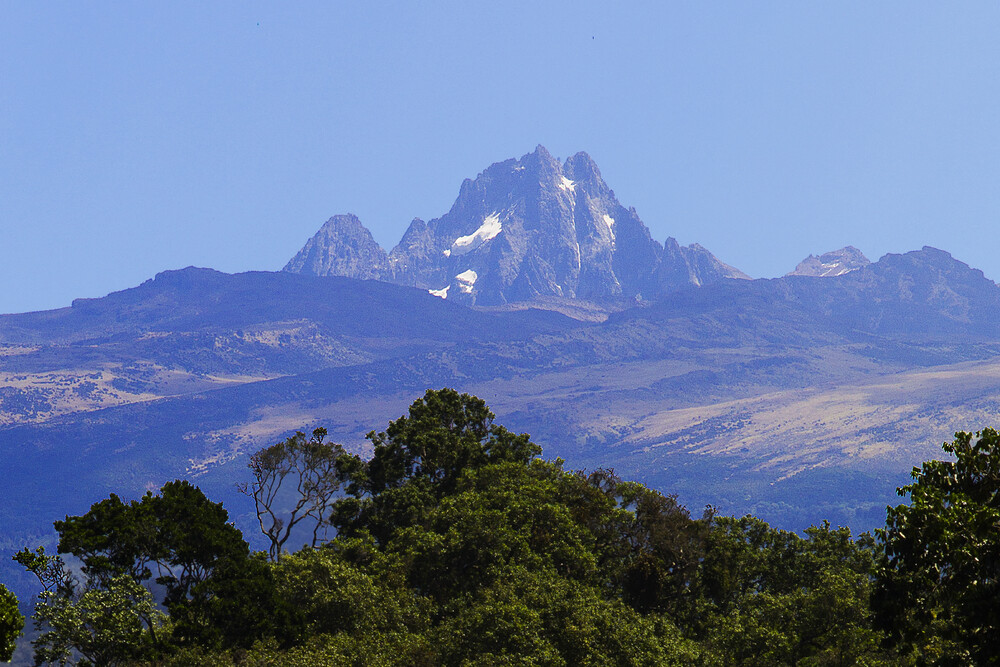
Every Kikuyu knows the founding story. In the beginning, Ngai — the Divider of the Universe, the Lord of Nature who dwelt on the peak of Kere-Nyaga — called the first man, Gikuyu, to the summit and showed him the land spread below: rolling hills, green valleys, rivers of clear water. “This is yours,” Ngai told him. Gikuyu descended to build his homestead beneath the sacred mugumo fig tree, and Ngai gave him a wife named Mumbi, the Creator or Moulder. Together they had nine daughters and no sons. When Gikuyu appealed to Ngai for husbands, he instructed him to sacrifice a ram; nine young men appeared, and from each daughter’s marriage descended one of the nine — sometimes counted as ten — clans of the Kikuyu: the Achera, Agachiku, Airimu, Ambui, Angari, Anjiru, Angui, Aithirandu, and Aitherandu.
Leakey’s study of Southern Kikuyu law and custom notes that the clan names themselves carry encoded meaning: “Ngarĩ means leopard, and there is a clan called the Angarĩ after the girl Wangarĩ, or Child of the Leopard. Similarly, the name Wairimũ means Child of the Ogre, the name Nyambura Daughter of the Rain, the name Wambũi Daughter of the Zebra.” This points to the possibility of an earlier totemic layer beneath the agricultural identity the Kikuyu carry today — a hunting people’s cosmology absorbed into a farmer’s founding myth.
The historian Godfrey Muriuki, author of the first systematic analysis of Kikuyu oral traditions (Oxford University Press, 1974), is frank about the historical limitations of the founding myth. In his preface he states that “among the Kikuyu, genealogies of the mbari, or kinship groups, are a more fruitful source of historical evidence than the popular myths of origin, which are practically worthless” for reconstructing actual events. Yet the myth matters enormously as a cultural document. It encodes the Kikuyu’s relationship to the land and to Kere-Nyaga as their spiritual centre; it establishes the nine-clan structure that organises social identity; it inscribes a covenant between the people and their god that later colonial land dispossession would violate in ways experienced as both legally and cosmically unjust.
The Kikuyu as Amalgam: Migration and Assembly
Muriuki’s genealogical analysis reveals that the Kikuyu are, as he writes, “an amalgam of diverse elements drawn from a wide area.” They are not a people who arrived in the Central Kenya highlands as a unified group; they coalesced there over roughly four centuries, absorbing immigrants from the Meru, Embu, Kamba, Maasai, and other communities alongside the Bantu-speaking core who migrated from the northeast. Linguistically, the Kikuyu speak a Central Kenya Bantu language closely related to those of the Embu, Meru, Chuka, and Tharaka — peoples who share broadly similar social structures centred on patrilineal descent, age-set organisation, and elder council governance. The ancestral Bantu communities appear to have migrated into the highlands from the northeast, possibly from the Tana River valley and Mbere country, from the sixteenth century onward.
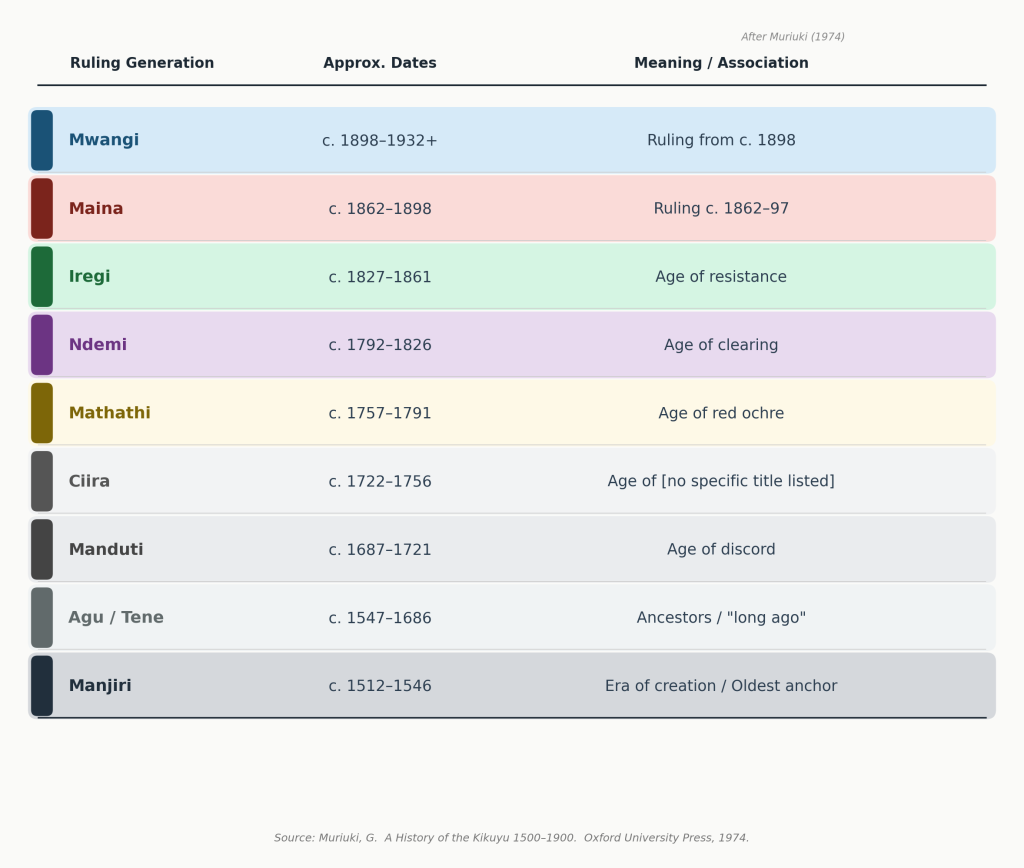
Muriuki’s age-set (mariika) chronological framework extends documented Kikuyu history back to approximately 1512. The framework is built by cross-referencing age-set lists from all three Kikuyu sub-districts — Gaki (Nyeri), Metumi (Murang’a), and Kabete (Kiambu) — and identifies the following reconstructed ruling generation sequence, working backwards from the colonial period. The oldest heartland of settlement was Murang’a, “traditionally considered to be the tribe’s ancestral and spiritual home.” Expansion north into Nyeri and south into Kiambu proceeded ridge by ridge over generations. Muriuki’s analysis establishes that the southward frontier around what is now Nairobi was not reached until the late eighteenth century; the outermost pioneer kihingo (fortified villages) in Kiambu — at Karura, Westlands, Limuru, and Uplands — were established by warriors of the Kinyanjui and Njiriri generations, initiated in the mid-to-late eighteenth century.
The Athi, the Purchase of Land, and Frontier Relations
Before the Kikuyu, the highland forests were inhabited by the Athi — known also as Dorobo or Gumba — hunter-gatherers whose territorial knowledge and hunting rights gave them a prior claim over the land. Muriuki argues against the colonial caricature of the Athi as passive victims cheated by unscrupulous immigrants. The Athi “were too strong and well-armed to be so easily driven off,” and the relationship between incoming Kikuyu farmers and established Athi hunters was genuinely complementary: Kikuyu needed forest-clearing assistance and local knowledge; the Athi needed agricultural produce they could not grow.
Sorrenson’s analysis of the legal dimensions of these transactions explains their complexity and their later political significance. Land transactions between Kikuyu pioneers and Athi families took the form of elaborate ceremonies that combined economic exchange, ritual adoption, and the establishment of permanent social relations. Through adoption, an Athi family became a client of the incoming Kikuyu mbari; the Athi’s children then belonged to the adoptor’s lineage, and title passed securely to the Kikuyu line. The transaction simultaneously validated the Kikuyu pioneer’s claim against other incoming Kikuyu migrants and propitiated the spirits of the Athi ancestors — whose goodwill was necessary before any agricultural use of the land was religiously safe. Sorrenson notes that elders from Fort Hall told the 1929 Maxwell Committee on Kikuyu Land Tenure that “All that is ever conveyed is a temporary and provisional right to reside, to cultivate and to keep stock on a given area. There is always right of redemption.” This principle — that land could never be irretrievably sold — was encoded in the Kikuyu proverb “githaka ni ngwatira,” land is a loan.
Leakey adds the crucial physical detail of how Kikuyu pioneers established and defended the frontier: a chain of fortified kihingo villages, set into the dense forest fringe, concealed from approaching enemies and linked by messenger networks. “So well concealed are the Wakikuyu villages,” the traveller Hinde recorded, “that it is possible to pass within a few yards of one without having any idea of its existence.” The main entrances were flanked by deep staked pits, carefully covered, to impale rushing enemies. When Arab or Swahili caravan leaders fired their guns near the forest edge — the conventional signal for a desire to trade — messengers summoned people from these concealed villages to a meeting point with food for sale. This was the “Maginot Line” of Kikuyu frontier defence, as Leakey evocatively describes it: a forest barrier studded with fortified communities that successfully repelled Maasai raids from the south and west for generations.
Society, Land, and Political Organisation
The Mbari and the Githaka: The Architecture of Land Tenure
The foundational institution of Kikuyu society was the mbari — the extended patrilineal kinship group — and its relationship to the githaka, the land estate it held collectively. Sorrenson describes the mbari as “the most important social grouping in Kikuyu society as it combined landowning with the regulation of marriage.” A mbari was founded when an individual acquired a githaka, typically covering a whole ridge, through first-clearing or purchase. On the founder’s death, the estate became the common property of his male descendants, managed by the eldest son as muramati — trustee and guardian of the mbari’s collective interests. The muramati could be deposed by the other right-holders if he abused his authority; in all important matters affecting the estate he was required to call a meeting and seek consensus.\
Within the githaka, a range of subsidiary rights existed. A muguri received use-rights against a loan of livestock; a muhoi received temporary cultivation rights on the basis of friendship; a muthami had the additional right to erect buildings. None of these conveyed ownership. Leakey is emphatic: “Any member of a sub-clan who happened to have more than enough land for his own use had to help other members of the sub-clan by giving them at least cultivation rights if they genuinely needed them.” This obligation to share — and the reciprocal duty of the recipient not to claim permanent rights — was the social glue of the land tenure system. Muriuki’s genealogical evidence confirms that the system was dynamic: mbari divided as populations grew, with younger sons or ambitious members founding new githaka through pioneering and becoming the ancestors of new mbari in their turn. European colonial rule halted this expansion precisely when it was at its most active, creating an artificial land scarcity whose consequences dominated Kikuyu politics for sixty years.
The Age-Set System: Mariika and the Architecture of Authority
The Kikuyu governed themselves through an elaborate age-set system that Muriuki reconstructs in its full historical depth. Boys were circumcised in cohorts — the riika — and entered adulthood simultaneously, creating bonds of fraternal solidarity that rivalled kinship. These cohorts were combined into larger regiments (the ituka system), and these regiments grouped into two alternating ruling generations, Mwangi and Maina, which exchanged authority through an elaborate ceremony — the ituika — approximately every thirty years. “Had it not been for the coming of the Europeans,” one of Leakey’s elder informants explained, “the Maina generation would have redeemed the right to rule from us a long time ago.” The ituika ceremony required the transfer of ritual authority over the whole country simultaneously in all three Kikuyu sub-regions, with delegates meeting at Mukurwe wa Gathanga, the tribe’s traditional place of origin in Murang’a.
Leakey’s analysis of political structure is precise on a point that colonial administrators consistently misunderstood: there were no chiefs among the Kikuyu. “The title muthamaki, which has so commonly been misinterpreted as chief, did not mean chief at all, for those who held this title had no powers or rights vested in them alone, and could act only in consultation with their colleagues. A muthamaki was, at the most, the president of a committee.” Every village had three committees: the njama of the senior warrior regiment, the njama of the regiment in formation, and the kiama council of elders. Each had its muthamaki. These committees appointed representatives to territorial-unit councils, and those in turn to broader councils. The whole structure was consensual and layered, dependent at each level on the earned respect of peers rather than hereditary or appointed authority.
The kiama of elders performed legislative, judicial, and executive functions simultaneously. Their legal code was elaborate and precise. Muriuki records some of its provisions: theft of a goat or honey, or causing bodily injury, required compensation of ten goats and a ngoima (fatted ram); the murder of a man required one hundred goats; the murder of a woman, thirty goats. Those who persistently defied kiama judgements faced ostracism, the uprooting of their crops by angry neighbours, and ultimately a public curse whose efficacy was feared not only by the culprit but by all their kinsmen. It was rarely that a culprit deliberately disregarded an elder council’s verdict. In the absence of prisons or a standing police force, social pressure and the fear of ritual sanction maintained order with remarkable effectiveness.
The Economy: Agriculture, Crafts, and Long-Distance Trade
The Kikuyu were primarily an agricultural people with a mixed economy of considerable sophistication. Leakey records the traditional crop portfolio: bulrush millet, foxtail millet, sorghum, njahi (lablab) beans, kidney beans, sweet potatoes, yams, sugar cane, edible arum, and bananas. Maize arrived only in the late eighteenth or early nineteenth century and became dominant as a staple much later. The agricultural system was diversified against risk: different crops grew at different altitudes and in different soils, fallowing rested exhausted land, and the spacing of planting dates smoothed the labour demands of the agricultural calendar. Livestock — primarily sheep and goats, with cattle reserved for the wealthy as bridewealth and ceremonial animals — provided the social currency through which alliances were built and obligations discharged.
Iron-working was central to Kikuyu material culture and was practiced by specialist clans. Leakey notes that South Kikuyu “had vast deposits” of iron-bearing lateritic murram “from which the Southern Kikuyu derived a large amount of iron to make into spearheads, swords, axes, etc.” Iron hoes were the essential instrument of agricultural expansion; iron weapons sustained the frontier defence system. Trade in iron goods connected the highlands to the wider East African economy.
Muriuki’s account of Kikuyu trade emphasises its scale and strategic importance. The Kikuyu were not merely producers for local consumption; they produced surpluses deliberately for exchange. Kabete, the southernmost district, “became to the caravans what Cape Town had been to the passing ships in the seventeenth century.” A caravan of 1,200 to 1,500 men was a common sight at Ngong, and all expected to obtain their provisions from the Kikuyu. One of Leakey’s elder informants recalls that “a Kikuyu who took a load of foxtail millet, sorghum, or banana flour could get in exchange a ewe or a ram” from the Maasai; “banana flour was made by drying green bananas in the sun and then grinding them to flour in the mortars; this flour was made only for the Maasai trade.” Women were the primary traders in this system — “trading was a woman’s occupation,” Leakey notes — moving freely between communities under the protection of trade agreements even during periods of intermittent conflict.
Women’s Roles: Power and Its Limits
Kikuyu women occupied a position of substantial economic importance alongside formally circumscribed political authority. Presley’s research establishes that women were the primary cultivators, processing and trading food, managing the domestic economy, and controlling the disposition of household resources. Leakey corrects the common caricature of women as merely beasts of burden: clearing forest and breaking new ground were men’s work, “and it was of the hardest type.” The division of labour was negotiated rather than imposed. A husband could not dispose of the livestock kept in his wife’s hut without consulting her. Senior wives of polygamous households exercised considerable authority over junior co-wives. A mother’s consent was required before any important decision about property or family affairs was made.
Women also had their own institutional forms of collective authority. The kiama kia atumia — the women’s council — had recognised jurisdiction over matters affecting women: disputes over cultivation rights, co-wife relations, reproductive obligations, and the regulation of female initiation. Leakey records that Kikuyu women even had the right, “in special circumstances, to marry wives of their own” — a provision that allowed post-menopausal women of means to acquire rights over households through the same bridewealth mechanism that men used. The pre-colonial social contract was by no means egalitarian, but it was far from the simple subordination that colonial administrators and early missionaries assumed.
Religion: Ngai, the Ancestors, and the Mundumugo
Kikuyu religious life centred on Ngai, the supreme deity who dwelt on Kere-Nyaga and who had both created the world and covenanted the land to the Kikuyu. Sandgren’s analysis of the pre-Christian religious system emphasises that worship was not regular or calendrical but situational — offered at moments of communal crisis and celebration. At planting, harvest, circumcision, birth, illness, and death, Ngai was approached through sacrifice beneath the sacred mugumo fig tree, always with prayer oriented toward the mountain. The Kikuyu had no dedicated priesthood; the muramati (family trustee) conducted sacrifices for his mbari, and the kiama of elders conducted public rituals. “Religion held each family together, united the inhabitants of every village, bound together the inhabitants of the various villages of a territorial unit, and gave them the cohesion that was essential to their mutual security,” Leakey writes.
Alongside Ngai, the spirits of the ancestors (ngoma) remained active participants in the lives of the living. A person who died with unresolved grievances could cause illness or misfortune among their descendants until the wrong was addressed. It was the mundumugo — the religious specialist — who diagnosed such afflictions, discerned the cause of epidemic or crop failure, and prescribed the appropriate sacrifice or purification. Leakey is careful to distinguish the mundumugo from the missionary concept of a “witch-doctor”: he was not a priest, took no regular part in public worship, and wielded no political authority. He was more analogous to a physician who happened also to possess divinatory powers — “few Kikuyu who had taken the trouble to consult with a mundumugo would disregard the advice and instructions given by him, just as the European who puts himself in the hands of a medical specialist rarely disregards what the specialist says.”
Both Leakey and Sandgren note a tradition of Kikuyu prophecy about the coming of the Europeans. Cege wa Kibiru, described by Muriuki as “the famous and greatest Kikuyu seer,” had apparently forewarned the Kikuyu that strangers would come from the big water to the east — peculiar people whose skins resembled small white frogs, whose dress resembled butterfly wings, who carried sticks that spat fire, and who would bring an iron snake that belched fire between the big waters. Kibiru specifically forbade warriors from attacking them, since spears and arrows would be no match for the stick that spat fire. Whatever the actual history of this tradition, the existence of such prophecies shows that the first European arrivals were processed through existing Kikuyu intellectual frameworks — not simply experienced as an unprecedented shock.
The Nineteenth Century: Expansion, Commerce, and Crisis
Inter-Ethnic Relations: Maasai, Kamba, and Bantu Neighbours
The Kikuyu’s relationships with their neighbours were more nuanced than the “perpetual warfare” portrayed in early European travel literature. Muriuki demonstrates through oral traditions and pre-colonial sources that the Kikuyu and Maasai maintained “very close ties which, in turn, have led to cultural fusion.” The pattern was not perpetual enmity but alternating periods of raiding and peaceful exchange, structured by formal treaty mechanisms. When peace treaties were made between Kikuyu and Maasai communities, they were sealed by oaths of considerable solemnity: Muriuki records that a Kiambu warrior named Wangai was handed over to the Maasai for punishment in the 1890s after breaking such a treaty. Under peace conditions, Maasai women could enter Kikuyu villages freely to trade, and Kikuyu women could go to Maasai kraals to exchange grain for hides — even when warriors of the two communities might be engaged in conflict nearby. Thomson’s 1883 account documents exactly this situation.
The Kamba, to the southeast, were important commercial intermediaries connecting the highlands to the coast, but relations with them were more competitive than with the Maasai. The Kamba operated long-distance trade networks that the Kikuyu sought to access directly — one of the reasons Kikuyu communities were receptive to the first Swahili caravan leaders who arrived on the edge of their territory. Muriuki notes, however, that the Kamba were also partly responsible for the “bad reputation” that the Kikuyu acquired among coastal traders and later among Europeans: Kamba traders, who had commercial incentives to deter competitors from entering the Kikuyu highlands directly, spread stories of extreme Kikuyu hostility that coloured subsequent encounters.
First Contact with Outsiders: Swahili Traders and European Explorers
The conventional narrative of Kikuyu hostility to outsiders dissolves under the scrutiny of both Muriuki and Leakey. The Kikuyu’s established relationship with Arab and Swahili traders was commercial rather than hostile. Leakey records that prior to the first European expedition in 1887, the recognised custom was for traders to make camp near the Ngong Hills and “fire off their guns to let the Kikuyu who were living in the fortified villages in the forest belt know that they wanted to trade. As soon as the gun reports were heard, news was sent by messengers throughout the land, and people from all over South Kikuyu made their way to Ngong, taking with them maize, millet, sweet potatoes, and other foodstuffs, to exchange for beads, copper wire, and cloth.” The signal was commercial, not military. When Arab or Swahili caravans tried to penetrate Kikuyu territory — departing from the established trading protocol — they were indeed attacked and their goods seized; but this was a defence of commercial territory, not an expression of pathological violence.
Leakey adds a vivid detail from one of his elderly informants who personally remembered the first European he had ever seen: the man had attempted to attack the strangers but was stopped when the European demonstrated his rifle by shooting through a shield placed across a stream. “When the Kikuyu saw that display they were afraid, and they went home again and gave up the idea of an attack.” This account of pragmatic assessment rather than irrational hostility captures the Kikuyu approach to the new arrivals.
Muriuki’s reconstruction of the IBEAC period is the most detailed historical account available of why trust broke down. The IBEAC established Fort Smith (Dagoretti) in 1892 on land overlooking the village of Waiyaki, who had welcomed Lugard and entered into blood brotherhood with him in 1890. The subsequent deterioration of relations was driven by soldier indiscipline: theft from shambas, foraging for food, harassment of women, and the use of local Kikuyu collaborators to settle private scores. “Owing largely, I believe, to the want of discipline in the passing caravans, whose men robbed the crops and otherwise made themselves troublesome,” Lugard himself observed, “the people became estranged, and presently murdered several porters.” Muriuki reconstructs the Maktubu incident — which company officials used to justify punishing Waiyaki — in precise detail: Maktubu was not murdered by Waiyaki’s order while buying food; he was killed in a private dowry dispute into which he had been drawn by a Kikuyu collaborator acting against company orders. Waiyaki, who knew nothing of the incident, was arrested, marched to the coast in chains, and died at Kibwezi en route to Mombasa.
Muriuki’s assessment of Waiyaki deserves quotation in full: he was “neither the ‘scheming rogue’ — breathing treachery, fire and brimstone — of the company officials, nor was he the martyr of the nationalist cause.” He was a genuine moderate whose authority was fatally misunderstood by the IBEAC officials, who took him to be a “Paramount Chief” with authority he did not possess. In Kikuyu political reality, Waiyaki was one among several athamaki; any agreement he made “had willy-nilly to be ratified by the council of elders, if not actually initiated by them.” When the company held him responsible for actions that required collective Kikuyu authority to prevent, they were applying a political model fundamentally alien to Kikuyu governance.
Catastrophe: The 1890s Crisis and Its Legacy
The last decade of the nineteenth century brought catastrophe of a scale that Kikuyu collective memory preserved for generations. Muriuki identifies the sequence with precision: invasions of locusts from 1894 to 1899 caused extensive crop damage; the great cattle rinderpest of 1898 destroyed herds; severe drought struck in 1897-8; a cattle plague followed in 1898; a serious famine struck in 1898-9; and smallpox broke out simultaneously. The famine was exacerbated by the fact that the Kabete Kikuyu had sold enormous quantities of food to IBEAC caravans and the railway-building party at a time when cultivation had already declined due to the military disruptions of the preceding years.
Sorrenson’s examination of colonial records confirms the scale of the disaster in the most severely affected areas. In the Kiambu district, according to one colonial estimate, seventy percent of the population perished in the famine and smallpox epidemic around 1898-1900. Others survived by retreating into the forests of the Kikuyu escarpment or to Fort Hall, and many had not returned to their land by 1902 when European land alienation began. This demographic catastrophe was the direct prerequisite for the “empty land” fiction that justified colonial settlement: in Kikuyu property law, a temporarily abandoned githaka was not ownerless. It remained the collective estate of the surviving mbari, held against the time when its members could return. Muriuki is explicit: “It was the effects of these disasters that account for the apparently empty land which was alienated for European settlement in 1902-3.”
At the same time, the disasters created the conditions for the emergence of the collaborator class that would complicate Kikuyu responses to colonial rule. The Great Famine drew many ahoi (landless dependants) and displaced people to attach themselves to the IBEAC at Fort Smith, where food could be obtained. Among the early pioneer mission adherents at Thogoto, Muriuki notes, “consisted largely of ahoi or, for one reason or another, displaced people, many of whom attached themselves to the mission during the Great Famine.” These became the kernel of the loyalist class — people whose access to colonial institutions gave them opportunities denied to those who maintained their distance.
The Colonial Period, 1895–1952
Land Alienation: The Legal Architecture of Dispossession
The British colonisation of the Kikuyu highlands was built on a series of legal instruments that progressively extinguished African land rights. Commissioner Eliot’s Crown Lands Ordinance of 1902 allowed the alienation of land not in “actual occupation”; but as Sorrenson documents in meticulous detail, Eliot made no attempt to survey and demarcate occupied from unoccupied land before offering it for settlement, “despite frequent warnings from his subordinate officials.” The ordinance was applied to lands that were occupied — lands temporarily abandoned during the 1890s catastrophe — as if they were genuinely empty.
In 1915 the Crown Lands Ordinance went further, declaring all “waste and unoccupied” land Crown property. A 1921 court ruling — arising from a case that tested these ordinances — confirmed that “native rights, whatever they were under the Gathaka system, disappeared and natives in occupation of such Crown land became tenants at will of the Crown.” This legal revolution was accomplished without any Kikuyu consent, any compensation process, or any acknowledgement that the githaka system constituted a property right cognisable by English law. The Kikuyu knew otherwise. What the colonial state classified as waste was the collective inheritance of their mbari; what it called tenancy at will was their ancestral entitlement.
The Kenya Land Commission of 1932-3, under Sir Morris Carter, was the colonial government’s attempt at a final settlement. Its terms were revealing. Of the land that Kikuyu witnesses demonstrated had been alienated, it recommended adding only 21,000 acres to the Kikuyu reserve — a fraction of the loss — and firmly rejected any return of land to individual families or mbari. Sorrenson traces the political history of the Commission’s failure: the KCA, loyalist chiefs including Koinange, and virtually the entire spectrum of Kikuyu opinion united in opposition. In October 1934 — soon after publication of the report — all major Kikuyu political factions joined in petitioning the Secretary of State to express dissatisfaction. The land issue remained unresolved at independence.
The Squatter System and Colonial Labour
Kikuyu families who found themselves on alienated land were reclassified as “squatters” — a juridical fiction that transformed multi-generational landholders into illegal occupants of someone else’s property overnight. The squatter system allowed Kikuyu families to remain on settler farms in exchange for labour — typically 180 days of work per year at minimal wages. Whatever crops a squatter grew on his allocated plot often had to be sold to the European owner at prices fixed by that owner. As Mugo Gatheru describes from his own father’s experience: the squatter “worked long hours, from six in the morning to five in the evening” and faced conditions that were “very frustrating, uncertain, and horrible,” with no medical facilities and no security of tenure.
The Resident Labourers Ordinance of 1937 tightened conditions further, specifying work days and restricting the area and stock each labourer could maintain. By the 1944 Settlement Committee, which proposed accelerated closer European settlement after the war, squatter-occupied land amounted to two to three million acres of the seven million acres of European farms — and the Committee argued that “any talk of closer settlement is farcical unless the squatter system is abolished, and abolished very quickly.” The mass evictions of Kikuyu squatters from settler farms that followed in the late 1940s — sending tens of thousands with their families and livestock back to an already overcrowded reserve — was among the most direct material causes of the Mau Mau rebellion. Sorrenson’s 1945 labour census figures make the scale concrete: 101,038 Kikuyu resident labourers and their families lived on European farms, nearly 60,000 of them in the Rift Valley. Within a decade, most would be evicted.
Women bore the labour system’s impact with particular severity. Presley documents that from 1902 to 1923, Kiambu women were in many cases compelled through force or the threat of force to work on coffee estates against their will. Their coffee harvesting — timed to coincide with the European profit cycle — conflicted directly with their obligations to harvest their own food crops. This was not merely economic exploitation; it was a violation of the social contract that had defined gender relations in Kikuyu society. Women who had been the managers of the domestic food economy found themselves compelled to labour for alien employers at wages too low to compensate for the loss of their own production. This radicalisation of women through labour exploitation became, as Presley argues, one of the deepest roots of female participation in the nationalist movement.
The Creation of Artificial Chiefs and the Subversion of Authority
When the British government took over from the IBEAC in 1895 and set about establishing effective administration, it faced a fundamental problem: there was no traditional centralised authority to work with. Muriuki’s account of the solution is damning. Officials “turned to the motley crowd of mercenaries who had served them as porters, guides or askari, and created them chiefs.” Some of the athamaki were elevated on the assumption that chiefs had always existed in traditional society; but many so-called chiefs were simply “any bold spirits who exaggerated their own importance.” One woman, Wangu Makeri, became a chief “simply because Karuri spent his nights at her house on his way to Murang’a.”
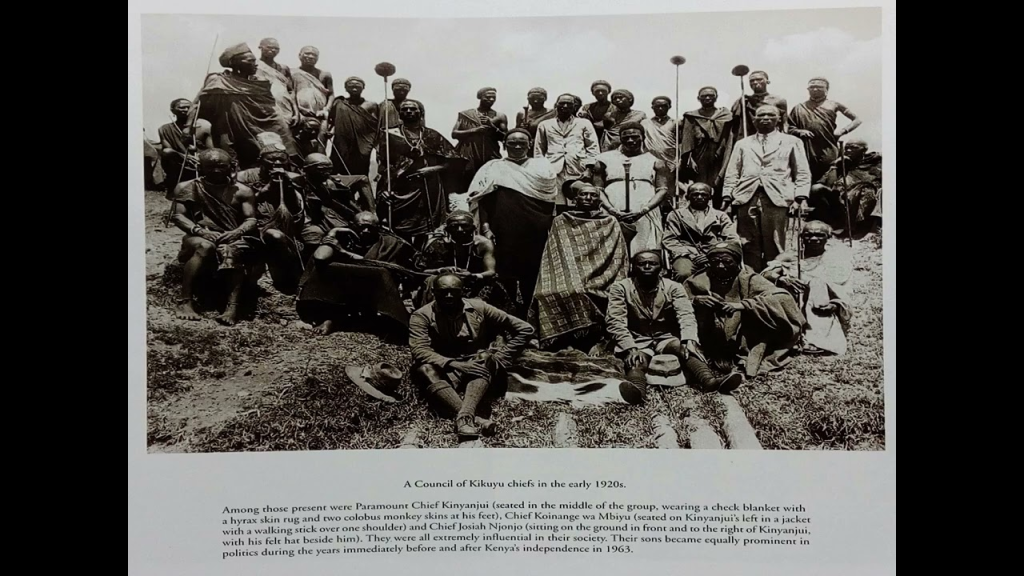
The consequences were severe. Muriuki quotes an official observer’s 1906 account: “Under the present arrangements, the njama consists of all the rogues of an enormous district who have the chief’s permission to enter. It is an engine of oppression… During the time he [a njama member] condescends to remain there [in a village], he is like the owner of the village; the owner himself is but his servant… The women of the village become for the time being the property of the visitor. Everyday a sheep has to be killed, and the njama live like kings.” Six people were murdered on trumped-up witchcraft charges; one was killed because he had refused to give up his shamba to a chief who coveted it. The colonial chiefs became, Muriuki writes, “the political and emotional target of anti-colonialist activity” — not only as symbols of colonial oppression but as “a constant reminder that the traditional political structure had either been ignored or rudely dismantled.”
The Missionary Encounter: AIM, the Circumcision Crisis, and the Aregi Exodus
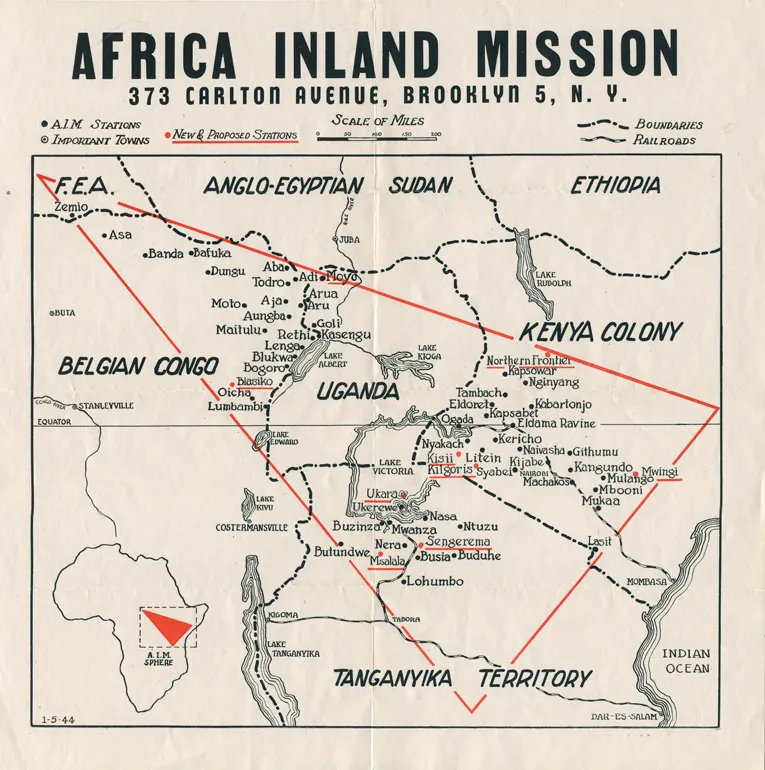
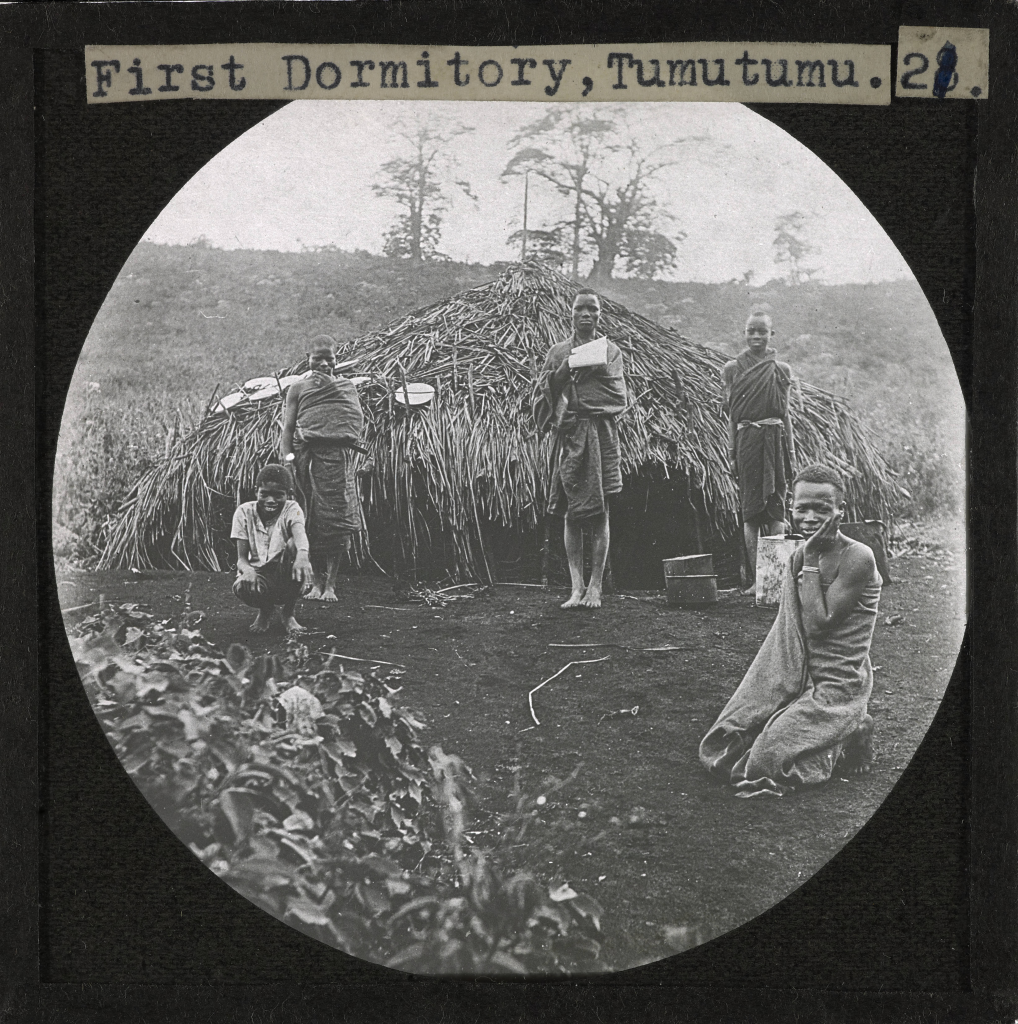
The relationship between the Kikuyu and Christian missionaries was, as Sandgren’s research makes clear, far more complex and consequential than a simple narrative of resistance or accommodation. The Africa Inland Mission (AIM) — an American nondenominational society that arrived among the Kikuyu at the turn of the twentieth century and established its main station at Kijabe and its sub-stations across Kiambu and Murang’a — provided something the Kikuyu urgently wanted: literacy. In a colonial economy where advancement depended on reading and writing, access to mission schools was not merely cultural but economic. Yet the AIM attached conditions. Adherents were required to abandon all Kikuyu cultural practices; those who refused faced discipline and expulsion. Sandgren observes that missionaries “automatically assumed that they knew what was right for the Kikuyu” and were “oblivious to their cultural arrogance.” They understood themselves as acting in the Kikuyu’s best interest; the Kikuyu experienced them as instruments of cultural destruction.
The circumcision dispute that erupted in 1929-31 brought these tensions to a head. The crisis had been building for years. Government ordinances had already restricted circumcision ceremonies to two-month windows per year and required the operation to be performed by licensed practitioners. When the Church of Scotland Mission demanded that its adherents take an oath of loyalty explicitly renouncing female circumcision, and the AIM followed suit, they forced every Kikuyu Christian to declare allegiance either to the mission or to their community.
For the Kikuyu, circumcision was not separable from initiation as a whole, and initiation was not separable from adulthood. Sandgren documents the full depth of what was at stake: initiation “was the point of graduation from adolescent education”; it was “held to be the only entrance thought possible to adulthood”; it was “the specific time when the individual was formally brought into close fellowship with both the living and the living-dead of the community.” The link between initiation and womanhood was so strong that uninitiated women were commonly believed to be unable to bear children. To abandon circumcision was not to modify a custom; it was to cease to be recognisably Kikuyu. “The Athomi [mission adherents] realized that their very identity as Kikuyu was involved in this issue,” Sandgren writes.
The community split into the Kirore — those who signed the loyalty oath, stamping it with a thumbprint — and the Aregi — those who refused, from the verb kurega, to refuse. Abuse and intimidation flowed in both directions. Schools that continued to operate during the Aregi boycott were forced to close; church services were disrupted; families were permanently estranged. “Actions taken in this period forever estranged members of the same family, age group, or out-station,” Sandgren observes. A song called Muthirigu was composed by younger Aregi adherents to taunt the missionaries and their Kirore allies, its lyrics cataloguing the grievances accumulated over thirty years of mission presence.
The resolution was institutional: the Aregi withdrew from the AIM entirely and established their own independent churches and schools. Two principal independent movements emerged: the African Independent Pentecostal Church (AIPC), associated with the Kikuyu Independent Schools Association (KISA), and the African Christian Churches and Schools (ACC&S), associated with a second group. Sandgren’s central analytical contribution is the demonstration that these religious divisions — between AIM loyalists, KISA independents, and ACC&S independents — mapped almost directly onto the loyalist/Mau Mau divisions two decades later. The Kirore became the loyalists; the Aregi became the nationalists. “The diverse roots of the Mau Mau revolt against the British lay in these earlier struggles for the faith,” as Sandgren argues.
Political Organisation: Thuku, the KCA, and the Road to Confrontation
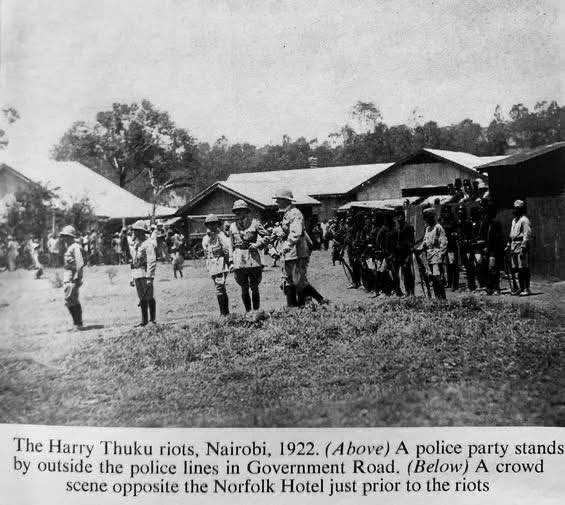
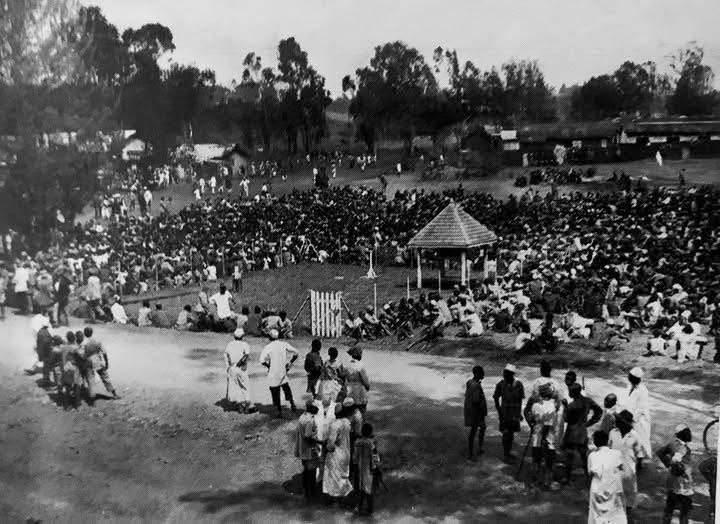
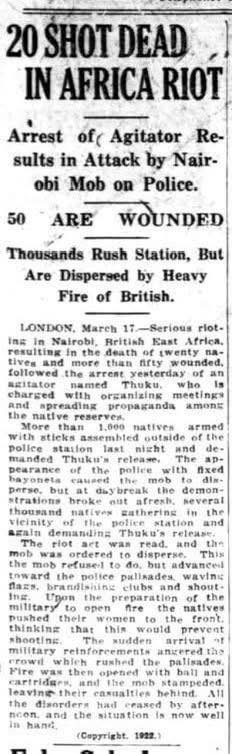
Modern Kikuyu political organisation began with Harry Thuku, whose East African Association of 1921 articulated Kikuyu grievances over land, forced labour, and the kipande (pass system) to both the colonial government and a wider public. Thuku’s arrest in March 1922 triggered the first major urban confrontation between Africans and the colonial state. Sorrenson’s account of the immediate aftermath is precise: “Kenyatta and P.G. Mockerie, who went to put the KCA’s case before the Joint Parliamentary Committee on Closer Union in 1930, were refused a hearing because they were not accredited by the Kenya Government.” The Kikuyu protest could be ignored so long as it remained constitutional.
The Kikuyu Central Association (KCA), founded in 1924, pursued land restoration, abolition of the hut tax, and political recognition. Its most significant achievement was the intellectual: Jomo Kenyatta, as KCA secretary in London from 1929, studied anthropology under Bronislaw Malinowski at the London School of Economics and produced Facing Mount Kenya (1938), a systematic documentation and defence of Kikuyu culture that reframed the circumcision dispute and the land question in terms that the colonial government could not simply dismiss. The independent schools movement — particularly the Kenya Teachers’ Training College founded by Peter Koinange at Githunguri in 1939, where Kenyatta became principal in 1947 — provided the institutional base that linked cultural nationalism to political organisation.
Post-war conditions intensified every grievance. Sorrenson documents the structural pressures in detail: Kikuyu agricultural land in the reserve, supporting a population that had recovered from the 1890s disaster to reach over a million by 1948, was severely overcrowded and eroded. The government’s ban on Kikuyu coffee planting — maintained until 1951 — deprived the reserve population of their most obvious path to cash income. Soil conservation regulations introduced compulsory terracing, which Kikuyu farmers resisted as an appropriation of their labour and a prelude to land confiscation. Every attempt by the Kenya African Union — founded in 1944 with Kenyatta as president from 1947 — to negotiate on land, political representation, or the White Highlands ran into a colonial government determined to maintain the racial structure of the colony intact.
Mau Mau: The Land and Freedom Army, 1952–1960
Origins: Accumulated Grievance and the Oath
The Mau Mau rebellion emerged from an accumulation of grievances that Sorrenson’s research maps with precision at the material level. The immediate triggers were the post-war evictions of Kikuyu squatters from Rift Valley farms. As early as 1948 the Nakuru District Commissioner’s annual report contained the first official mention of “Maumau association,” linking it to the unrest among resident labourers. The Olenguruone settlement — where the government had placed evicted squatters on land at over 8,000 feet altitude, wholly unsuitable for Kikuyu crops, then attempted to impose strict cultivation rules — generated organised resistance in the mid-1940s that Sorrenson identifies as an early rehearsal of the Mau Mau oath. The Olenguruone settlers were evicted in 1950 and dispersed back to Kiambu, which Sorrenson identifies as “the first centre of the movement in the reserve,” carrying their oath with them.
The oath itself drew on the deepest sources of Kikuyu social binding. Like the oaths that had sealed treaties between Kikuyu and Maasai communities, or that enforced kiama judgements, the Mau Mau oath created an obligation of solidarity and mutual commitment that carried both social and religious force. Sorrenson notes the difficulty of determining the rebellion’s exact organisational origins: “Whether or not these reports are symptomatic of a general pattern is uncertain; but they could well mean that Mau Mau was started by disgruntled Kikuyu outside the reserve and subsequently spread to the reserve, first to Kiambu and then to Fort Hall and Nyeri.” What is clear is that by 1952 the movement had achieved mass support across all Kikuyu districts, that the Kenya African Union’s constitutional leadership had failed to produce any significant concessions, and that the colonial government was unwilling to address the fundamental grievances over land and political representation.
The Fighters and the Civil War Dimension
Sorrenson’s analysis of the rebel composition complicates any simple nationalist narrative. The forest guerrilla forces were organised under several commanders — Dedan Kimathi and Stanley Mathenge near Nyeri, Matenjagwo and Kago near Fort Hall, Waruhiu Itote (General China) on the southern slopes of Mount Kenya, and smaller bands in Kiambu. As fighting forces they were severely constrained by limited weapons; their strategic value lay in sustained hit-and-run raids and their capacity to survive in the forests. The most militarily significant single operation was the March 1953 Naivasha police station raid, in which a force of eighty men attacked the post, freed prisoners, seized arms, and withdrew in twenty minutes.
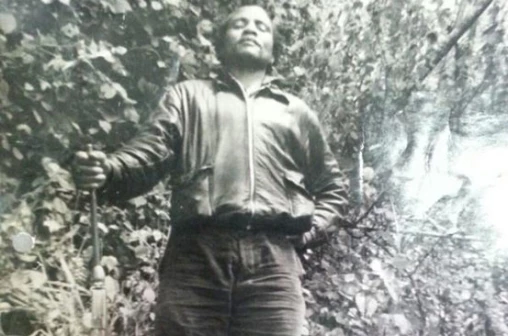
But the rebellion had an inward dimension that Sorrenson documents unflinchingly. The Lari massacre of 26 March 1953 — in which a force of approximately 500 swept the homesteads of loyalists, burning or butchering ninety-seven people — was not simply a Mau Mau attack on loyalism. The District Commissioner at Kiambu admitted two days after the massacre that “It has been a location job,” and that returned Rift Valley squatters were “largely responsible.” Sorrenson’s analysis reveals the land history beneath the massacre: Lari was a settlement area established in 1939-40 for Kikuyu right-holders from alienated Kiambu farms; the loyalist Chief Luka and his people had accepted the resettlement that the KCA had condemned as a betrayal of land rights; many of the attackers were the descendants of right-holders who had not accepted it. “It would seem that the Lari massacre was the final act in this tragic drama.” The rebellion was simultaneously a nationalist struggle against British colonialism and a civil war within Kikuyu society — a settling of accounts over land, loyalty, and the colonial social order.
Sorrenson’s analysis of the loyalist demographic is equally illuminating. The Kikuyu Home Guard — the loyalist force that bore much of the close-quarters fighting — was disproportionately composed of older men and men of the landed, wealthier classes. Of one Guard contingent analysed in detail, three camp leaders were described as “very rich,” eighteen as “rich,” and two as “above average in wealth.” The hard core of Mau Mau, by contrast, came from the riika groups circumcised between 1930 and 1945 — men now in their late twenties to forties, the generation that had grown up watching their parents evicted from settler farms and their land rights denied.
Women in the Rebellion
Kikuyu women were not peripheral to the Mau Mau rebellion but essential to its functioning, as Presley’s oral history research from Kiambu demonstrates definitively. Women served as spies, couriers, and intelligence-gatherers, moving through security checkpoints with food, medicine, weapons, and information that could not safely be carried by suspected male fighters. They recruited new members, administered oaths, and maintained the supply networks that sustained the forest fighters. The Mumbi Central Association — which Presley identifies as a radical revision of the traditional women’s council, organised in the 1930s around the circumcision controversy — provided an institutional structure through which thousands of women were mobilised. MCA members claim credit for promoting political consciousness among women well before the Emergency declared.
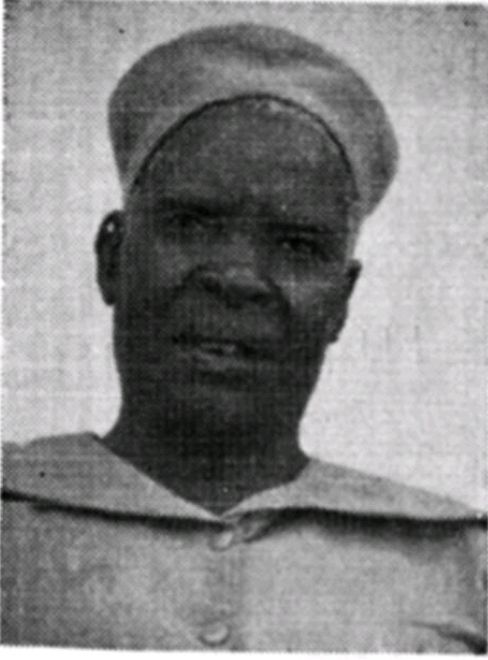
A smaller but significant number of women joined the forest fighters as combatants, breaking entirely with the pre-colonial pattern in which warfare was exclusively male. Their participation created lasting changes in how gender and political agency were understood within the movement. Presley quotes Mary Wanjiko, the local KANU representative who became a key research collaborator, on why she believed the story had to be told: “This story had to be told since the children did not know what their mothers had done in the fight for freedom.”
The Emergency: Violence, Detention, Villagisation, and Land Reform
Governor Sir Evelyn Baring declared the State of Emergency on 20 October 1952, arresting Kenyatta and eighty-two others the same night. Sorrenson’s careful accounting of the Emergency’s scale makes sobering reading. By the end of 1954, 77,000 people — mainly Kikuyu — were in detention. The total number of executions for Emergency offences probably exceeded 1,000, applied to a range of acts from armed resistance to mere possession of ammunition. Collective punishment included the confiscation — documented in official returns — of over 6,000 cattle and 22,000 sheep and goats by mid-1956.
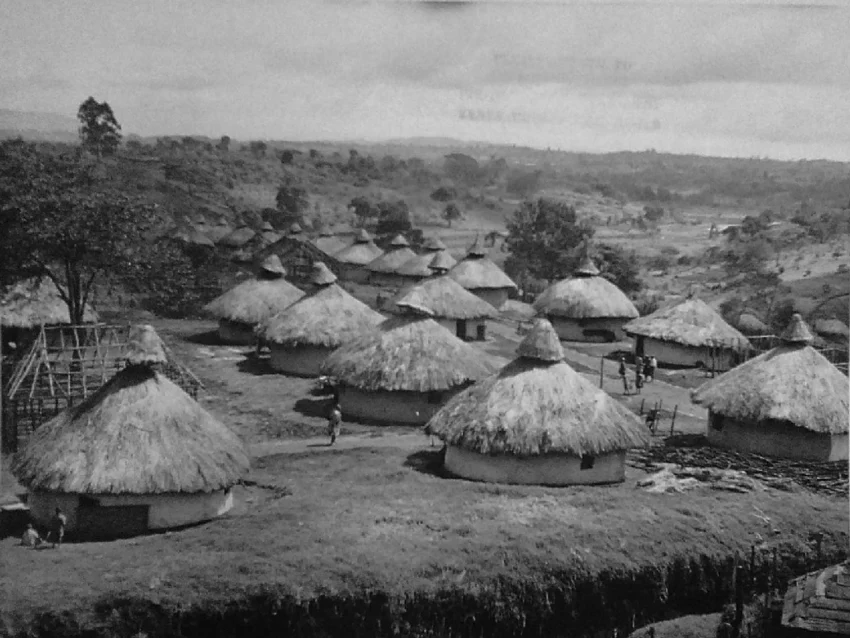
The villagisation programme forcibly relocated virtually the entire rural Kikuyu population of Central Province into enclosed Emergency Villages — cutting forest fighters off from their supply networks and concentrating the population for surveillance and control. Simultaneously, the colonial government used the Emergency as the occasion for the most significant transformation of Kikuyu land tenure since the initial dispossession. Land consolidation — the compulsory amalgamation of scattered fragmented holdings into consolidated individual farms, with registered titles — was introduced as an Emergency measure alongside villagisation. The Swynnerton Plan of 1954 provided the framework: consolidated farms, individual registered titles, and access to credit and cash crops were offered as the material alternative to Mau Mau. The consolidation process, Sorrenson shows, was also designed to reward loyalists with better land at the expense of Mau Mau supporters — “if the elders concerned in adjudicating ownership were predominantly loyalists, there would be little difficulty in bringing about such re-allocation.”
By 1956 the organised military resistance had been broken, though the Emergency was not formally ended until 1960. Dedan Kimathi was captured and hanged in February 1957. The defeat of the forest armies did not resolve the political question. The scale and duration of the rebellion demonstrated beyond doubt that the colonial settlement was unsustainable, and the British government recognised that Kenya’s future could not be secured by force alone. Lancaster House negotiations, constitutional reforms, and decolonisation followed.
Independence, Land, and the Long Reckoning
The Road to Uhuru
Kenya’s formal independence came on 12 December 1963. Jomo Kenyatta — who had spent nine years in detention and restriction before his release in 1961 — led the Kenya African National Union to electoral victory and became the country’s first Prime Minister, then its first President. For the Kikuyu, who had borne the greatest burden of colonial dispossession and the heaviest losses of the Emergency, independence represented the fulfilment of the promise for which generations had worked, organised, petitioned, and fought. The price had been staggering. An estimated 11,000 Mau Mau fighters killed, perhaps 150,000 detained, thousands hanged — and the community divided between loyalists and nationalists in ways that did not simply dissolve with the colonial departure.
The Land Question After Independence
Independence brought partial resolution of the land question. The Million Acre Scheme, financed by the British government, purchased some settler farms for redistribution to African smallholders — primarily Kikuyu — through a series of settlement schemes in the former White Highlands. The land consolidation that Sorrenson traces as a colonial Emergency measure became the template for post-independence tenure: registered individual titles on consolidated holdings, replacing the mbari’s collective githaka system, which was not restored. Many Kikuyu families received land; others remained landless. The redistribution produced new inequalities alongside old ones — and the question of who exactly received what, on what terms, through what political connections, continued to shape Kenyan politics for decades.
The independent schools that had sustained Kikuyu cultural and political identity through the colonial period became the foundation of a formidable educational achievement. Sorrenson notes that by 1941, the Kikuyu Independent Schools Association maintained over fifty schools in Central Province and seventy in the Rift Valley. Peter Koinange’s Githunguri college — which Kenyatta led from 1947 to the Emergency — represented the aspiration toward a Kikuyu university. These institutions, and the literacy they spread, produced the educated class that led both the nationalist movement and the post-independence state.
Language, Culture, and Modern Identity
The Kikuyu language — Gikuyu — is a Bantu language with seven vowel phonemes and a rich tonal structure of considerable sophistication, as Lilias Armstrong’s meticulous 1940 phonetic study — compiled with Jomo Kenyatta as language informant at University College London — demonstrates. Spoken today by seven to eight million people, it is one of the major languages of East Africa. The culture it carries has survived radical disruption: the colonial encounter, Christian evangelism, the Emergency, urbanisation, and the pressures of a modernising national state have all reshaped it, but not erased it.
The Kikuyu in the twenty-first century are simultaneously Kenya’s largest ethnic group and its most politically prominent one. A disproportionate share of Kenya’s educated and professional class, business community, and political leadership has come from the Kikuyu highlands — a concentration that reflects both the community’s historical experience of colonialism’s harshest pressures and its earliest and most intensive engagement with mission education. This prominence generates inter-ethnic resentments that have at times boiled over into violence, as in the post-election crises of 2007-8. These tensions are, in part, the long legacy of a colonial history that created the conditions — land scarcity, forced migration, class differentiation, community division between loyalists and nationalists — that neither the Emergency nor independence fully resolved.
A People Shaped by Their Land
The Agikuyu are, above all, a people shaped by their land and determined to reclaim it. From the founding covenant between Gikuyu and Ngai on the slopes of Kere-Nyaga to the long guerrilla war in the Aberdare forests, the relationship between the Kikuyu and their highland territory has defined their identity, their political culture, and their sense of who they are. The githaka — the collectively held family estate, named for its founder and held in the memory of every succeeding generation — was more than a piece of ground. It was the material expression of kinship, history, continuity, and the covenant between the living, the dead, and the generations yet to come. When elders told the Maxwell Committee that “githaka ni ngwatira — land is a loan,” they were not stating a legal position alone but a philosophy of belonging so deep that no ordinance could extinguish it.
When that land was taken, the Kikuyu did not accept the loss. They organised, argued, petitioned, marched, and ultimately fought. They produced in Jomo Kenyatta not only a national leader but an intellectual who documented Kikuyu culture with the systematic rigour of European anthropology and turned that documentation into a political weapon against colonial contempt. They produced in the women of Kiambu and Murang’a a generation of political actors who permanently expanded the definition of who could participate in public life. They produced in the forests of Kere-Nyaga and the Aberdares a resistance movement that — whatever its military outcome — forced the British to recognise that the colonial era was over. And they produced, from the githaka outward through the riika and the kiama to the national state, a political tradition sufficiently robust to carry them through the most violent decade of their history into a nation of their own making.
Sources and Further Reading
This article draws extensively on the following primary and scholarly sources:
- Gatheru, R. Mugo. Child of Two Worlds: A Kikuyu’s Story. New York: New American Library, 1972 (orig. 1964). A first-person memoir spanning from the 1920s through Kenyan independence, indispensable for understanding Kikuyu life under the squatter system and for the circumcision and education debates seen from within.
- Leakey, L.S.B. The Southern Kikuyu before 1903. 3 vols. London: Academic Press, 1977. The most comprehensive ethnographic record of pre-colonial Kikuyu society, compiled from extended elder interviews in the 1930s and published posthumously. Essential on land tenure, religious practice, political structure, the age-set system, and the fortified village frontier. Includes the first-person memoir of Kabetu wa Waweru, an elder who remembered the first Europeans entering Kikuyu country.
- Muriuki, Godfrey. A History of the Kikuyu, 1500–1900. Nairobi: Oxford University Press, 1974. The foundational historical work on pre-colonial Kikuyu society, based on a 1969 University of London doctoral dissertation. Establishes the mariika chronological framework extending to c.1512, demonstrates the Kikuyu as “an amalgam of diverse elements,” reconstructs the IBEAC period from oral tradition and colonial records, and corrects the myth of Waiyaki as either villain or martyr.
- Presley, Cora Ann. Kikuyu Women, the Mau Mau Rebellion, and Social Change in Kenya. Boulder: Westview Press, 1992. The authoritative study of women’s roles in Kikuyu political life from pre-colonial domestic production through the Mau Mau rebellion, based on oral histories collected in Kiambu district in 1978-9. Essential for understanding the gendered dimensions of both colonial labour exploitation and the independence struggle.
- Sandgren, David P. Christianity and the Kikuyu: Religious Divisions and Social Conflict. New York: Peter Lang, 1989. Traces the Kikuyu encounter with the Africa Inland Mission and the resulting Aregi/Kirore split over female circumcision, demonstrating how the religious divisions of the 1930s provided the social geography for the loyalist/nationalist divisions of the Mau Mau period. Based primarily on oral testimony collected in Kiambu and Murang’a.
- Sorrenson, M.P.K. Land Reform in the Kikuyu Country: A Study in Government Policy. Nairobi: Oxford University Press, 1967. The definitive study of British colonial land policy toward the Kikuyu, from the 1902 Crown Lands Ordinance through the Mau Mau Emergency and post-war land consolidation. Based on extensive archival research in government records. Essential for the legal history of dispossession, the failure of the 1932-3 Land Commission, the squatter evictions, and the Lari massacre.
- Kenyatta, Jomo. Facing Mount Kenya. London: Secker and Warburg, 1938. Kenyatta’s anthropological and political account of Kikuyu culture, written under Bronislaw Malinowski’s supervision at the London School of Economics. Simultaneously ethnographic documentation and nationalist manifesto; the founding text of Kikuyu cultural self-assertion in the colonial period.
- Armstrong, Lilias E. The Phonetic and Tonal Structure of Kikuyu. London: Oxford University Press for the International African Institute, 1940. A landmark linguistic study of the Kikuyu language, compiled at University College London with Jomo Kenyatta as language informant from 1935 to 1937.
