From the Nile Valley to the Rift Valley highlands — the origins, governance, resistance, politics, and world-record running of Kenya’s fourth-largest ethnic group.
Kenya’s fourth-largest ethnic group, the Kalenjin number over six million people and occupy one of the most storied landscapes on the continent: the highlands and escarpments of the Great Rift Valley. They are Southern Nilotic in origin, fiercely decentralized in their political tradition, and have produced a disproportionate share of Kenya’s distance-running champions, its longest-serving president, and some of the most dramatic episodes of anti-colonial resistance in East African history. Yet the name “Kalenjin” is barely eighty years old — a deliberate act of collective invention by young men who understood that identity, like a weapon, needed to be forged before it could be used.
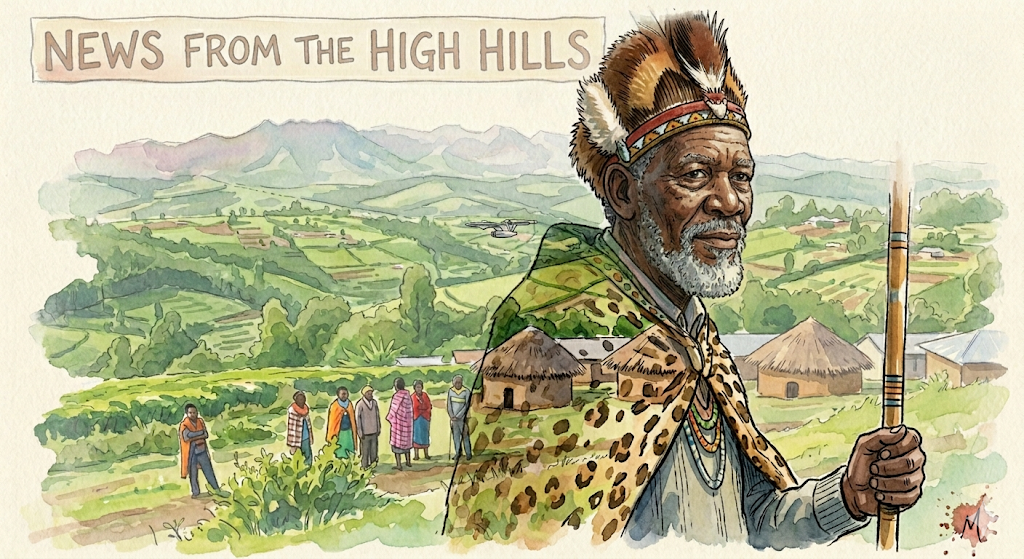
Origins and Migration
The ancestors of the Kalenjin are broadly identified as Southern Nilotic peoples who migrated southward from the borderlands of present-day South Sudan and western Ethiopia during what historians call the African Classical Age, roughly 1000 BCE to 400 CE. Linguistic and archaeological evidence traces their deeper ancestry to mobile pastoralist communities that inhabited the Lower Wadi Howar — the ancient “Yellow Nile” — during the Mid-Holocene, before that river system dried and pushed their descendants toward the Nile Valley proper.
Kalenjin oral tradition offers a more dramatic account. Many communities claim descent from Misiri — a name widely understood to mean ancient Egypt — and trace their lineage to the “family of Joseph,” citing parallels between their monotheistic worship of a supreme being called Asis and the Egyptian god Aten or goddess Isis. A Kalenjin Egyptologist named Kipkoeech arap Sambu later published a serious comparative study titled Was Isis Asis? exploring those connections. Scholars treat these traditions as meaningful expressions of cultural memory rather than literal genealogy, though the linguistic similarities are striking.
The Elmenteitan culture — a distinctive pastoralist tradition named by Louis Leakey after Lake Elmenteita — represents one material trace of their presence in the western plains of Kenya. The later Sirikwa tradition, visible in the highlands from around 1000 CE, left behind the famous Sirikwa holes: circular hollows dug into hillsides, four to nine metres across, used as fortified livestock pens stretching from the Mau and Chepalungu forests through the Cherangany Hills to Mount Elgon.
The Kalenjin still believe that Mount Elgon — Tulwet ab Kony, “the grandparents’ place” — is their original settlement in Kenya. From Elgon, all sub-groups dispersed.
By approximately 1600 CE, sub-groups settled their current locations: the Nandi in Nandi County and Uasin Gishu, the Kipsigis in Kericho, the Tugen in Baringo, the Marakwet and Keiyo in the Kerio Valley, and the Sabaot remaining around Elgon straddling the Kenya-Uganda border. The Maasai, fellow pastoralists and equally expansionist, occupied much of the fertile plateau, producing years of raids and counter-raids before they were eventually displaced southward.
The Sub-Groups
The Kalenjin are not a single tribe in any pre-colonial sense. They are a linguistic and cultural cluster of related peoples who, until the 1940s, had no common name. The 2019 Kenyan census officially recognizes seventeen sub-groups. Their dialects are not fully mutually intelligible across the entire range — Nandi and Kipsigis form the core cluster; Pokot is most divergent.
| Sub-group | Population | Location | Note |
|---|---|---|---|
| Kipsigis | ~2.6M | Kericho, Chepalungu, Trans-Mara | Most populous; core of Kenya’s tea-growing highlands |
| Nandi | ~950K | Nandi County, Nandi Hills | Resistance Home of Koitalel; dominated global distance running |
| Pokot (Suk) | ~600K | West Pokot County, Uganda | Greatest linguistic divergence; cross-border community |
| Tugen | ~300K | Baringo County | Presidential Sub-group of Daniel arap Moi |
| Keiyo (Elgeyo) | ~200K | Elgeyo-Marakwet County | Live on the Kerio Valley escarpment; kin of Marakwet |
| Marakwet | ~180K | Upper Kerio Valley | Known for sophisticated pre-colonial irrigation channels |
| Sabaot | ~150K | Mount Elgon, Kenya/Uganda border | Kap Gugo — “those who stayed to guard the ancestral homeland” |
| Terik | ~118K | Nandi/Kakamega border | Integrated with Nandi; also present in Uganda, Sudan, Ethiopia |
Pre-Colonial Society and Governance
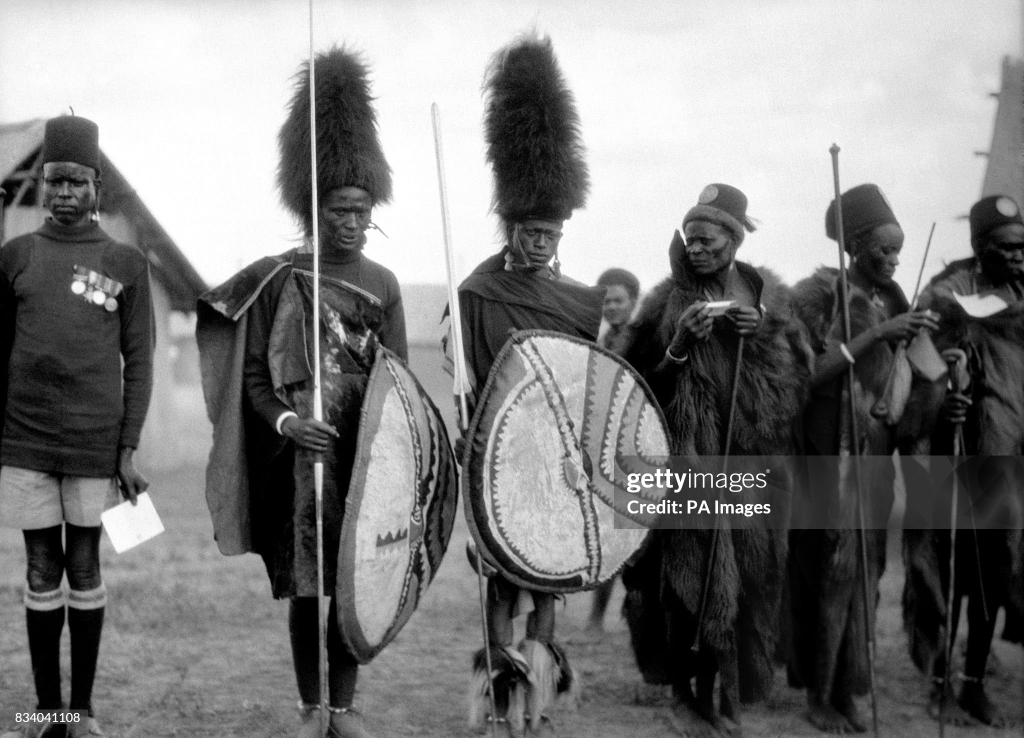
The most striking feature of pre-colonial Kalenjin political life is what it was not: there were no chiefs, no kings, no centralized state. The Kalenjin were an acephalous egalitarian society — authority was diffuse, collective, and anchored in age rather than hereditary rank. Political organization worked through a nested series of units, from the homestead up to the regional council.
The Kokwet — Neighbourhood Council
The crucial social and political unit was the kokwet. Typically comprising fifteen to a hundred families from mixed clans, the kokwet was both a place and an institution — a gathering of married men who met under a large tree to settle disputes, allocate land, and discuss community affairs. The presiding elder, boiyot ab kok, was selected by his age-mates for wealth, wisdom, cultural knowledge, and oratory. He announced consensus; he did not impose it. A rungu (wooden club) was passed from speaker to speaker — no one could address the council without holding it, ensuring every voice was heard before any verdict was reached.
The Age-Set System — Ibinda
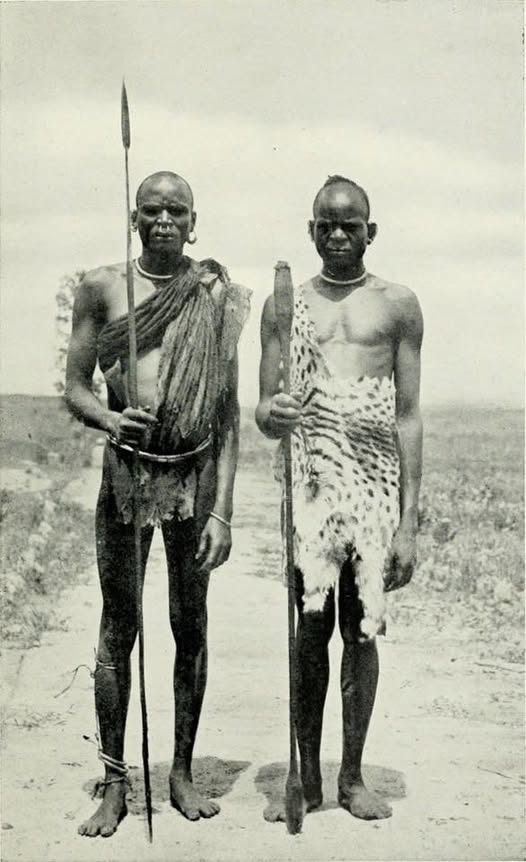
Cutting across the administrative structure was the ibinda, which organized Kalenjin men into rotating cohorts defined by the year of their circumcision. Boys circumcised together — bakule or botum — formed lifelong bonds. Those who completed the painful ceremony were called murenik: “those who lay down their lives for the community.”
The Seven Rotating Age-Sets
- Maina (newest)
- Chumo
- Sawe
- Korongoro
- Kipkoimet
- Kaplelach
- Kipnyigei
Each set lasts ~15 years. A full cycle takes ~105 years. The end of each set’s initiation is marked by the Saket ab Eito ceremony. Boys circumcised together become lifelong bakule — brothers-in-arms who form the warrior cohort of their generation.
Asis — Monotheism before Christianity
The Kalenjin practiced monotheism. Their supreme deity was Asis, the god of the sun, referred to by many names: Tororot, Chebo Nomun Ni, Chepkoyo, Cheptalel. Alongside Asis stood Ilat, the lightning deity — Ilat ne-mie (good lightning, bringing rain) and Ilat ne-ya (bad lightning, bringing punishment). Offerings were conducted at kapkoros — hilltop places of offering selected by elders. When drought struck, a virgin girl from the Kaparkesaek clan — the Chepto Ne Lel — led prayers to Asis before the community bathed in a river and splashed water toward the east.
The Nandi War: Colonial Resistance
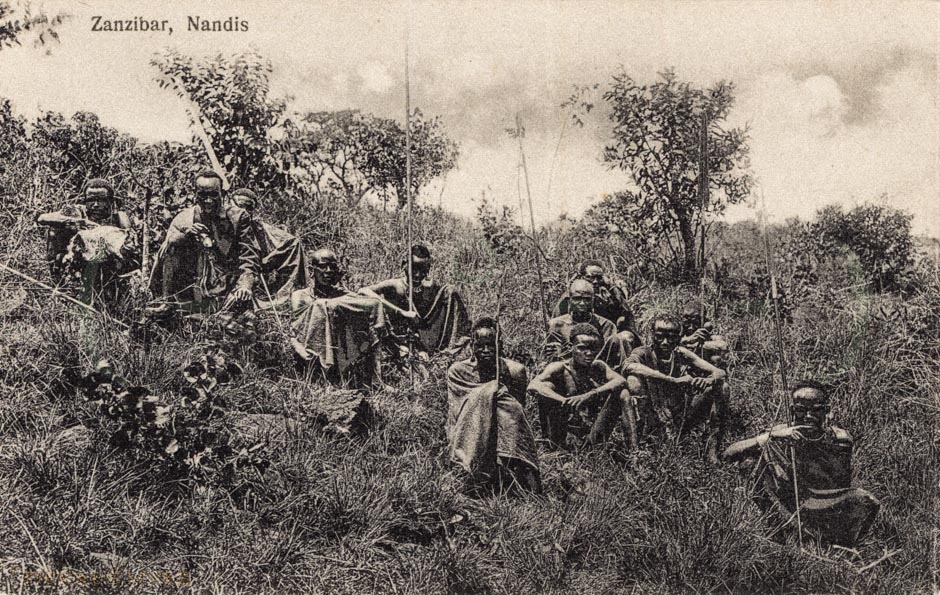
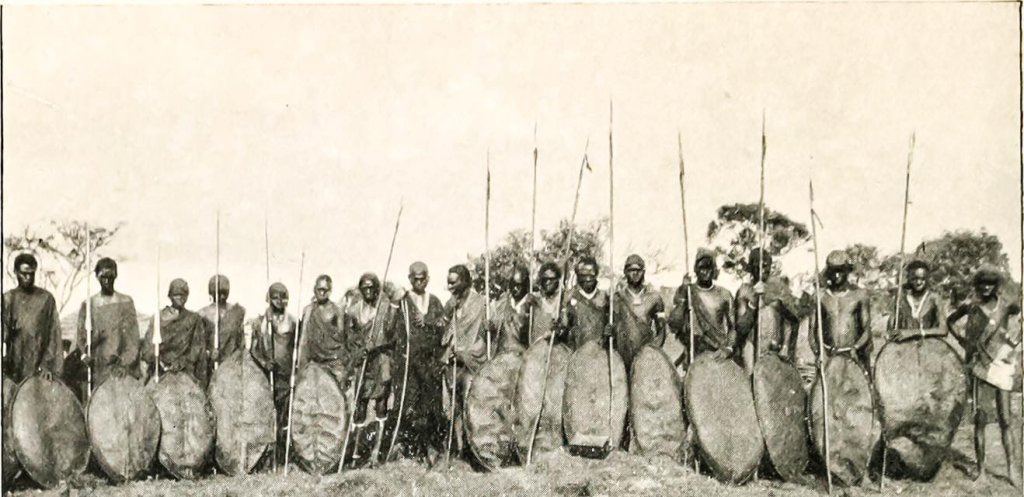
When British surveyors began pushing the Uganda Railway through the western highlands in the 1890s, they ran into the most sustained armed resistance they would encounter in what would become British East Africa. The war lasted approximately eleven years — from 1895 to 1906 — and was led by the Nandi under their Orkoiyot, Koitalel Arap Samoei.
Koitalel was born around 1860 in Aldai, Nandi County, fourth son of the prophet Kimnyole arap Turukat. His warriors deployed guerrilla tactics with striking effectiveness: attacking construction camps, ambushing supply convoys, stealing telegraph wire and railway materials — repurposed as weapons and ornaments. The Nandi Hills and Tindiret escarpment provided natural fortification; attackers melted into terrain impenetrable to colonial forces but wholly familiar to defenders.
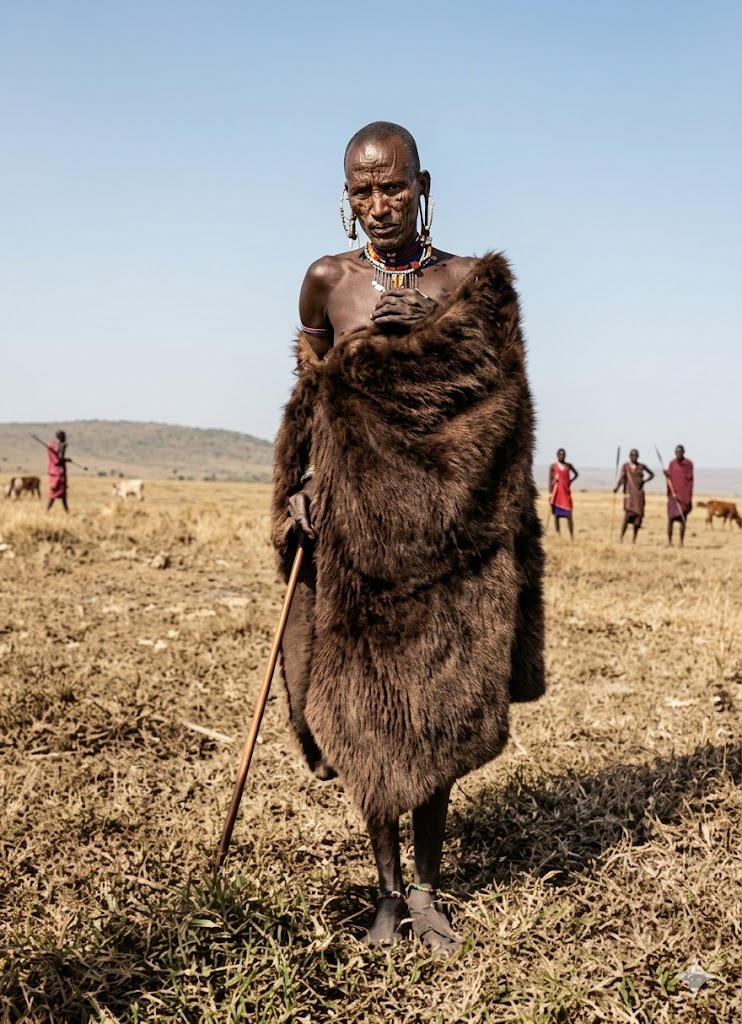
The British mounted five major punitive expeditions over ten years. Each time, Koitalel remained uncaptured. The railway advanced; the resistance held. The only way to end it was treachery.
On October 19, 1905, at Ketbarak (now the Nandi Bears Club), Colonel Richard Meinertzhagen invited Koitalel to a peace meeting. Each side was to come with five companions. Meinertzhagen arrived with eighty armed men, seventy-five of whom hid near the venue. When Koitalel extended his hand in greeting, Meinertzhagen shot him at point-blank range. Twenty-two members of Koitalel’s party were killed. His skull was decapitated and taken to Britain, where it remains unreturned. His sacred leadership staffs — stolen from his homestead — were returned in 2006 by Meinertzhagen’s son at a ceremony attended by ten thousand Nandi.
The Birth of “Kalenjin”
Until the 1940s, the people now called Kalenjin had no collective name. Colonial administrators called them the “Nandi-speaking peoples” or “Southern Nilo-Hamites.” The construction of a unified identity came from three converging forces across a single decade.
The first was the Second World War. As young men from various Nandi-speaking communities enlisted in the British African forces, they began using the word kale or kole — referring to the Kalenjin practice of scarring the arm after killing an enemy — as a collective battlefield marker. The second was radio broadcaster John Arap Chemallan, who used the word kalenjin as a catchphrase on vernacular programmes for African soldiers, giving the name rapid currency across communities who had never before shared one.
The third — and most deliberate — was at Alliance High School in Nairobi, circa 1944, where a fourteen-member student club led by Taaitta arap Toweett formally adopted the name. Kalenjin students at Alliance were outnumbered by Kikuyu, and the new name was partly a defensive act — solidarity and visibility in the face of numerical dominance. The name means “I tell you” in Nandi. The Kalenjin Union was formally founded in Eldoret in 1948. Historians like Peter Simatei and B.A. Ogot have described the Kalenjin as an “imagined community” — a group whose unity was constructed rather than primordial, whose traditions were partly invented to create social cohesion and political leverage. What is unusual is that it happened so recently, so consciously, in living memory.
Daniel Arap Moi and the Nyayo Era
The transformation of the Kalenjin from a politically marginal cluster into a group that would dominate Kenyan national politics for a quarter-century began with one man: Daniel Toroitich arap Moi, born September 2, 1924, in Kuriengwo village in present-day Baringo County — Tugen country, eastern edge of the Rift Valley.
His early career was defined by a strategic anxiety: that post-independence Kenya would be dominated by the Kikuyu-Luo alliance, leaving smaller communities voiceless. In 1960, he co-founded the Kenya African Democratic Union (KADU) with Ronald Ngala, explicitly to defend minority ethnic communities, advocating majimboism — a federal system that would protect smaller groups. After independence and KADU’s dissolution into KANU, Kenyatta appointed him Minister for Home Affairs and then Vice-President — a man from a minority tribe, acceptable to the major blocs as a compromise choice.
When Kenyatta died in 1978, Moi became president. His first months were strikingly open: he freed political prisoners, preached unity, and announced his philosophy as Nyayo — “footsteps.” Then the 1982 coup attempt provided the pretext for consolidation. He disbanded the air force, eliminated Kikuyu and Luo officers from military command, and replaced them with Kalenjin loyalists. A constitutional amendment made Kenya a de jure one-party state. Critics were detained without trial; universities were infiltrated; the press was censored.
Moi had the demeanor of a headmaster, the tone of a preacher, and the heart of a tactician. He distributed development resources like gifts — rewarding loyalty and punishing dissent. Present, seen, felt. But also unforgiving.
Multi-party elections, finally forced in 1992, were accompanied by ethnic violence in the Rift Valley — approximately 700 dead, tens of thousands displaced. Moi won with 36 percent in a fragmented field. He stepped down on December 30, 2002, constitutionally barred from a third term — twenty-four years in office. He died February 4, 2020, aged 95. The Goldenberg and Anglo Leasing scandals of his era may have cost Kenya over 10 percent of its GDP. His legacy remains genuinely contested.
The Running Phenomenon
Of all the things the Kalenjin are known for internationally, none has attracted more sustained scientific and cultural attention than their extraordinary dominance of long-distance running. Approximately 75 percent of Kenya’s best distance runners come from the Kalenjin, a group that constitutes roughly 12 percent of Kenya’s population. The dominance is concentrated particularly in the Nandi sub-group, which constitutes only about 2 percent of Kenya’s total population. A peer-reviewed study found that 17 American men in all of history had run the marathon in under 2:10; 32 Kalenjin men accomplished the same feat in October 2011 alone.
The phenomenon became globally visible on October 20, 1968, when Kipchoge Keino — a Nandi police officer — defeated world record holder Jim Ryun in the 1,500 metres final at the Mexico City Olympics. He ran through a gallbladder infection so severe that doctors had ordered him not to compete. He broke the Olympic record. What followed was not a moment but an era: Wilson Kipsang, Eliud Kipchoge, David Rudisha, Moses Kiptanui — the roll call of Kalenjin world champions and Olympic medalists spans every generation since 1968.
Key Figures
Sources and Further Reading
- Chelimo, Florence J. and Chelelgo, Kiplagat. “Pre-Colonial Political Organization of the Kalenjin of Kenya.” International Journal of Innovative Research & Development, Vol. 5, Issue 13, 2016.
- Rono, Charles Kipng’eno. “Kipchamba Arap Tapotuk’s Music: Oral Narratives, (Hi)story and Culture of the Kalenjin People.” Eastern African Literary and Cultural Studies 5:1 (2019), 54–69.
- Simatei, Peter. “Kalenjin Popular Music and the Contestation of National Space in Kenya.” Journal of Eastern African Studies 4:3 (2010), 425–434.
- Tucker, Ross, Onywera, Vincent O., and Santos-Concejero, Jordan. “Analysis of the Kenyan Distance-Running Phenomenon.” International Journal of Sports Physiology and Performance 10:3 (2015).
- Chesaina, C. Oral Literature of the Kalenjin. Nairobi: Heinemann Kenya, 1991.
- Matson, A.T. Nandi Resistance to British Rule 1890–1906. Nairobi: East African Publishing House, 1972.
- Sambu, Kipkoeech. Was Isis Asis? The Kalenjin People’s Egypt Origins. Nairobi: Longhorn, 2007.
- Kipkorir, B.E. and Welbourne, F.B. The Marakwet of Kenya. Nairobi: East African Literature Bureau, 1973.
- Ogot, B.A. (ed.). “The Kalenjin.” Kenya Before 1900. Nairobi: East African Publishing House, 1978.
- Appiah, Kwame Anthony and Gates, Henry Louis Jr. (eds.). Encyclopedia of Africa, Vol. I. Oxford University Press, 2010.