
Estimated Reading Time: 18 minutes
Key Takeaways at a Glance
| Theme | Summary |
|---|---|
| Ancient Origins | Somali pastoralists migrated south of the Juba River after 1860, belonging mainly to the Darod and Hawiye clan-families. |
| Colonial Era | The British governed the Northern Frontier District (NFD) as a closed, isolated “buffer zone,” treating it differently from the rest of Kenya. |
| Dual Somali Identity | Two distinct Somali communities emerged: pastoralists in the NFD and “alien” Somali traders (primarily Isaq and Herti) in Nairobi and towns. |
| Political Struggle | Somali traders fought for decades to be classified as “Asiatic” rather than “native,” while pastoralists engaged in armed resistance and later, nationalist politics. |
| The Shifta War | Kenya’s forgotten border conflict (1963–68) saw Somalis fight for secession to join Greater Somalia, leaving a legacy of marginalisation. |
| Contemporary Kenya | From the 2009 census controversy to ongoing citizenship struggles, the Somali story is one of resilience against xenophobia and state suspicion. |
Introduction: Who Are the Somali of Kenya?
The Somali people of Kenya are not a recent phenomenon. They are not simply refugees of a modern civil war, though that conflict has shaped their contemporary reality. They are, first and foremost, an ancient pastoral people whose history in the Horn of Africa predates the colonial borders that now divide them.
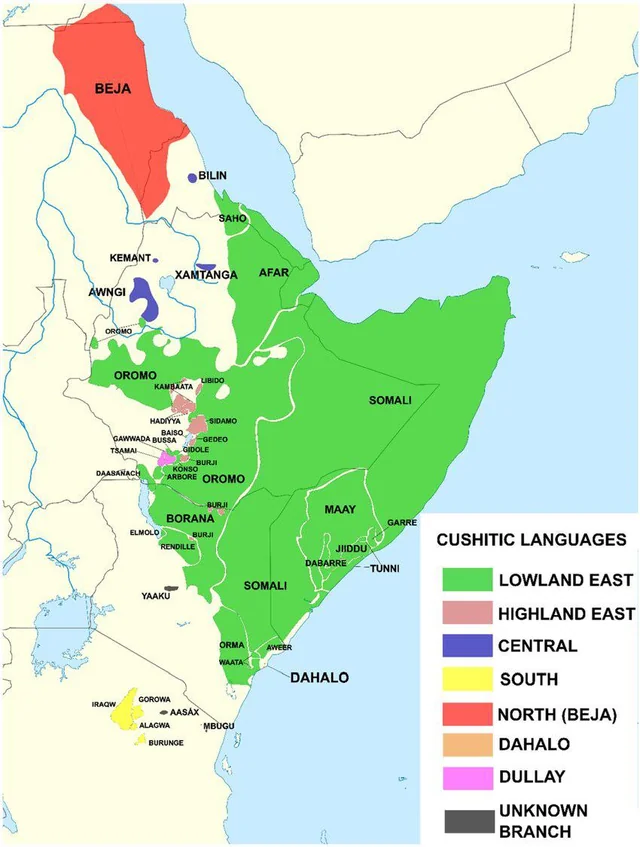
As scholar Ibrahim Ali argues in his revisionist history, the ancient homeland of the Somali people was north-eastern Somalia, an area that was the centre for the trade in frankincense, myrrh, and cinnamon. The Somali and Afar separated from other Cushitic tribes at a very early date, and their languages have remained close to the ancient Erythraic parent language.¹
This deep history is essential for understanding the Kenyan Somali today. They are part of a vast, transnational kinship network that stretches across Somalia, Ethiopia, and Kenya—a reality that colonial powers ignored when they drew their maps, and one that post-colonial states have struggled to manage ever since.
This article traces that journey: from the arrival of pastoralist clans in the late 19th century, through the complex dynamics of colonial rule in the Northern Frontier District (NFD), to the rise of Somali political consciousness, the trauma of the Shifta War, and the ongoing struggle for recognition and belonging in modern Kenya.
Part One: Origins and Arrival – The Pastoralist Foundation
1.1. Ancient Roots in the Horn
The Somali are a Cushitic-speaking people, part of a larger language family that includes the Oromo, Afar, and Rendille. Linguistic evidence suggests that the Somali and their closest relatives, the Afar, separated from other Cushitic groups at a very early date, establishing themselves in the northern Horn of Africa.²
Ancient Greek and Roman writers, drawing on sources like the Periplus of the Erythraean Sea (1st century A.D.), described a people they called the “Barbaroi” inhabiting the northern Somali coast. These were the ancestors of the modern Somali, and they were already engaged in a thriving trade network that connected them to Egypt, Arabia, India, and even the Far East. As Ali notes, the ancient Somalis were skilled seafarers who controlled the export of cinnamon—a spice that does not grow in Africa—importing it from Indonesia and Malaysia and jealously guarding the secret of its true origin.³
For deeper context: This ancient trading culture foreshadows the later role of Somali traders in Kenya’s urban centres. The commercial instincts that would define the Isaq and Herti communities in Nairobi were not new; they were a continuation of millennia-old patterns.
1.2. Migration South of the Juba
The Somali pastoralists who would eventually inhabit Kenya’s Northern Frontier District were part of a broader, centuries-long southward migration. As historian E.R. Turton explains, the majority of Kenya’s Somali were pastoralists who migrated south of the Juba River after 1860, belonging to two main clan-families: the Darod and the Hawiye.⁴
This migration was not a single event but a gradual process of movement driven by the search for pasture and water, as well as inter-clan dynamics. The Ogaden (a major Darod clan), the Marehan, and the Aulihan were among those who established themselves in the vast, arid lands that would later become the NFD.
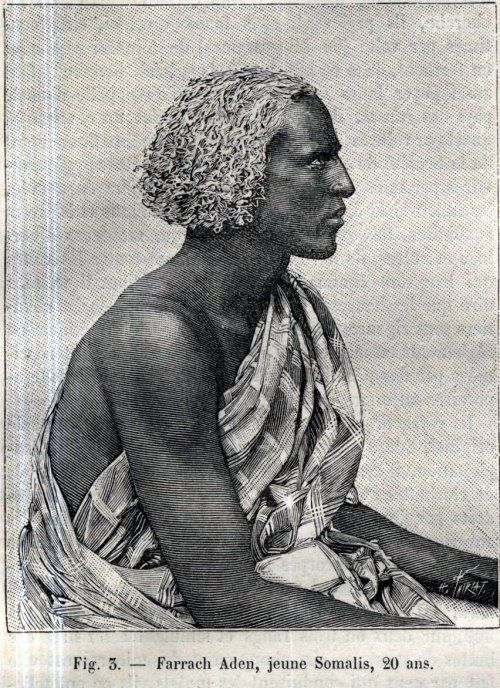
By the time the British began to assert control over East Africa in the late 19th century, these Somali pastoralists were firmly established in the region, their lives governed by a complex system of clan-based customary law (xeer) and a deep attachment to their livestock, which were not merely economic assets but the very foundation of their society and identity.
Part Two: Colonial Encounters – Resistance and Collaboration in the NFD
2.1. The Creation of the Northern Frontier District
When the British East Africa Protectorate was declared in 1895, the vast, arid lands north of the Tana River presented a challenge. They were sparsely populated, economically unproductive in colonial terms, and inhabited by fiercely independent pastoralists who had little interest in being governed.
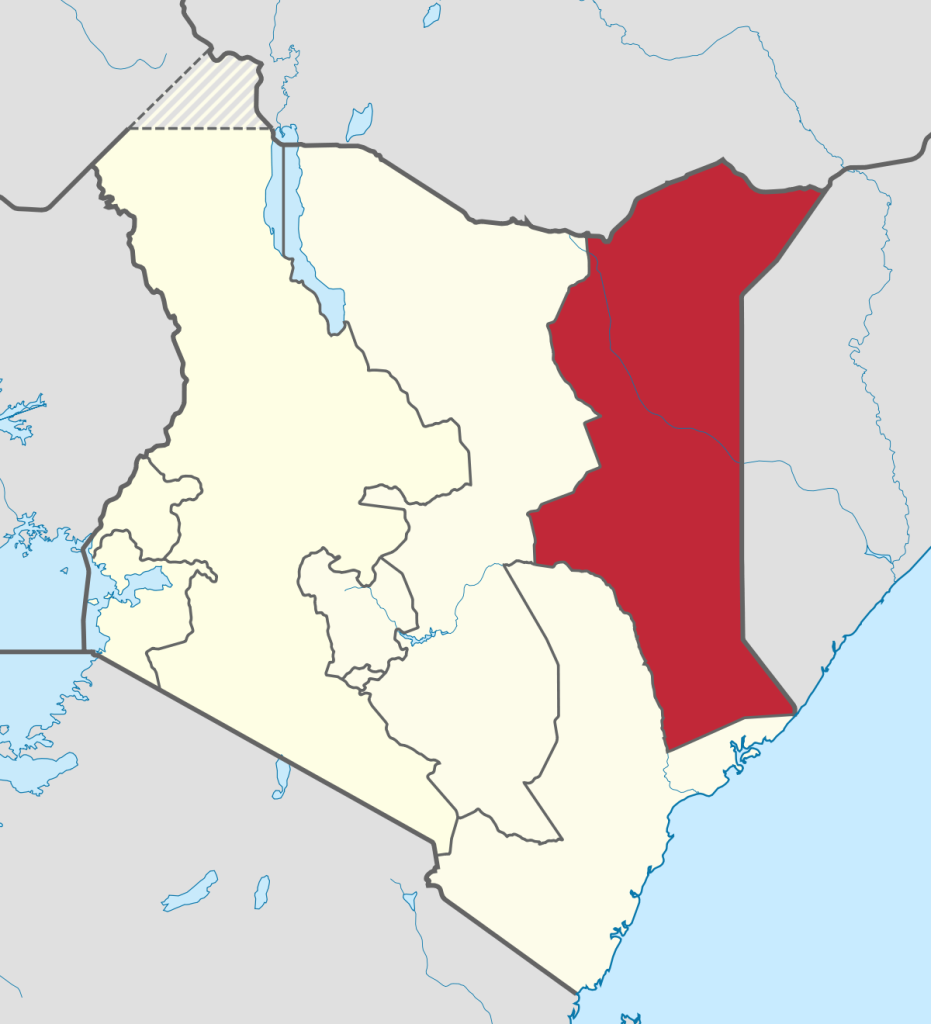
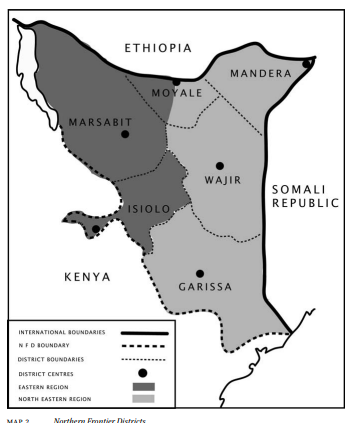
The colonial solution was to create a special administrative zone: the Northern Frontier District (NFD) . As Keren Weitzberg documents, the NFD was conceived as an economically marginal “buffer zone” for the white highlands. Colonial authorities invested little manpower and few resources in the north, which they isolated from other parts of the colony.⁵
This isolation had profound consequences. The NFD was governed under a different legal regime than the rest of Kenya. Movement in and out of the district was restricted, and for decades, it was effectively a closed area. This policy, while intended to simplify administration, also had the effect of preserving Somali social structures and distancing the Somali from the political and economic developments taking place in the south.
2.2. The Myth and Reality of Somali Resistance
The Somali pastoralists of the NFD have traditionally been portrayed as quintessential resisters. As Turton notes, “More punitive campaigns were carried out against the Somali than against any other people in Kenya.”⁶ The catalogue of conflicts is lengthy: the Herti uprising of 1893, the Ogaden revolts of 1898 and 1901, Marehan resistance in 1913, and an Aulihan rebellion in 1916.
However, Turton argues that this narrative is misleading. Somali resistance was far more complex—and far more limited—than a simple list of rebellions suggests. The Somali were not united in their opposition to the British. Inter-clan rivalries, rooted in competition for resources and deep-seated segmentary loyalties, prevented the kind of unified resistance seen elsewhere in Africa.
Furthermore, the Somali faced other threats besides the British. The expansion of Ethiopian power southwards after 1898 was, from their perspective, a far more immediate and terrifying danger. As a result, some Somali clans actually sought British protection. The Aulihan around Serenli, for example, were anxious for a government station to be opened there to protect them from Ethiopian incursions.⁷ The Garre asked for British help in 1899 to stop the Digodia from crossing the Juba.⁸
Collaboration was as much a part of the Somali colonial experience as resistance. The Herti, in particular, became close collaborators with the British. They served as scouts, mail-runners, and askaris. They even monopolised the Kismayu police force for a time. Their proximity to the coast made them vulnerable to British naval power, and they wisely chose to work with, rather than against, the new administration.⁹
Related reading: The dynamics of resistance and collaboration in Kenya’s peripheral regions are also explored in Fighting for Land and Identity: Turkana Resistance to Colonial Rule.
2.3. The Limits of Colonial Power
One of the most significant findings in the historiography of the NFD is the sheer inability of the colonial state to fully govern its Somali subjects. As Weitzberg demonstrates, British officials never knew with any certainty how many Somalis lived within the colony’s borders. The nomadic lifestyle, the porous international boundaries (with Ethiopia and Italian Somaliland), and the Somali talent for evading government officials all conspired to make accurate enumeration impossible.¹⁰
In 1930, the District Commissioner of Wajir argued that implementing a census “would serve no useful purpose so long as the Somali adopts the attitude of moving over the boundary into Italian territory at will.”¹¹ When the government imposed cash taxation in the north in 1930, many Somali simply fled across the border into Ethiopia or Italian Somaliland.
This reality challenges James C. Scott’s famous concept of state “legibility.” The colonial state in the NFD was not a failure because it couldn’t make its subjects legible; rather, it developed a different mode of governance, one that worked with and around Somali mobility rather than against it. As Weitzberg puts it, “Colonial officials developed governance techniques that should not be mistakenly portrayed as state ‘failures’.”¹²
Part Three: The “Alien” Somali – Traders, Towns, and the Struggle for Status
While the pastoralists of the NFD remained largely isolated, a very different Somali community was taking shape in Kenya’s urban centres, particularly Nairobi and Isiolo. These were the “alien” Somali—traders, primarily of the Isaq and Herti clans, who had arrived via Aden and the coast, and who occupied a unique and precarious position in the colony’s racial hierarchy.
3.1. Two Somali Worlds
By the 1920s, Kenya contained two distinct Somali populations:
- The Pastoralist Somali: Domiciled in the NFD, primarily Darod and Hawiye clans, governed under “native” administration, and largely untouched by modern politics.
- The “Alien” Somali: Traders concentrated in Nairobi and Isiolo, primarily Isaq and Herti, who were classified as “natives” for some purposes but who fiercely rejected that label.
As Turton explains, the Isaq were stock-traders who spent considerable periods away from town centres, moving between the pastoralist communities of the north and the urban markets of the south. They were, in a sense, the commercial link between the two Somali worlds.¹³
3.2. The Exemption Ordinance of 1919 and the Fight for “Asiatic” Status
The central political struggle for the Isaq in the interwar period was their campaign to be recognised as “non-natives” or “Asiatics.” This was not a trivial matter of prestige; it had profound practical implications for where they could live, what taxes they paid, and their legal status in the colony.
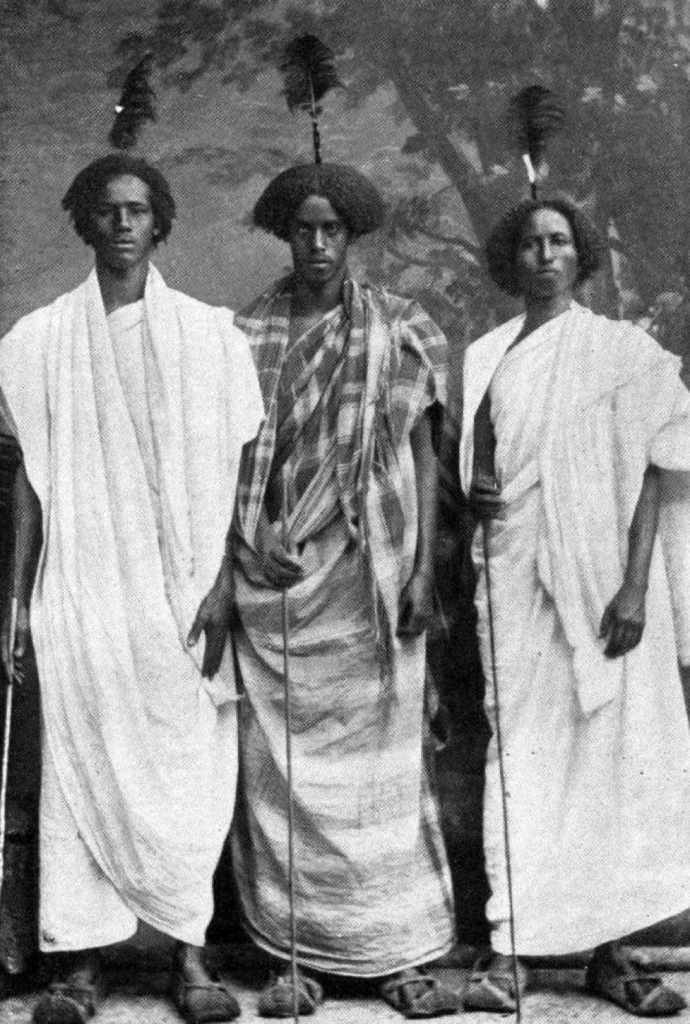
The background to this struggle was the 1919 Somali Exemption Ordinance, which was drafted specifically to “meet a long standing grievance of the Somalis in and about Nairobi.”¹⁴ The ordinance exempted certain Somalis from the definition of “native” in tax and other legislation. Crucially, this was not a response to Somali agitation; rather, it was driven by colonial officials themselves, many of whom held the Somali in high regard. As Sir Charles Eliot, the Commissioner, had written, “there can be no doubt that they are the most intelligent race in the Protectorate… The Somalis… cannot be classed as ordinary African natives.”¹⁵
However, the ordinance was vaguely worded, and its implementation soon ran into trouble. The government realised it was impossible to verify Somali claims of Asiatic origin. More importantly, extending non-native status to the Isaq threatened to open the door to pastoralist Somalis in the NFD, who would then also seek to escape native law. Within months, the government backtracked, ruling that most native legislation would continue to apply to the “alien” Somali.¹⁶
The result was a bizarre and frustrating legal limbo. The Isaq were non-native for tax purposes (meaning they paid higher taxes) but native for almost everything else. They were gradually excluded from the Asiatic ward of Nairobi Hospital, and their status was slowly eroded.
3.3. Passive Resistance and Transnational Campaigning
From the 1930s onwards, the Isaq mounted a sustained campaign to regain the privileges they felt they had been promised. Their methods were sophisticated and far-reaching:
- Petitions: They bombarded governors, the Colonial Office, and even King George V and King George VI with petitions.
- Legal Representation: They hired solicitors in Nairobi and in Cardiff, Wales, to plead their case. A Cardiff solicitor, B.W.P. Morgan, worked for them for years.
- Transnational Networking: They sought support from Isaq communities in British Somaliland and from sympathetic Members of Parliament in Britain.
- Passive Resistance: In 1937, they refused to pay the reduced “other non-native” tax rate of 20 shillings, insisting on paying the full Asian rate of 30 shillings. When the government refused to accept it, they stopped paying taxes altogether, leading to over 100 imprisonments for tax default.¹⁷
This campaign, however, was deeply sectarian. As Turton notes, “In seeking political advancement, the Isaq have reached the ridiculous position of rejecting their own kith and kin.”¹⁸ They actively distinguished themselves from other Somali, denying their Somali origin and emphasising their connections to Aden. This alienated them from the Darod pastoralists and even from the Herti traders, who eventually stopped cooperating with them.
For deeper context: The Isaq struggle for legal recognition parallels the efforts of other communities to navigate the colonial racial hierarchy. For a different example of a community navigating colonial power, see The Asian Heritage in Kenya: From Railway Builders to Nation Builders.
Part Four: The Rise of Somali Nationalism and the Somali Youth League (SYL)
4.1. A New Kind of Politics
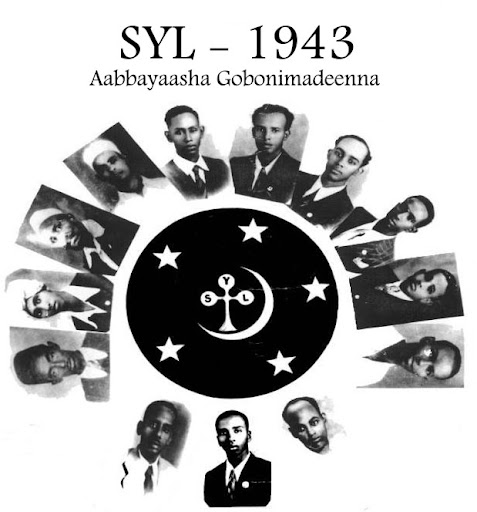
The Isaq’s clan-based, exclusivist campaign was already becoming obsolete by the 1940s. A new force was emerging from Mogadishu that would transform Somali politics across the Horn: the Somali Youth Club (later the Somali Youth League or SYL).
Founded in Mogadishu in 1943, the SYL’s aims were radically different from those of the Isaq. It sought to unite all Somalis, regardless of clan, to promote education, and to work towards the eventual unification of all Somali territories. It was, in essence, a pan-Somali nationalist movement.
The SYL spread to Kenya in early 1947, with branches opening at Wajir, Mandera, Isiolo, Garissa, Moyale, and Marsabit.¹⁹ Initially, it spread amongst township Darod—traders and clerks—but it quickly gained a mass following among the pastoralist population as well. For the first time, the two Somali worlds of Kenya were being drawn together.
4.2. The SYL Challenge to Colonial Authority
The colonial administration viewed the SYL with deep suspicion. While the League professed social and charitable aims, officials were convinced it was a front for seditious activities. Their fears were not unfounded.
The SYL began to undermine the system of indirect rule through government-appointed headmen. As Turton records, they “began to persuade the tribesmen that in future all matters relating to the Somalis… should come under the jurisdiction of the chosen leaders of the League.”²⁰ They set up illegal courts, collected fines, and encouraged members to ignore tribal boundaries and grazing controls. They also assisted the immigration of “alien” Somalis into the colony, operating what one official called an “impromptu underground railway.”²¹
Most alarmingly for the government, the SYL recruited members from the Somali police, askaris, and boma employees, raising fears of a security force mutiny. In 1948, the government acted, proscribing the SYL and forcing government employees to choose between their jobs and their League membership.²²
4.3. From SYL to Secession
The SYL was driven underground, but its ideas did not die. The dream of a unified Greater Somalia—a nation-state encompassing all Somali territories in the Horn—took root in the NFD. By the late 1950s, as Kenya moved towards independence, the political question for the Somali had become clear: secession.
The overwhelming majority of Somalis in the NFD did not want to be part of an independent Kenya governed by Africans from the south, whom they distrusted. They wanted to join the Somali Republic, which was set to become independent in 1960.
This sentiment crystallised in the formation of the Northern Province Peoples Progressive Party (NPPP) in 1960, which captured the secessionist mood and united elders, headmen, traders, and common pastoralists to an unprecedented degree.²³
Part Five: Independence and the Shifta War (1963–68)
5.1. The NFD Commission and the Rejection of Secession
In the lead-up to Kenya’s independence, the British government appointed a commission in late 1962 to investigate public opinion in the NFD regarding its political future. The commission found that the overwhelming majority of Somalis wished to secede and join the Somali Republic.
However, the British government, eager to hand over a unified territory to the new Kenyan government led by Jomo Kenyatta, rejected the commission’s findings. The NFD would remain part of Kenya.
5.2. The “Shifta” Conflict
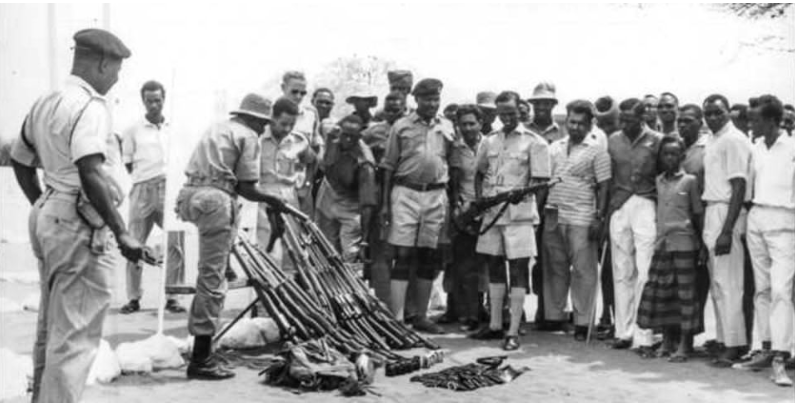
The result was war. From 1963 to 1968, Somali irredentists, supported by the Somali Republic, fought a guerrilla war against the Kenyan state. The Kenyan government officially termed the insurgents “shifta” (a word meaning “bandit” in Amharic, designed to delegitimise their political cause) and declared a state of emergency.
The Shifta War was a brutal and largely forgotten conflict. The Kenyan government imposed collective punishment on Somali communities, confiscated livestock, and restricted movement. The north was placed under a military administration that would last for decades.
As Richard Hogg and other scholars have documented, the war had a devastating impact on the Somali pastoral economy and left a legacy of deep mistrust between the Somali community and the Kenyan state.²⁴
For deeper context: The Shifta War is explored in detail in a dedicated article: The Shifta War: Kenya’s Forgotten Border Conflict 1963-1968.
5.3. The Legacy of Marginalisation
In the aftermath of the war, Kenyan Somalis were subjected to systematic discrimination. They were required to carry special passes to travel outside the NFD. They were excluded from many aspects of national life. Their citizenship was, and in some ways remains, suspect in the eyes of the state and many fellow Kenyans.
As Weitzberg notes, the introduction of electoral politics tied rights to “the language of quantity, of number.”²⁵ In a context where numerical predominance determined political power, long-standing patterns of migration and kinship across borders became highly problematic. Somalis, whose transnational networks were an integral part of their identity, were now viewed as potential threats to the ethnic arithmetic of Kenyan politics.
Part Six: Contemporary Kenya – Citizenship, Census, and Xenophobia
6.1. The 2009 Census Controversy
The unresolved tensions of the colonial and early independence periods came to a head in 2010, when the Kenyan government annulled the results of the 2009 national census in eight districts, five of which were in the former NFD.²⁶
The government’s rationale was that the Somali population had increased by over 140% in a decade, a figure that could not be explained by natural growth. Officials blamed “illegal” immigration from Somalia.
Somali leaders and MPs responded by pointing out the obvious: earlier censuses had systematically under counted the Somali population. For decades, nomadic pastoralists had been difficult to enumerate. The colonial state had never achieved an accurate count, and post-colonial censuses had inherited these flaws. The 2009 census, they argued, was simply more accurate, not evidence of a sudden influx.²⁷
6.2. The Politics of the “IDP” (Internally Displaced Person/Politicised Identity)
The census controversy was part of a broader pattern. As scholar Emma Lochery has shown, Kenyan Somalis have faced a long history of “rendering difference visible” through administrative measures—from the colonial-era kipande to post-colonial screening exercises.²⁸
In 1989, on the eve of multi-party elections, the Moi regime implemented a screening process for Somalis, requiring them to prove their Kenyan citizenship. This process, widely denounced as xenophobic, left many Somalis without identification documents, rendering them stateless in their own country.²⁹
6.3. Security, Terror, and the “Othering” of Somalis
The rise of Al-Shabaab and the 2013 Westgate Mall attack have dramatically worsened the situation for Kenyan Somalis. They face routine profiling, harassment by security forces, and widespread public suspicion. The Somali community is often conflated with terrorism, and their loyalty to Kenya is questioned.
As a 2021 report by the International Commission of Jurists (ICJ) Kenya noted, “The profiling and collective punishment of Somali Kenyans… has become a persistent feature of Kenya’s counter-terrorism efforts, in violation of the Constitution and international human rights law.”³⁰
Part Seven: Resilience and Revival – The Somali Contribution to Kenya
Despite a century of marginalisation, suspicion, and conflict, the Somali people have made and continue to make profound contributions to Kenya.
7.1. Economic Powerhouse
The Somali are among Kenya’s most dynamic entrepreneurs. From the livestock trade that connects the northern rangelands to Nairobi and the Middle East, to the real estate and retail sectors in Eastleigh (“Little Mogadishu”), Somali businesses have injected billions of shillings into the Kenyan economy. The Isaq and Herti trading tradition lives on.
7.2. Political Representation
After decades of exclusion, Somali Kenyans now hold significant political office. The 2010 Constitution’s devolved structure has given the counties of the former NFD (now Wajir, Mandera, Garissa, and parts of Isiolo and Marsabit) substantial autonomy and representation. Leaders like former Majority Leader in the National Assembly, Aden Duale, have risen to the highest levels of national politics.
7.3. Cultural Richness
Somali culture—its poetry, its music, its deep oral traditions, its distinctive architecture and dress—is an integral part of Kenya’s cultural mosaic. The Somali language, one of the few Cushitic languages with a rich written literary tradition, is a vital part of the country’s linguistic heritage.
Conclusion: The Unfinished Story of Belonging
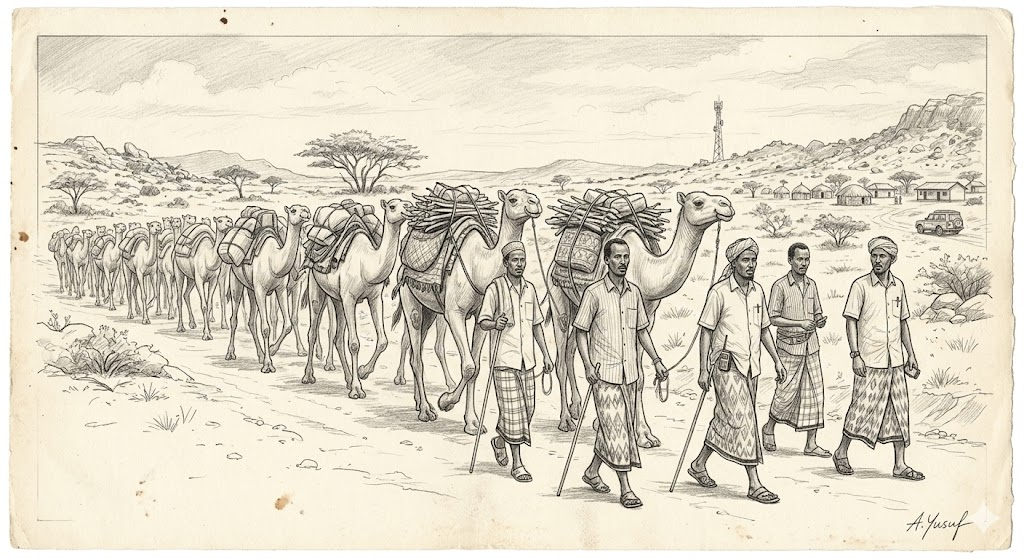
The history of the Somali people in Kenya is not a simple story of migration and settlement. It is a story of ancient pastoralism colliding with modern state borders, of colonial manipulation and post-colonial violence, of legal limbo and political struggle. It is a story of resilience in the face of marginalisation and of a community’s determination to assert its place in the nation.
The Somali of Kenya challenge the very idea of a neatly bounded, ethnically homogenous nation-state. They are a living reminder that Kenya’s history is entangled with the Horn of Africa, that its borders are porous, and that its identity is, and always has been, plural.
From the armed resistance of the Ogaden in the 1890s to the legal battles of the Isaq in the 1930s, from the nationalist dreams of the SYL in the 1940s to the secessionist struggle of the Shifta in the 1960s, and from the census battles of the 2000s to the counter-terrorism profiling of today, the Somali story is one of a people continually negotiating their place in a state that has often been reluctant to fully embrace them.
As Kenya continues to grapple with questions of citizenship, belonging, and security, the history of its Somali citizens offers essential lessons. It is a history that demands to be remembered—not as a footnote, but as a central strand in the complex tapestry of the Kenyan nation.
Further Reading on Kenyan History
| Article | Link |
|---|---|
| The Shifta War: Kenya’s Forgotten Border Conflict | Read |
| The Northern Frontier District: Kenya’s Forgotten Frontier | Read |
| Fighting for Land and Identity: Turkana Resistance | Read |
| Rendille: Camel Nomads of Northern Kenya | Read |
| A History of Land Ownership in Kenya | Read |
| The Asian Heritage in Kenya | Read |
| Kenya’s Colonial Administration 1920-1963 | Read |
| The History of Political Parties in Kenya | Read |
Comments Section Discussion Questions
- Does your family or community have any historical connections or stories involving Somali traders or pastoralists? Share them below.
- How should Kenya balance national security concerns with the rights and citizenship of its Somali population?
- Do you think the devolved system of government has improved the lives of Kenyans in the former NFD? What more needs to be done?
- The 2009 census controversy revealed deep flaws in how Kenya counts its citizens. How can future censuses be made more accurate and inclusive of nomadic populations?