
Estimated Reading Time: 14 minutes
Key Milestones at a Glance
Coffee and tea are more than just beverages in Kenya—they are the lifeblood of the economy, the backbone of rural livelihoods, and a story woven into the very fabric of the nation’s history. From the red volcanic soils of the highlands to the global auction houses in Nairobi and Mombasa, these two crops have shaped Kenya’s colonial past, its independence struggle, and its modern identity.
This article traces the parallel journeys of coffee and tea in Kenya: their introduction by European colonisers, the bitter fight by Africans for the right to cultivate them, the institutions built after independence, and the challenges facing farmers today.
How Coffee and Tea Came to Kenya
Coffee: The Missionaries’ Gift
Despite Kenya’s proximity to Ethiopia—the birthplace of coffee—the crop was not cultivated here until the late 19th century. The story begins not with Africans, but with European missionaries.
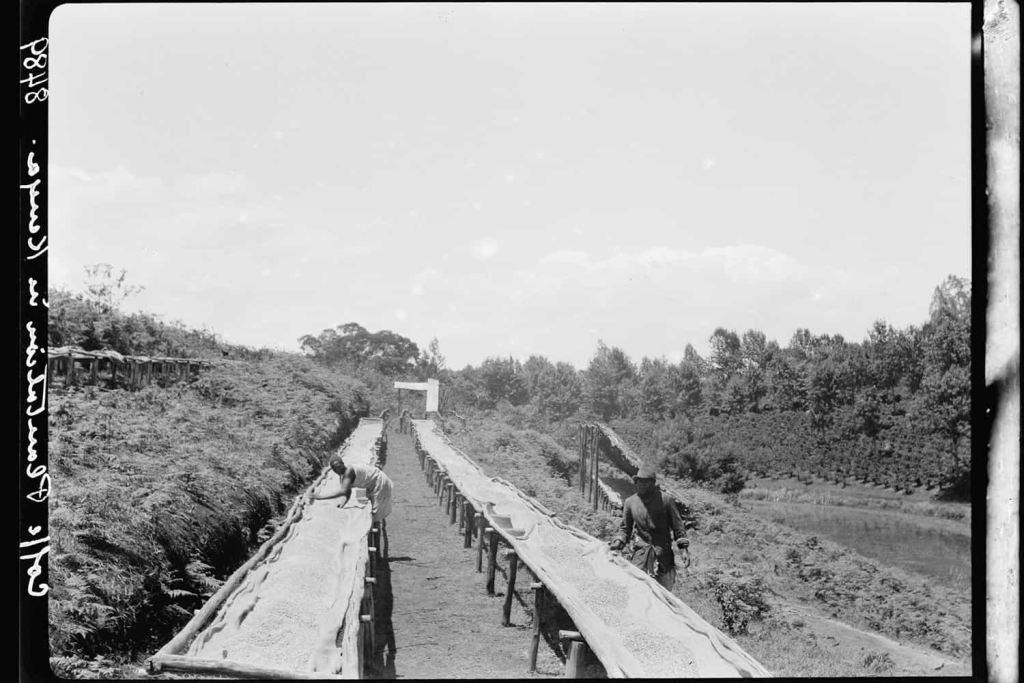
In 1893, French Holy Ghost Fathers introduced coffee trees from Réunion Island (then called Bourbon Island) and planted them at Bura in the Taita Hills . This was the first recorded coffee planting in Kenya. The seeds were likely a mix, with the Mocha variety predominant .
In 1900, coffee was planted at Kibwezi under irrigation, and in 1904, it reached Kikuyu near Nairobi and Thika . St. Austin’s Mission near Nairobi became particularly significant—most coffee plantations in the colony were later established from seed first grown there .
For deeper context: The land where these first coffee farms were established was not empty. It belonged to communities like the Kikuyu, whose traditional land tenure systems we explored in A History of Land Ownership in Kenya. The arrival of coffee plantations accelerated the dispossession documented in that article.
Tea: From Assam to Limuru
Tea’s journey to Kenya began a decade later. In 1903, a settler named G.W.I. Caine introduced the first tea seedlings (Camellia sinensis) to Limuru, planting them on an experimental basis . Some of these original bushes still stand today on what is now Unilever’s Mabroukie Tea Estate, living relics of Kenya’s tea history .

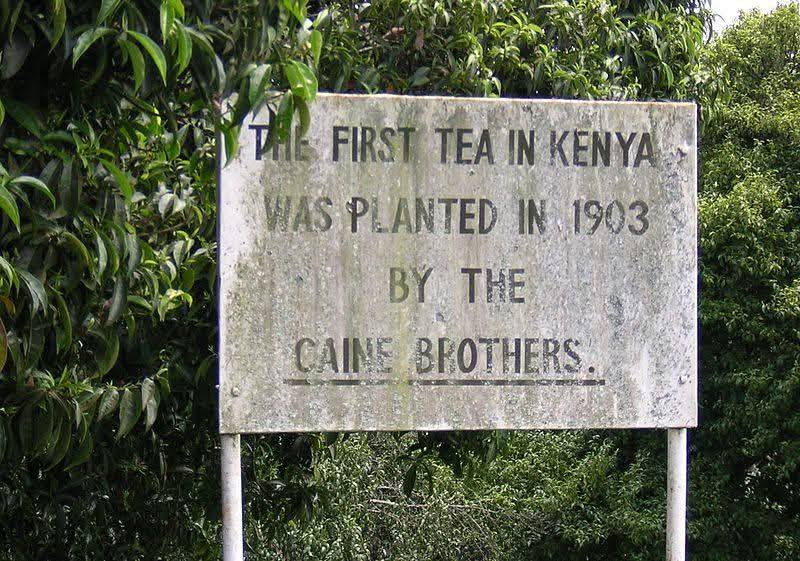
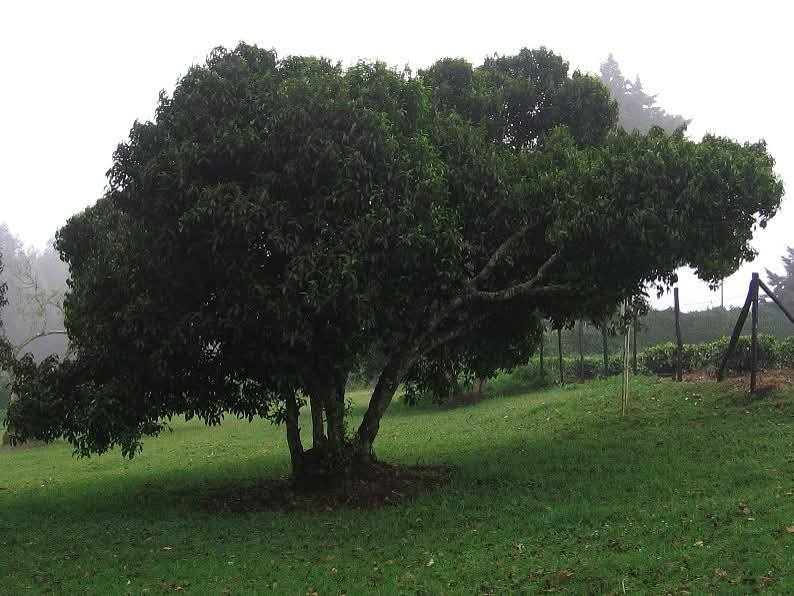
For years, tea remained a curiosity. It was not until 1924 that commercial cultivation began in earnest, and even then, it remained an exclusive preoccupation of European colonialists . The first person to grow, make and sell tea commercially in Kenya was Arnold Butler McDonell, who established Kiambethu Farm in Limuru in 1910 . He sold his first harvest in 1926 to the Mabroukie tea factory, marking the true beginning of Kenya’s tea industry .

The Colonial Era – Exclusion, Exploitation, and Resistance
The “White Man’s Crops”
In the early decades of the 20th century, both coffee and tea were strictly reserved for European settlers. The colonial government actively prohibited Africans from growing cash crops, using several justifications:
- Disease control: Officials argued that African farms would harbour diseases that could spread to “well-cared-for” European plantations .
- Labour supply: If Africans could earn a living from their own cash crops, who would work on settler farms?
- Competition: European settlers feared African competition and used their political power to maintain a monopoly.
The Devonshire White Paper of 1923 declared that African interests were “paramount” in the colony, but in practice, this meant nothing for cash crop cultivation. It would take decades of struggle to change this.
Coffee: Controlled Liberalisation
The first crack in the coffee monopoly came in the 1930s. Following the Devonshire Paper, the colonial government allowed controlled planting of coffee outside European areas—specifically in Kisii and Meru . This was not generosity; it was a calculated move to create African buffers and test production in different regions.
Meanwhile, the institutional framework for coffee was being built—by Europeans, for Europeans:
- 1932: The Coffee Industry Ordinance was enacted, following requests from coffee farmers .
- 1933: The Coffee Board of Kenya was established to regulate and promote the industry .
- 1934: The Kenya Coffee Auctions were established as the mode of selling Kenyan coffee .
- September 1935: The first coffee auction was inaugurated .
- 1946: The Coffee Marketing Board (CMB) was established under Ordinance No. 6, becoming operational in July 1947 .
Related reading: The exclusion of Africans from cash crop cultivation was part of a broader system of economic control. For more on how the colonial economy operated, see Kenya’s Colonial Administration 1920-1963.
Tea: Decades of Delay
Tea liberalisation came even later than coffee. Through the 1930s and 1940s, African farmers were forbidden from planting tea. The colonial government’s arguments remained the same: Africans could not control diseases; their participation would threaten European farms .
One of the most bitter land disputes erupted in 1949, when the Nyanza Provincial Commissioner ordered residents of Kimulot to relinquish 6,500 acres for the Kenya Tea Company, plus an additional 10,000 acres in Sotik .
When landowners protested, the government labelled them illegal residents. Tapsimate arap Borowo became a symbol of defiance, insisting on his right to live on ancestral land, showing identity cards issued in the 1920s as proof of residence. Despite winning court cases, he and others were ultimately crushed by colonial force .
On August 1, 1951, the colonial government awarded Kimulot Tea Company (James Finlay Ltd) a 999-year lease over the land, without consent from the owners . This injustice still simmers today.
The Turning Point: Mau Mau and the Swynnerton Plan
The Mau Mau uprising (1952-1960) changed everything. As we documented in Mau Mau Uprising in Kenya 1952-1960, the war was fundamentally about land and economic exclusion.
In response, the British sought to create a loyal class of African smallholders who would have a stake in the system. The Swynnerton Plan of 1954 was introduced to consolidate land holdings, adjudicate ownership, and grant individual freehold titles to “productive” and “loyal” Africans .
Crucially for coffee, the plan allowed African cultivation of cash crops in Central Province . This was extended to other regions, and by the late 1950s, African coffee farming was finally permitted.
For tea, the breakthrough came in 1956, when African growers were allowed to start planting tea . But it was too little, too late. By 1960, the Special Crop Development Authority (SCDA) was created to promote tea growing by Africans under the Ministry of Agriculture . This would become the foundation for independent Kenya’s tea sector.
For deeper context: The Mau Mau fight for land and dignity is explored in Dedan Kimathi: The Lion of the Aberdares and The British Concentration Camps in Kenya.
Independence – Africanising the Plantations
Coffee: A New Dawn, Old Structures
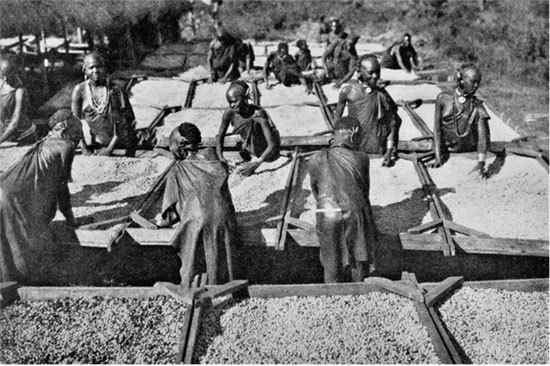
By the time Kenya attained independence in 1963, the coffee industry was already playing a significant role in the economy as the leading foreign exchange earner . But the structure of the industry remained largely colonial: large European estates dominated, while African smallholders were concentrated in less productive areas.
The new government, led by Jomo Kenyatta, faced a choice: radically restructure the industry or work within existing frameworks. As we explored in Jomo Kenyatta: Power, Nationhood, and the Making of Postcolonial Kenya, the choice was to preserve economic structures while Africanising ownership.
Key developments included:
- 1964: The Coffee Board of Kenya continued operations, but now with African leadership.
- 1971: Act 13 of 1971 abolished the Coffee Marketing Board and consolidated its functions with the Coffee Board of Kenya .
- 1982: The Coffee Board was re-established as an autonomous body by Act of Parliament .
The cooperative movement expanded rapidly, with thousands of smallholders joining societies that could process and market their coffee. By the 1980s, about 70% of Kenyan coffee was produced on small farms, which controlled about 75% of the land under coffee .
Tea: The KTDA Revolution
Tea’s post-independence transformation was even more dramatic. On 20 January 1964, just one month after independence, the government established the Kenya Tea Development Authority (KTDA) under Legal Notice No. 42 .
KTDA’s mandate was revolutionary: to promote and foster tea development for small-scale growers in scheduled areas . Its goals included:
- Managing tea extension programmes to improve husbandry
- Developing tea infilling programmes
- Recruiting more farmers and increasing area under tea
- Providing planting materials
- Collecting and processing green leaf
- Marketing made tea
- Paying growers after deductions
- Developing technical, financial, and managerial infrastructure
Initially, KTDA served 19,775 smallholders with just 4,413 hectares of tea and one factory (Ragati) . Growth was explosive. By 1980, KTDA had become the world’s largest tea exporter, managing 30 factories and producing over 36,000 tonnes . By 2000, it operated 44 factories producing over 110,000 tonnes, 80-90% for export .
In June 2000, the Authority was privatised, becoming Kenya Tea Development Agency Holdings Limited (KTDA (H) Ltd) , owned by the 54 tea factory companies that are themselves owned by the farmers .
Related reading: The cooperative model that underpins KTDA has parallels in other sectors. For more on how Kenyans organised economically, see Africanising Capitalism: Kenya’s Gambit to Create a Black Bourgeoisie.
The Geography of Growth
Where Coffee Grows
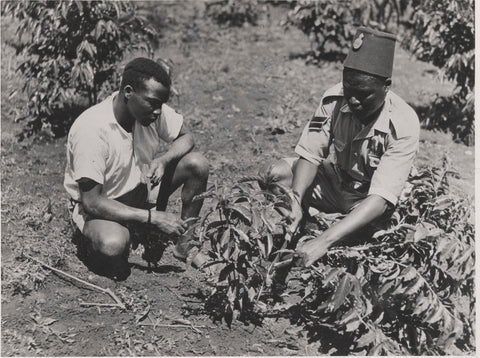
Kenya’s coffee is almost exclusively the Arabica variety, prized globally for its intense flavour, full body, and pleasant aroma with notes of cocoa and blackcurrant . The ideal growing conditions include:
- Altitude: 1,500 to 2,100 metres above sea level
- Soil: Volcanic, acidic, well-drained
- Rainfall: Well-distributed, with adequate sunlight
The major coffee-growing regions include the high plateaus around Mount Kenya, the Aberdare Range, Kisii, Nyanza, Bungoma, Nakuru, Kericho, Nandi, Mount Elgon, and to a smaller scale in Machakos and Taita Hills .
Notable cooperative societies include Gikanda, Tekangu, Thiriku, and Mutheka in Nyeri; Iyego in Murang’a; Rung’eto in Kirinyaga; and Baragwi and Meru Central Coffee Co-operative Union .
Where Tea Thrives
Tea is grown in the highlands both west and east of the Rift Valley, at altitudes between 1,500 and 2,700 metres . The conditions required include:
- Soil: Tropical, volcanic, red soils
- Rainfall: 1,200 to 1,400 mm annually, well-distributed
- Location: Equatorial, allowing year-round production with minimal seasonal variation
The 19 tea-growing counties include Nakuru, Narok, Kericho, Bomet, Nyamira, Kisii, Kakamega, Bungoma, Vihiga, Nandi, Elgeyo Marakwet, Trans-Nzoia, Kiambu, Murang’a, Nyeri, Kirinyaga, Embu, Tharaka-Nithi, and Meru .
Kericho remains the heartland of Kenyan tea, home to vast estates that stretch as far as the eye can see—a green carpet draped over rolling hills.
Economic Impact and Global Trade
Coffee’s Contribution
Coffee is a key foreign exchange earner for Kenya . In the 2022-2023 coffee year, US$127.8 million worth of coffee was sold through the Nairobi Coffee Exchange . While this represented a decrease from the previous year due to global price fluctuations, production has ranged from 34,500 to 51,900 tonnes in recent years .
Approximately 6 million Kenyans are employed directly or indirectly in the coffee industry . About 150,000 coffee farmers—mostly smallholders—form the backbone of production .
Kenya exports most of its coffee unprocessed (green coffee) , with the top destinations being the United States, Germany, Belgium, Sweden, and Korea . The highest grade, Kenya AA, commands premium prices worldwide .
Tea’s Dominance
Tea makes an even larger contribution to the economy:
- 23% of total foreign exchange earnings
- 2% of Agricultural GDP
- Over 450 million kgs produced annually
- Over Ksh 120 billion in export earnings, plus Ksh 22 billion in local sales
- About 5 million people supported directly and indirectly
- Approximately 650,000 tea growers depend on the crop
KTDA produces about 60% of Kenya’s tea, managing 66 factories and serving over 560,000 smallholder growers cultivating about 130,000 hectares .
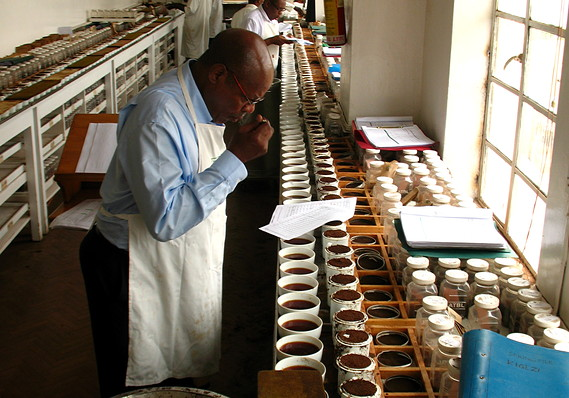
The Mombasa Tea Auction is the world’s second-largest tea auction centre, handling about 83% of Kenya’s tea trade . The auction is conducted under the East Africa Tea Trade Association (EATTA), with members including brokers, buyers, producers, warehousemen, and packers.
Quality and Reputation
Kenyan tea is renowned worldwide for its quality, attributed to:
- Adherence to good agricultural practices (no pesticides or agro-chemicals)
- Good husbandry and high-quality varieties
- Skilful processing (no additives, preservatives, or artificial colouring)
- Continuous investment in modern technology and R&D
- Compliance with global food safety standards (ISO, HACCP, KS1927) and market requirements (ETP, Fair Trade)
Related reading: Kenya’s economic transformation through agriculture parallels developments in other sectors. For comparative context, see Kenya’s Cash Ratio vs. China and Global Norms, which explores Kenya’s unique financial evolution.
Challenges and Controversies
Coffee’s Decline and Revival
Despite its glorious past, Kenya’s coffee industry has faced significant challenges:
- Production decline: From about 130,000 tonnes in 1987/88 to just 40,000 tonnes in 2011/12
- Price instability: Global price fluctuations hit smallholders hardest
- Land pressure: A property boom in traditional coffee-growing areas has reduced acreage
- Governance issues: Corruption and mismanagement in cooperatives have plagued the sector
In 2024, coffee farmers in Kirinyaga blocked roads to protest against poor pay . Such protests reflect deep-seated frustrations with an industry structure that often leaves farmers with a tiny fraction of the final price.
However, there are signs of revival. Global coffee prices began rebounding in 2024 . The World Bank announced a US$15 million contribution to Kenya’s coffee sector in 2020 to support production and improve smallholder livelihoods .
Tea’s Turbulence
Tea has faced its own storms:
- Land grievances: The 1949 Kimulot land dispute remains unresolved. In 2023, the storm was still “simmering in Kericho, Nairobi, and London” .
- Governance battles: In 2020, KTDA came under scrutiny from the Agriculture Cabinet Secretary, who accused directors of attempting to block reforms meant to protect small-scale farmers .
- Climate change: Tea production is weather-oriented. Fiona Vernon of Kiambethu Farm notes that “if there is inadequate rainfall, the quality of tea is usually poor” .
- Price volatility: Global market fluctuations directly impact farmer incomes.
The Colonial Legacy
The colonial origins of both industries continue to shape their structure. As Chris Oluoch of African Fair Trade Organisation notes, during the colonial era, “the coffee产业的几乎所有价值都被欧洲和美国占有—African大陆却一无所有” . Even today, much of Kenya’s coffee and tea is exported unprocessed, with value addition occurring overseas.
In Uganda, the term “Kiboko” coffee (meaning “hippopotamus tail” in Swahili) serves as a grim reminder of this history—named after the whips used by colonial overseers to force labour . While Kenya’s experience was less brutal, the structural legacy remains.
For deeper context: The land injustices of the colonial era continue to resonate. Our article The Shifta War: Kenya’s Forgotten Border Conflict explores another dimension of colonial land alienation and its post-independence consequences.
The Future – Sustainability and Transformation
Coffee’s Path Forward
The future of Kenyan coffee depends on several factors:
- Value addition: Moving from exporting green beans to roasting and packaging locally
- Direct trade: Connecting farmers directly with international roasters
- Specialty coffee: Capitalising on Kenya’s reputation for high-quality Arabica
- Youth engagement: Attracting young people back to coffee farming
- Technology: Improved processing and marketing through digital platforms
Brands like Java Coffee, Dorman’s Coffee, Artcaffé, and Spring Valley Coffee are building a domestic coffee culture, while international demand for Kenya AA remains strong .
Tea’s Transformation
Tea faces similar challenges and opportunities:
- Diversification: KTDA subsidiaries now engage in insurance, micro-finance, and even power generation through small hydro projects
- Value-added products: Ketepa blends and packages tea for local and export markets, and has diversified into iced tea and bottled water
- Sustainability: Certification schemes like Fair Trade and Rainforest Alliance are increasingly important
- Agri-tourism: Farms like Kiambethu offer “bush-to-brew” tours, creating new revenue streams
The Farmer’s Voice
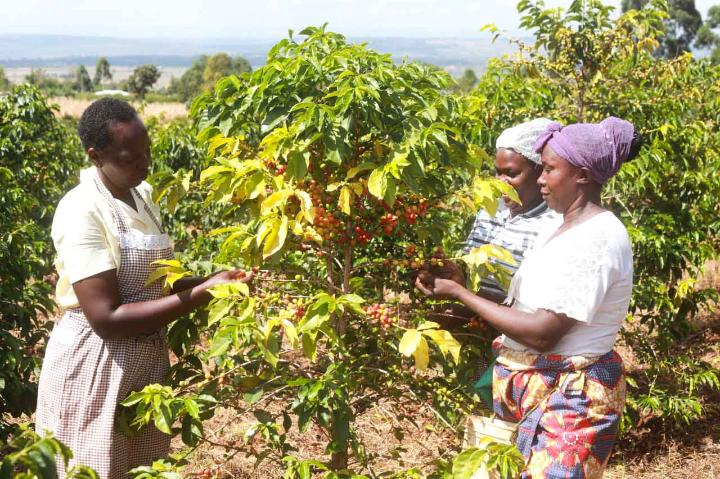
Ultimately, the future of both industries rests with the farmers. As KTDA’s ownership structure demonstrates—with 600,000 small-scale tea farmers as individual shareholders in 54 factory companies, which in turn own KTDA Holdings—the cooperative model offers a path to farmer empowerment .
The question is whether this model can deliver fair returns in an increasingly competitive global market.
Conclusion: From Colonial Crop to National Treasure
The story of coffee and tea in Kenya is the story of Kenya itself. It is a tale of colonial exploitation and African resistance, of independence and the struggle for economic freedom, of global markets and local livelihoods.
From the first coffee trees at Bura Mission in 1893 to the thousands of tonnes sold at the Nairobi Coffee Exchange today; from the experimental tea seedlings in Limuru in 1903 to the 66 KTDA factories serving 560,000 farmers—these crops have shaped the nation.
The spirit of those who fought for the right to cultivate their own land—the Tapsimate arap Borowos, the Mau Mau fighters, the cooperative pioneers—still echoes in the demands of farmers today for fair prices and just treatment.
As we explored in Why Are Kenya’s Youth Protesting? Understanding the Roots of Change, economic marginalisation remains a central grievance. Until coffee and tea farmers receive a fair share of the value they create, the struggle for economic justice will continue.
But there is also hope. Kenya’s coffee and tea are world-class products, sought after from Tokyo to New York. With the right policies, investment, and commitment to farmer welfare, these crops can continue to be not just Kenya’s economic backbone, but a source of pride and prosperity for generations to come.
Further Reading on Kenyan History
| Article | Link |
|---|---|
| A History of Land Ownership in Kenya | Read |
| Mau Mau Uprising in Kenya 1952-1960 | Read |
| Jomo Kenyatta: Power, Nationhood, and the Making of Postcolonial Kenya | Read |
| Kenya’s Colonial Administration 1920-1963 | Read |
| Africanising Capitalism: Kenya’s Gambit to Create a Black Bourgeoisie | Read |
| The Shifta War: Kenya’s Forgotten Border Conflict | Read |
| The History of Nairobi | Read |
| The History of Kericho | Read |
Comments Section Discussion Questions
- Does your family have a history with coffee or tea farming? Share your story below.
- Do you think today’s farmers receive a fair price for their crops? What should change?
- Should Kenya focus on exporting raw beans/leaf or invest more in local processing and value addition?
- How can the cooperative system be improved to better serve smallholder farmers?
Last Updated: March 2026
