
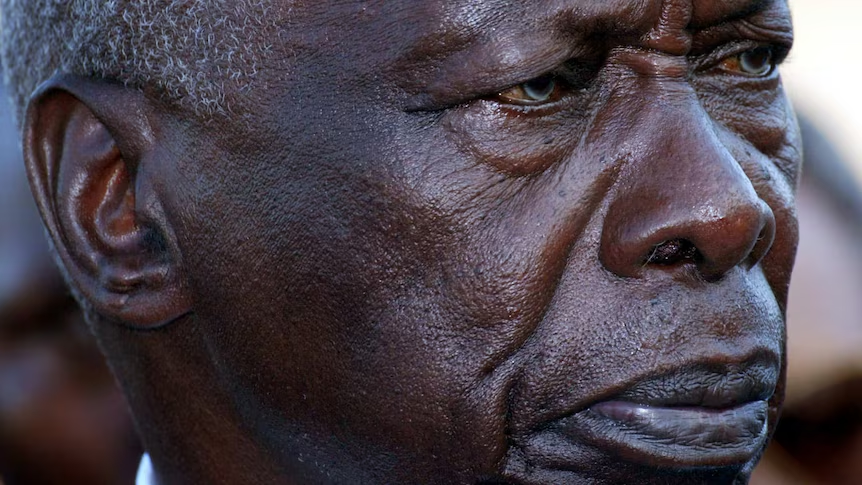
On 22 August 1978, a schoolteacher’s son from the Tugen hills of Baringo took the oath of office as Kenya’s second president. The man who had spent eleven years as vice president — mocked by the Kikuyu elite as “a passing cloud,” dismissed as a political placeholder incapable of independent leadership — would go on to govern Kenya for twenty-four years. He would survive an armed coup attempt, outlast the Cold War, preside over some of the worst political repression in independent Kenya’s history, and then — in the end — hand over power peacefully to an opposition candidate, something that almost nobody had predicted he would do.
Daniel Toroitich arap Moi (2 September 1924 – 4 February 2020) was the most consequential Kenyan political figure after Jomo Kenyatta, and the least understood. He was simultaneously a genuine champion of minority communities, a patron who rewarded loyalty with extraordinary generosity, and a president under whose watch political prisoners were tortured, elections were rigged, and billions of shillings were looted from the national treasury. He was, as the Kenyan political commentator John Kamau put it, “a professor of politics” — a man who understood power at a molecular level and manipulated it with a subtlety that his public persona of simple rural piety consistently disguised.
This is his story.
Origins: Baringo, Bereavement, and the Mission School
Moi was born in the village of Kurieng’wo in the Sacho division of Baringo, in the hills between Lake Baringo and the Kerio Valley — country that is beautiful, dry, and remote. He was the fifth child of Kimoi arap Chebii, a small-scale farmer of the Tugen sub-group of the Kalenjin people. His father died in 1928, when Moi was four years old. His mother Kabon largely disappears from the historical record at this point. His elder brother Tuitoek became his guardian.
In 1934, when Moi was ten, he was among the boys from Sacho location selected to attend the new Africa Inland Mission school at Kabartonjo — a walk of 28 miles from his village, a distance he made on foot. The colonial government had denied him access to Alliance High School, Kenya’s premier African secondary institution, a decision that would shape his lifelong ambivalence about educational gatekeeping and his later investment in Moi University and school construction across Kenya. He converted to Christianity at the mission school and took the name Daniel — a name whose Old Testament resonance, the prophet who survives the lions’ den through faith and wisdom, he would later invoke with characteristic self-awareness.
He trained as a teacher at Tambach Teachers Training College from 1945 to 1947, then at Kagumo Teacher’s College. He taught at several schools before becoming headmaster of the Government African School in Kabarnet in 1954. Teaching gave him two things that defined his political career: an intimate knowledge of rural Kenya’s educational inadequacies, and a pedagogical conception of leadership — the idea that the leader’s role was to instruct, correct, and guide, and that the relationship between leader and citizen was fundamentally parental.
Into Politics: KADU, Majimbo, and the Lancaster House Conferences
In 1955, Moi entered politics as a nominated member of the Legislative Council representing the Rift Valley — one of the first eight Black Africans elected to the LegCo. He was quiet, watchful, and clearly ambitious, though he expressed his ambition in the register of community service rather than personal advancement.
As Kenya moved toward independence, the dominant political fault line was between KANU — the Kenya African National Union, led by Jomo Kenyatta and drawing its strength from the Kikuyu and Luo — and the smaller communities who feared that independence under KANU would simply replace British domination with Kikuyu domination. In 1960, Moi co-founded the Kenya African Democratic Union (KADU) with Ronald Ngala, building a coalition of smaller groups — Kalenjin, Luhya, Maasai, Mijikenda — around the concept of majimboism: a federal constitution that would protect regional and ethnic autonomy against the power of a centralised national government.
KADU’s majimbo policy was not simply tribal defensiveness. It reflected a genuine and prescient concern about what majority-rule independence might mean for communities that would always be minorities in national politics. The White Highlands land question made this concrete: if Kikuyu politicians controlled the post-independence land redistribution, the Kalenjin and other Rift Valley communities who had also lost land to colonial settlement would receive nothing. Moi spent the Lancaster House Conferences of 1960 and 1962 arguing for constitutional protections that would make this theft impossible.
He lost. KANU’s numerical strength and British preference for a unitary state prevailed. When Kenya became independent on 12 December 1963, the constitution contained some regional provisions but nothing strong enough to prevent a determined central government from dismantling them. Within months of independence, Kenyatta began doing exactly that. KADU, recognising the futility of opposition against an entrenched government with a parliamentary majority, dissolved itself and joined KANU in November 1964. Moi dissolved his own creation.
It was the defining pragmatic decision of his political life. He had built KADU as a vehicle for minority protection. He dissolved it in exchange for incorporation into the ruling party — and a calculation that minority interests were better served from inside power than from outside it. Kenyatta rewarded him with the Ministry of Home Affairs in 1964, and in 1967 appointed him Vice President following the resignation of Joseph Murumbi. The calculation had worked.
Vice President: The Eleven-Year Apprenticeship
Moi served as vice president from 1967 to 1978 — eleven years in a role that carried almost no real power and considerable personal danger. Kenyatta’s inner circle, dominated by what was called the “Kiambu Mafia” — senior Kikuyu politicians from Kenyatta’s home district who wanted the presidency to remain within their community — regarded Moi with contempt. They called him a “passing cloud.” They called him a “limping sheep that could not lead other sheep to the pasture.” They mounted sustained campaigns to have him removed from the vice presidency and replaced with a more pliable figure. On at least one occasion, the powerful police commandant James Mungai publicly humiliated Moi in ways that amounted to provocation — including, according to his authorised biographer Andrew Morton, slapping him in the face in front of Kenyatta at State House in Nakuru.
Moi endured. He developed what he would later describe as a philosophy of patience and what his critics would later describe as a talent for concealment. He was present at every state function, quiet and deferential. He built relationships with rural politicians, church leaders, and ordinary Kenyans through the personal accessibility that Kenyatta — increasingly reclusive and imperial in his later years — had abandoned. He became, paradoxically, more popular with ordinary Kenyans the more the Kikuyu elite dismissed him.
When Kenyatta died on 22 August 1978, the constitutional succession mechanism activated automatically. There was no coup, no contested election, no crisis. Moi took the oath of office as Kenya’s second president. The passing cloud had become the sun.
The Nyayo Years: Phase One — Peace, Love and Unity (1978–1982)
The first years of Moi’s presidency were, by the standards of what followed, relatively open. He released political prisoners inherited from the Kenyatta era, including Oginga Odinga. He visited every part of the country — the contrast with Kenyatta’s late-period imperialism was real and remarked upon. He introduced free milk in primary schools. He launched a philosophy he called Nyayo — “footsteps” in Swahili, a commitment to follow in Kenyatta’s developmental legacy while adding “peace, love and unity” as the guiding principles of his own administration.
The word Nyayo would eventually become one of the most politically loaded terms in Kenyan history — appearing on buildings, buses, currency notes, and the notorious Nyayo House detention facility in Nairobi where political prisoners were held in basement water chambers. But in 1978 it genuinely expressed a spirit of national reconciliation that had some purchase on reality.
Moi was also managing the aftermath of the Kenyatta succession carefully. The Kikuyu elite who had expected to recover power through their candidate, Attorney General Charles Njonjo, found themselves outmanoeuvred. Moi promoted Njonjo — for a time — while building his own support base. He began placing Kalenjin loyalists in key positions. He cultivated the security services with a care that proved prescient.
The 1982 Coup Attempt and the Turn to Authoritarianism
On 1 August 1982, elements of the Kenya Air Force led by Senior Private Hezekiah Ochuka and backed by university students launched an armed coup attempt. For several hours they controlled the Voice of Kenya radio station and announced Moi’s overthrow to the country. Army units loyal to Moi — who escaped to Nakuru — eventually suppressed the coup. The fighting in Nairobi killed over 150 people. Ochuka was eventually tried and hanged.
The attempted coup was the pivot point of Moi’s presidency. Before it, his consolidation of power was gradual and partially disguised. After it, consolidation became systematic and undisguised. In its immediate aftermath, Moi made Kenya a de jure one-party state — it had been de facto since the banning of the Kenya People’s Union in 1969, but now the constitution was formally amended to make KANU the only legal political party. The University of Nairobi was closed. The Law Society of Kenya was suppressed. The independent press was increasingly harassed.
The dismissal of Charles Njonjo in 1983 — accused of plotting against the government, stripped of his offices, and subjected to a public judicial commission that was widely understood as a show trial — demonstrated that Moi would tolerate no rivals regardless of their former usefulness. The Kiambu Mafia that had tormented him as vice president was methodically removed from positions of power.
Kenya’s political history from 1982 onward was shaped by the instruments Moi built to maintain power: the provincial administration as a surveillance and enforcement network; KANU branches as patronage mechanisms; the queue voting system introduced in 1988 that made secret balloting impossible and allowed officials to monitor who voted for whom; the systematic use of detention without trial against critics and opponents. The Nyayo House basement — where detainees were held in water-filled cells, subjected to sleep deprivation, and beaten — became the symbol of state terror that his philosophy of “peace, love and unity” was powerless to contradict.
The people who passed through it included Raila Odinga, Kenneth Matiba, Koigi wa Wamwere, Gitobu Imanyara, and many others. Their testimony, when they were eventually released, was consistent and damning.
The Economy: Goldenberg and the Architecture of Theft
Moi inherited an economy that had grown reasonably during the Kenyatta years, underpinned by coffee and tea exports, tourism, and Cold War aid flows to a strategically important ally. His presidency saw all of these deteriorate.
The most notorious episode of economic mismanagement was the Goldenberg scandal — a scheme in the early 1990s in which a company owned by businessman Kamlesh Pattni was paid government export compensation on gold and diamonds that Kenya does not produce in commercial quantities. The government paid out an estimated KSh 58 billion (equivalent to roughly 10% of Kenya’s GDP at the time) in fictitious export subsidies. The scandal implicated senior figures in the Moi administration, including, eventually, Moi himself, though no criminal convictions resulted from the judicial commission that investigated it after his departure from power.
Goldenberg was the largest but not the only instance. Systemic corruption permeated procurement, land allocation, and the parastatals that had been the productive core of the economy. International donors — whose Cold War-era indulgence of Moi had allowed his authoritarianism to develop relatively unchallenged — withdrew balance of payments support in 1991, demanding political and economic reform. The pressure worked, in the narrow sense: Moi legalised multiparty politics in 1991.
Multiparty Politics: Winning Dirty, Losing Eventually
The reintroduction of multiparty elections in Kenya produced three elections under Moi: 1992, 1997, and 2002. The first two he won — but in circumstances that independent observers and the opposition refused to accept as legitimate. The 1992 election was preceded by ethnic violence in the Rift Valley that displaced hundreds of thousands of Kikuyu, Luo, and Luhya residents from land that Kalenjin communities were encouraged to reclaim. The connection between the violence and the elections — whether the administration organised it or simply failed to stop it — was disputed but widely presumed.
Moi won 36% of the vote in 1992, a plurality in a fragmented opposition field. He won again in 1997 under similarly contested conditions. By this point his presidency was internationally isolated, domestically unpopular in the urban centres where opposition was concentrated, and sustained primarily by the patronage networks he had built in rural areas and among smaller ethnic communities who still feared Kikuyu political dominance more than they feared Moi.
In 2002, constitutionally barred from a third term, Moi chose Uhuru Kenyatta — son of Jomo Kenyatta — as KANU’s candidate. The choice alienated large sections of KANU itself, which split. The opposition united behind Mwai Kibaki under the National Rainbow Coalition. On 27 December 2002, Kibaki won by a landslide. Moi conceded and left office on 30 December 2002 — peacefully, constitutionally, as he had promised he would.
That handover — genuinely peaceful, genuinely constitutional — was not an inevitability in the context of African political transitions of the era, and it deserves acknowledgment alongside the abuses that preceded it.
Regional Diplomacy: The Peace Broker
One dimension of Moi’s presidency that is consistently underweighted in accounts focused on domestic repression is his role in regional diplomacy. Kenya under Moi became a genuine hub for peace negotiations across East Africa. He mediated in Sudan, in Somalia, and in Uganda, hosting talks in Nairobi that contributed — sometimes over many years of grinding process — to agreements that reduced violence in the region. The 2005 Sudan Comprehensive Peace Agreement that eventually separated South Sudan from Sudan had roots in negotiations hosted in Nairobi during the Moi and post-Moi periods.
His regional diplomacy reflected a consistent strategic vision: Kenya’s stability and influence depended on a stable neighbourhood, and Kenya was better positioned to shape that neighbourhood through active engagement than through isolation. The instability in Uganda under Idi Amin, the civil wars in Sudan and Somalia, and the genocides in Rwanda and Burundi all created refugee flows and border pressures that Kenya directly experienced. Moi’s personal investment in these processes was real, even if the domestic governance that funded the diplomatic credibility was deeply compromised.
The Moi Development Legacy
Moi’s patronage politics produced an uneven but real development footprint. Moi University, founded in Eldoret in 1984, was the first public university outside Nairobi — a deliberate act of regional investment that transformed the North Rift’s higher education landscape. The Moi Teaching and Referral Hospital in Eldoret became Kenya’s second largest referral facility. Road construction, school building, and rural electrification programmes in the Rift Valley and other KANU strongholds were substantial, even if they were explicitly instruments of political patronage rather than equitably distributed public investment.
The Nyayo Bus Service democratised urban transport in Nairobi and other cities during the 1980s. The Nyayo car project — an attempt to build a Kenyan-designed vehicle — was an expensive failure, but it reflected genuine ambition for industrial self-sufficiency. The construction of Kenyatta International Conference Centre and other Nairobi landmarks continued the capital investment programme that the Nyayo era in Nairobi photographs document.
The development was real. The corruption was also real. Both were true simultaneously, and the record cannot be honestly assessed by emphasising one and ignoring the other.
After Power: Retirement and Death
Moi retired to his farm at Kabarak in Nakuru County — a sprawling estate that had been assembled over his years in power and that became, in retirement, the centre of a private philanthropic and religious activity that seemed genuine to those who knew him. He remained active in church affairs, established a foundation for education, and periodically commented on national politics — usually supportively of Uhuru Kenyatta when he eventually won the presidency in 2013.
He was never prosecuted. The Goldenberg Commission recommended action against several individuals including him; none resulted in charges. The post-Moi Truth, Justice and Reconciliation Commission documented the abuses of his era; its recommendations were largely ignored. This impunity was not unique to Kenya, but it meant that the reckoning his victims deserved never arrived.
Moi died on 4 February 2020, in Nairobi, aged 95. He was buried at Kabarak after a state funeral attended by heads of government from across Africa. He was remembered by his supporters as a leader who held a fractious, diverse nation together across 24 difficult years. He was remembered by his opponents as the man whose basement water chambers and rigged elections and looted billions set back Kenya’s democratic development by a generation. Both memories are part of the truth.
Key Facts at a Glance
- Born: 2 September 1924, Kurieng’wo village, Sacho division, Baringo County
- Died: 4 February 2020, Nairobi, aged 95
- Ethnic group: Tugen (sub-group of the Kalenjin)
- Religion: Christianity (Africa Inland Church)
- Education: Africa Inland Mission School; Tambach Teachers Training College; Kagumo Teacher’s College
- Occupation before politics: Teacher and headmaster, 1945–1955
- Entered politics: 1955 (nominated to Legislative Council)
- Co-founded KADU: 1960
- Minister for Home Affairs: 1964–1967
- Vice President: 1967–1978
- President: 22 August 1978 – 30 December 2002
- Duration: 24 years — Kenya’s longest-serving president
- Key events: 1982 coup attempt; 1982 one-party state amendment; 1991 multiparty legalisation; Goldenberg scandal; 1992, 1997 elections; 2002 peaceful handover
- Legacy institutions: Moi University (Eldoret), Moi Teaching and Referral Hospital
Further Reading on This Site
- The Kalenjin People — the community Moi came from and the identity he helped consolidate politically
- Twelve Years of Nyayo: Nairobi 1978–1990 in Photographs — a visual history of the first phase of his presidency
- The History of Eldoret — the city where Moi was born and which he transformed through Moi University and the referral hospital
- 30 Images from Kenya’s 1982 Failed Coup — the coup attempt that changed the character of his presidency
- The Birth and Evolution of Kenya’s Multiparty Democracy — the political context of his forced opening in 1991
- Nicholas Biwott: The Rise and Fall of Kenya’s Total Man — Moi’s most powerful and most controversial ally
- George Saitoti — Moi’s vice president and a key figure in the late Nyayo era
- Jomo Kenyatta — the president Moi succeeded and whose system he inherited
- Mwai Kibaki — the man who defeated Moi’s chosen successor in 2002
- Kenyan Vice Presidents from Independence — Moi’s place in the succession story
- History of Kenya: A Timeline — the full context of Moi’s era in Kenya’s political history
- Majimbo Dreams: Kenya’s Lost Federalism — the KADU federalism project Moi championed at independence
