Blood on the Rift: The Iloikop Wars and the Fall of Maasai Power
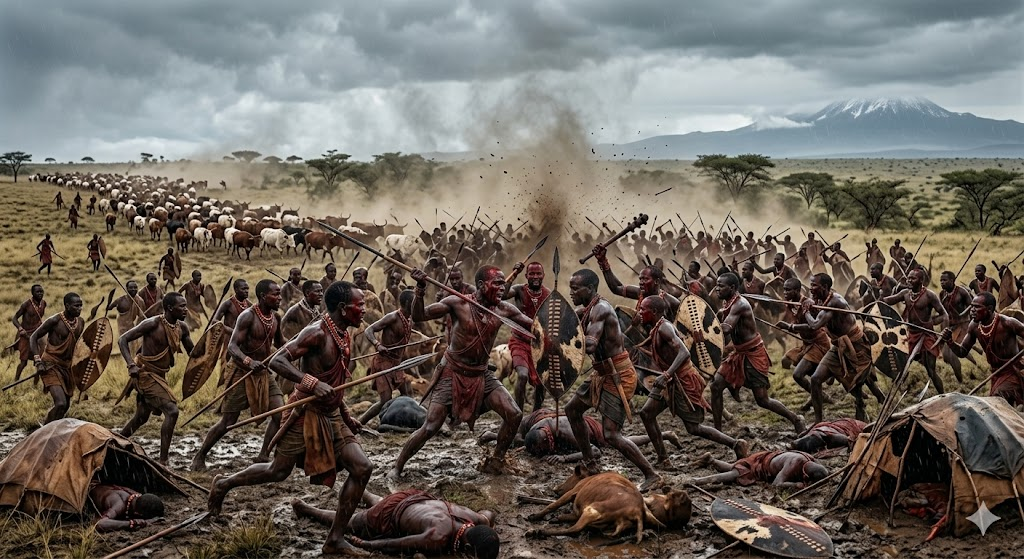
Between roughly 1830 and 1880, a series of wars tore through the heart of the Maasai world. These were not raids on neighbouring peoples. They were internal — Maasai fighting Maasai, section against section, pastoral against agropastoral — and they were fought with a ferocity that astonished early European observers who arrived expecting to find … Read more
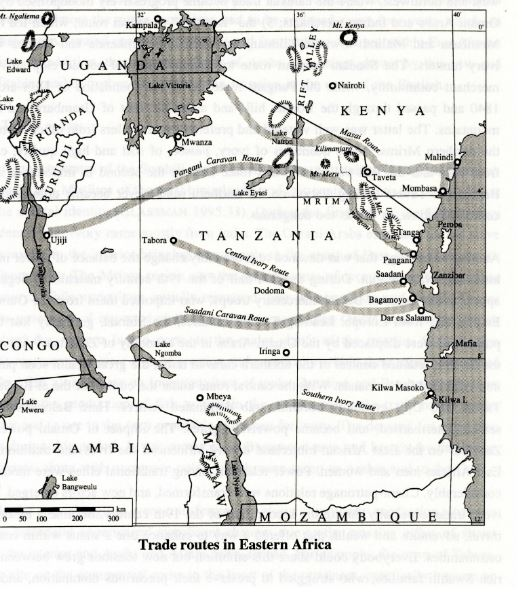
Threads of Ivory, Iron, and Identity: The Long-Distance Trade Networks of Interior Kenya

For centuries before the colonial period, the peoples of what is now Kenya were not isolated. They were integral parts of a vast, dynamic economic web that stretched from their inland homesteads to the stone cities of the Swahili coast and beyond, across the Indian Ocean. This long-distance trade was more than just an exchange … Read more

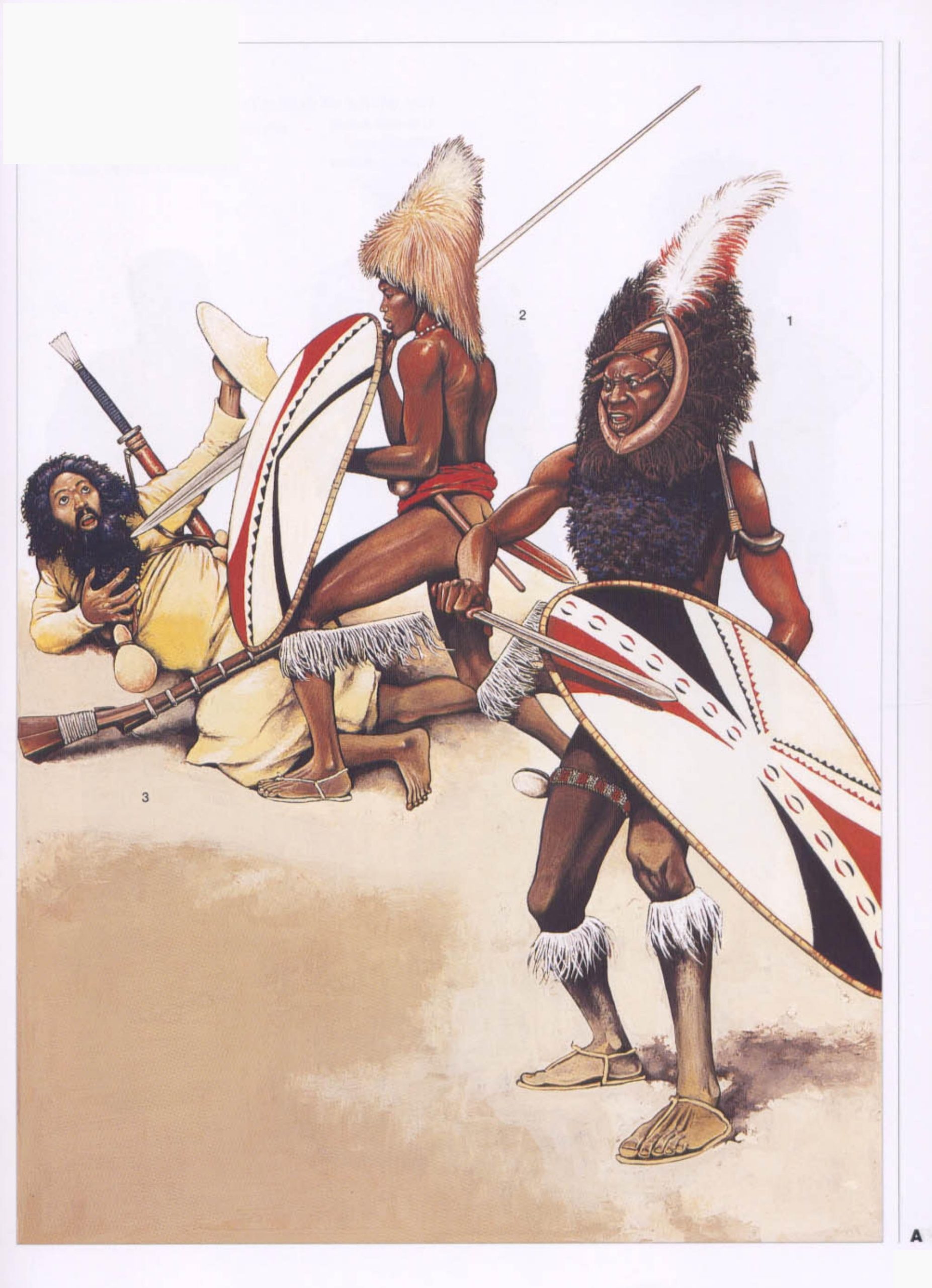
Lords of the Plains: The Maasai at Their Peak

The Maasai at Their Peak — kenyanhistory.com kenyanhistory.com 19th Century Kenya  ·  Pre-colonial Warfare For two centuries, the Maasai ruled the Rift Valley by fear alone. Every caravan detoured around them. Every neighbouring people built their villages on high ground. This is how they did it — and how it ended. Long Read 1650–1900 ~2,800 … Read more

The First Peoples of the North: Kenya’s Cushitic Inheritance and Its Long Erasure

The Cushitic Peoples of Northern Kenya — kenyanhistory.com kenyanhistory.com Pre-colonial History  ·  Northern Kenya Before the Kikuyu, before the Luo, before the British redrew the map — the Cushitic peoples shaped the languages, customs, and very bones of Kenyan civilisation. Their story has been buried twice: first by conquest, then by scholarship. Long Read Pre-colonial … Read more

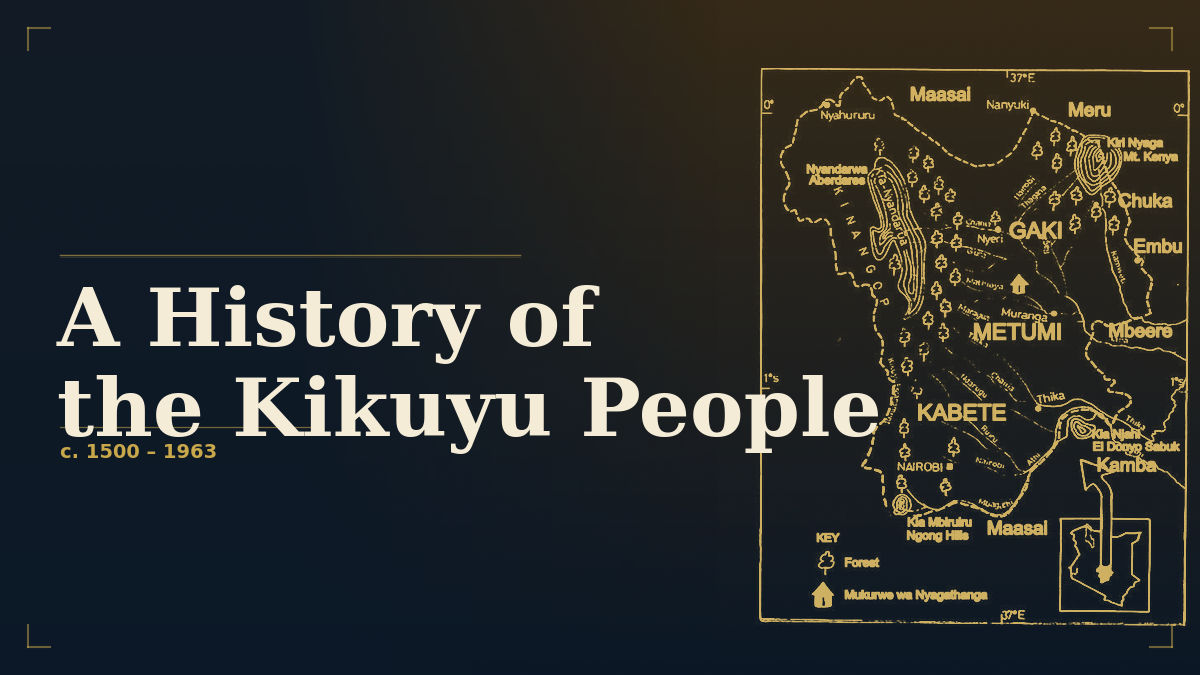
A History of the Kikuyu People

Kenya’s Largest Ethnic Group, from Origins to Independence The Kikuyu — also written Gikuyu, and known to themselves as the Agikuyu — are the largest ethnic group in Kenya, accounting for roughly seventeen percent of the country’s population. They inhabit the fertile Central Province highlands, spreading across the slopes of the Aberdare Range and around … Read more

Who Really Paid for Colonial Kenya?

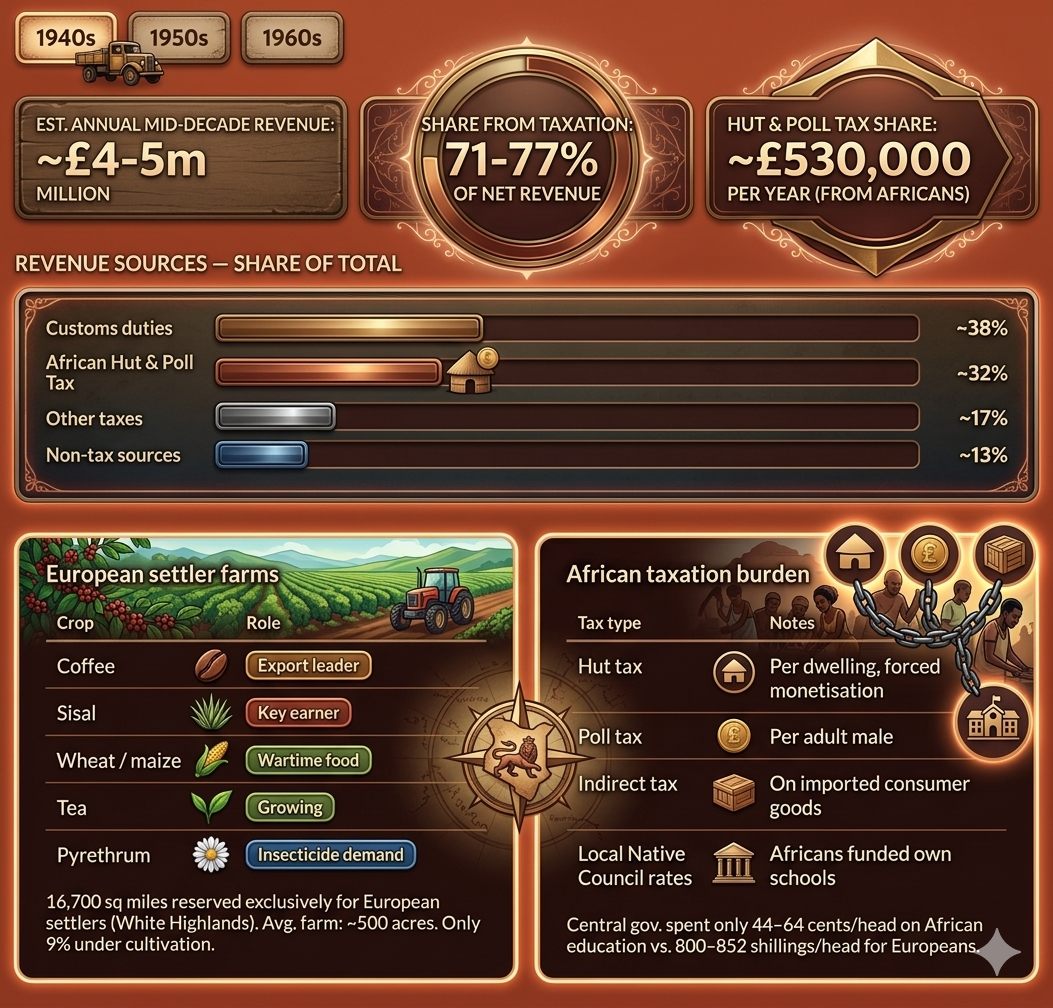
Revenue, race, and the great tax paradox — how African hut taxes bankrolled European settler privilege from the 1940s to independence. By the KenyanHistory.com  Between the 1940s and independence in 1963, Kenya’s colonial government collected millions of pounds in revenue each year. The popular narrative credited European settlers — with their sprawling coffee estates and sisal … Read more

A History of Kenya’s Power Grid: From a Sultan’s Palace to Universal Access

Key Milestones at a Glance Era Key Developments Capacity Milestone 1875–1908 Sultan’s generator in Zanzibar; first private companies in Mombasa and Nairobi Island lighting 1922–1954 Merger forms EAP&L; first regional grid; Owen Falls Dam connection Regional coordination 1963–1983 Post-independence expansion; national grid takes shape 102 MW at independence  1981–1997 Olkaria I geothermal; KenGen formed; diversification … Read more

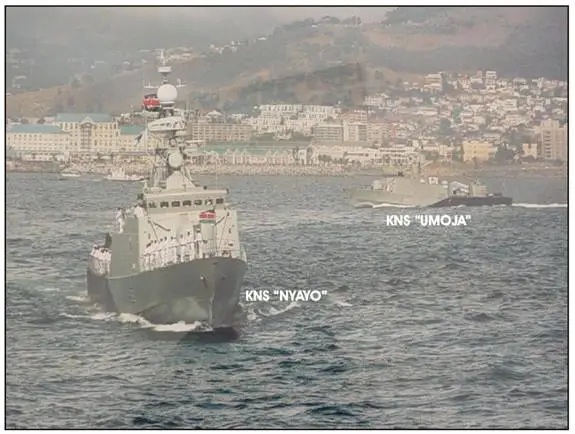
A History of the Kenya Navy and Maritime Security: From Colonial Harbours to Regional Power

Key Milestones at a Glance Era Key Developments Strategic Context WWII (1939–1945) Kilindini Harbour becomes British Eastern Fleet base; SS Khedive Ismail tragedy Imperial defence against Japan 1950s Royal East African Navy (REAN) established Colonial coordination 1964 Kenya Navy formally inaugurated Post-independence sovereignty 1967–1972 First Kenyan officers trained; indigenisation of command Nation-building 1970s–1980s Acquisition of missile boats; … Read more