
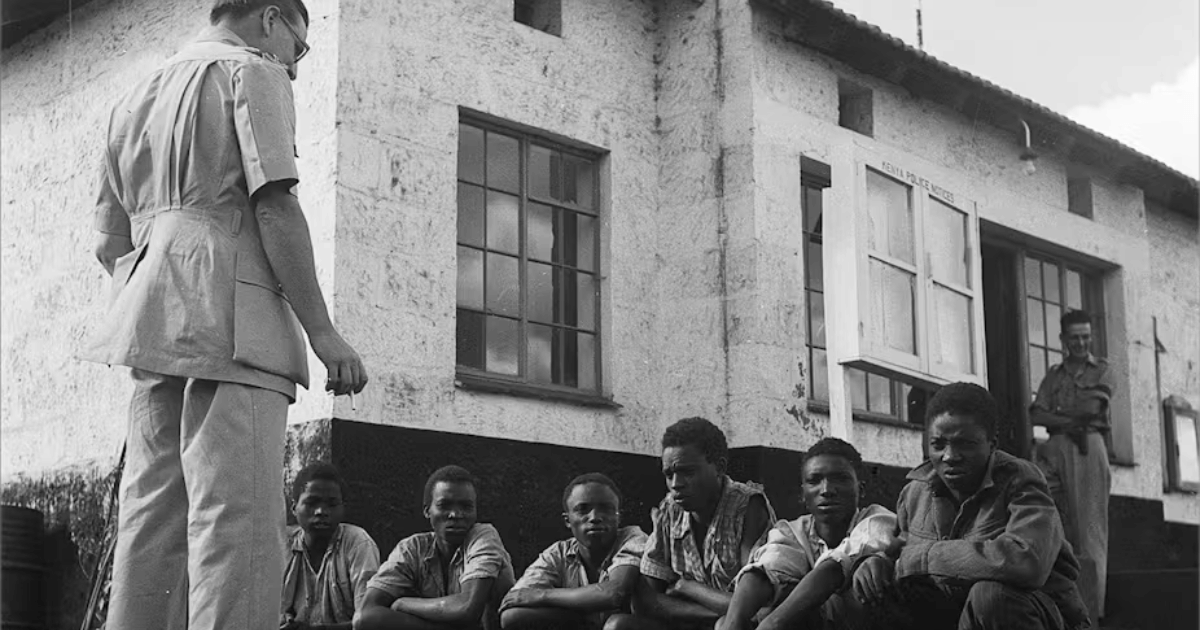
Origins, Impact, and Resistance — A Complete History
British colonial rule in Kenya lasted 68 years — from the declaration of the East Africa Protectorate in 1895 to independence on 12 December 1963. In that time, the colonial state dismantled pre-existing land systems, imposed forced labour, built a racially segregated economy, and generated resistance movements ranging from armed uprisings in the highlands to legal petitions in London. The consequences — land inequality, ethnic political divisions, and the suppression of alternative historical memory — have not been resolved in the six decades since independence.
This account draws on primary sources including the Colonial Office Annual Reports, and on academic scholarship including Richard Wolff’s The Economics of Colonialism (1974), Opolot Okia’s Communal Labor in Colonial Kenya (2012), Fabian Klose’s Human Rights in the Shadow of Colonial Violence (2013), and Cynthia Brantley’s The Giriama and Colonial Resistance in Kenya (1981).
Before the British: Kenya in the 19th Century
The land that became Kenya in 1895 was not an empty or ungoverned space. It was home to dozens of distinct peoples with sophisticated political, economic, and social systems. The Kikuyu farmed the central highlands in a complex system of clan-based land tenure. The Maasai grazed cattle across the Rift Valley under an age-set governance structure. The Luo fished and farmed along Lake Victoria’s shores. The Kamba ran long-distance caravan networks carrying ivory and goods between the interior and the coast. The Swahili and Arab communities had built Indian Ocean trading civilisations linked to Persia, India, and China for centuries.
The 19th century brought significant upheaval before the British arrived: a rinderpest epidemic in the 1890s devastated Maasai cattle herds; smallpox and drought compounded the crisis. East Africa’s long history of external contact had already brought Islam, new trade goods, and new diseases. The British did not encounter a pristine pre-modern landscape. They encountered peoples who had been managing complex, dynamic societies for centuries — and who would resist the colonial project with remarkable persistence.
How Colonial Rule Was Established in Kenya (1895–1920)
Was Kenya a British colony?
Yes — though the legal status changed over time. Britain first declared the region the East Africa Protectorate on 1 July 1895, nominally to protect trade routes and suppress the Arab slave trade. In 1920, the interior was formally annexed as a Crown Colony — the Colony of Kenya — while the coastal strip remained technically a protectorate leased from the Sultan of Zanzibar. Kenya remained a British colony until independence on 12 December 1963, giving it 68 years of direct colonial rule.
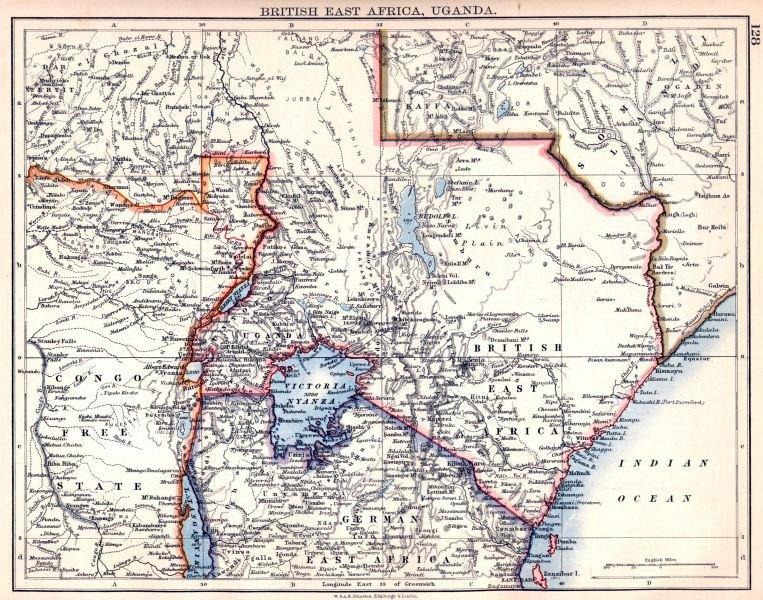
The establishment of British authority was driven by a combination of strategic and economic motives. The primary strategic concern was control of the headwaters of the Nile — Britain feared that a rival European power controlling the Upper Nile could destabilise Egypt and threaten the Suez Canal route to India. As Richard Wolff’s economic history demonstrates, by the 1870s British iron and steel industries supplying the domestic railway boom were looking outward for new markets. Kenya’s railway represented both a strategic and commercial opportunity: British-built, using British materials, connecting British-controlled territory.
Indirect rule and the remaking of African authority
The British governed through a system of indirect rule — administering through local chiefs, many of whom were appointed by the colonial government rather than recognised through existing traditional processes. This disrupted indigenous political structures in ways that were both practical and deliberate. By creating a class of chiefs dependent on colonial patronage, the British ensured that local authorities had incentives to enforce colonial policies — tax collection, labour recruitment, and the suppression of dissent.
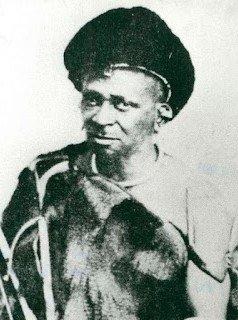
Some chiefs — like Paramount Chief Koinange wa Mbiyu — accumulated significant wealth through colonial patronage. Others, like Koitalel arap Samoei of the Nandi, refused incorporation and led armed resistance. The colonial state’s selective use of traditional authority — legitimising compliant leaders while destroying resistant ones — fundamentally altered the political landscape of every community it touched.
The Uganda Railway and Its Consequences (1896–1901)
The Uganda Railway — 930 kilometres of track from Mombasa to Kisumu on Lake Victoria, built between 1896 and 1901 — was the single act that made Kenya’s colonisation possible. Without it, the interior was inaccessible at scale. With it, European settlers could reach the highlands, African produce could reach export markets, and the colonial military could move rapidly anywhere in the territory.
The British brought approximately 32,000 indentured labourers from India — mainly from Gujarat and Punjab — to build the line. Working conditions were brutal: malaria, dysentery, heat exhaustion, and lion attacks at Tsavo took a significant toll, and around 2,500 workers died during construction. Many survivors chose to remain in East Africa, becoming the foundation of the Kenyan Asian community.
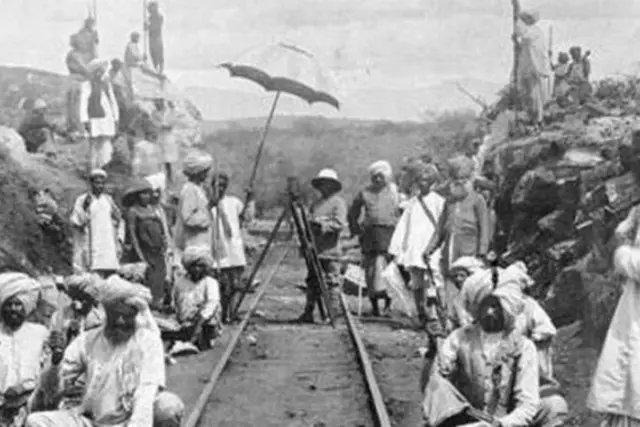
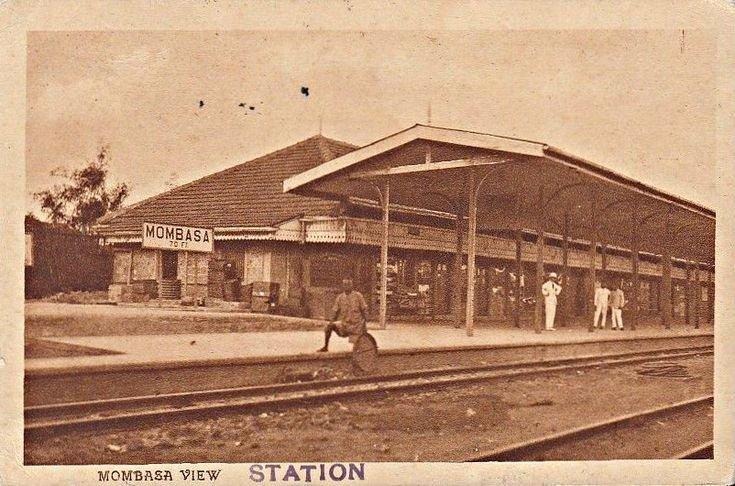
The railway also displaced African communities along its route, introduced new patterns of disease transmission, and created the towns — Nairobi, Nakuru, Kisumu — that became the nodes of the colonial economy. Nairobi itself was founded in 1899 as a railway depot on swampy land at mile 327 from Mombasa, growing within two decades into the colonial capital.
Land Alienation and the White Highlands
Land was the central issue of Kenyan colonialism — the act from which all other conflicts flowed. Between 1902 and the end of colonial rule, the British systematically dispossessed African communities of their most productive land through a combination of legal instruments, military force, and administrative manipulation.
The Crown Lands Ordinance and Native Reserves
The Crown Lands Ordinance of 1902 declared all “waste and unoccupied” land to be Crown property — a definition that conveniently encompassed fallow fields, grazing land, and any territory whose occupants had been temporarily displaced by the rinderpest epidemic. The practical effect was to make almost all land in Kenya theoretically available to the colonial government for alienation to European settlers.
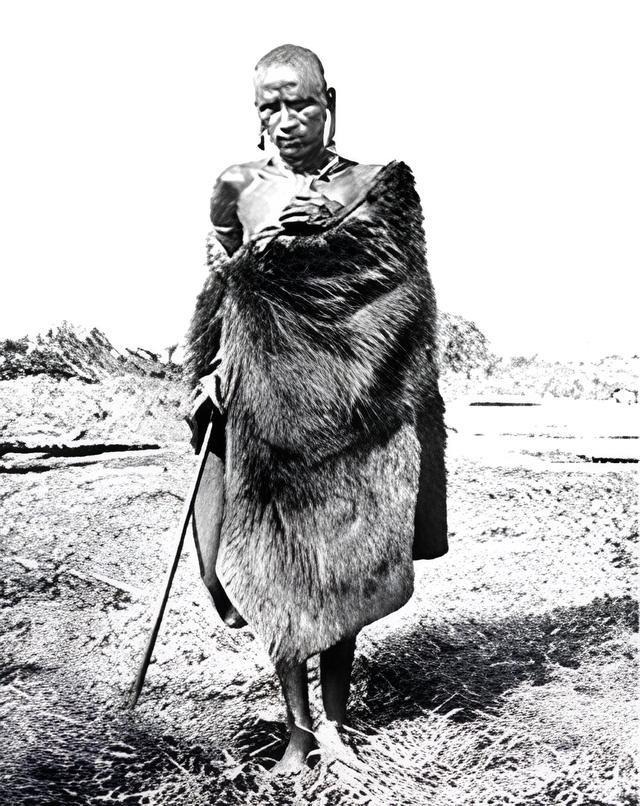
African communities were confined to Native Reserves — defined areas significantly smaller than their traditional territories, on land that was often less fertile than what had been taken. The Kikuyu lost large portions of the central highlands. The Maasai were moved twice — first in 1904 and again in 1911 — each time to less desirable land, through treaties described by later historians as conducted under duress.
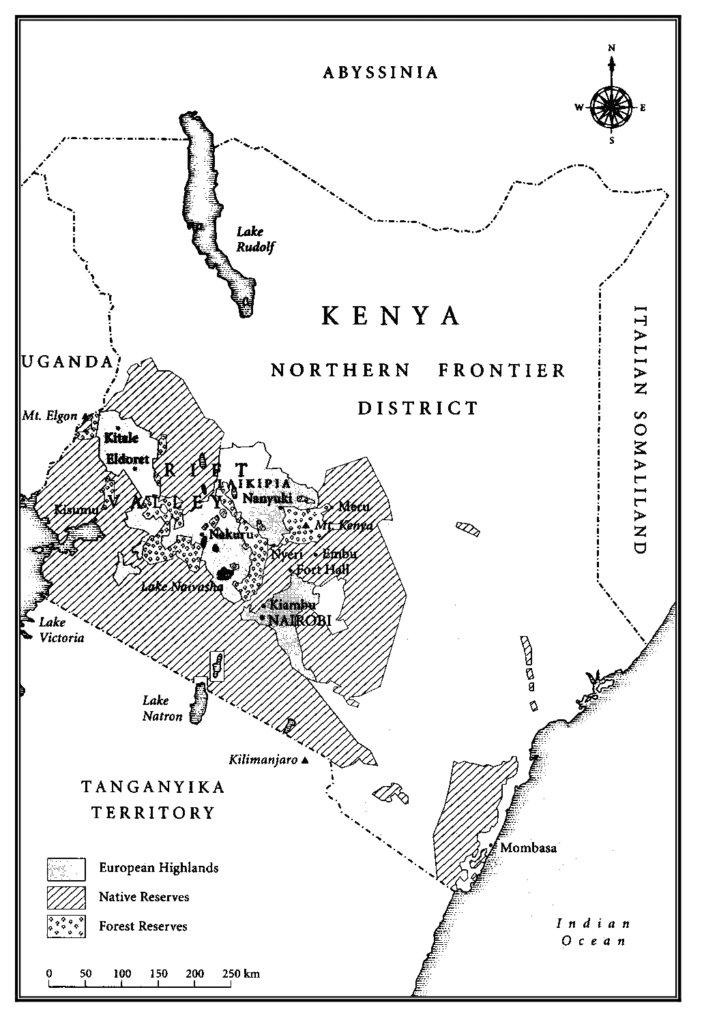
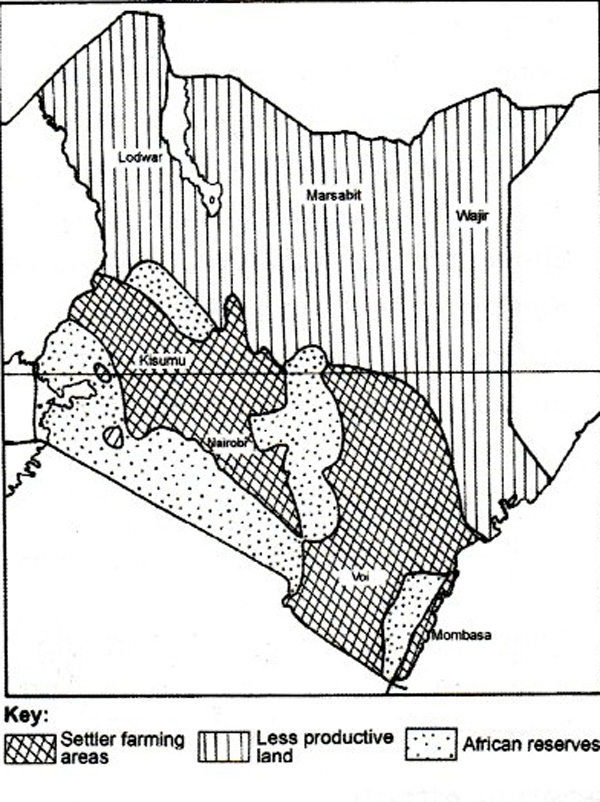
Colonial Kenya: the shaded areas show the European Highlands (hatched) reserved for white settlers, Native Reserves (stippled), and Forest Reserves. The concentration of European settlement in the central highlands is evident.
The White Highlands
The fertile highland zone between roughly 5,000 and 9,000 feet was designated a European preserve. By the 1920s, this White Highlands policy was formalised: Africans were legally prohibited from owning land in the zone, regardless of how long their communities had farmed it. By the 1930s, around 3,000 European farmers held some 7 million acres of Kenya’s best agricultural land.
The consequences were profound and lasting. Dispossessed Kikuyu became ahoi — tenant squatters — on the farms that had once been their own land, working for European settlers in exchange for limited cultivation rights. The Kikuyu Central Association, founded in 1924, made land restitution its central demand. The Mau Mau rebellion three decades later was, at its roots, a land war.
The Native Lands Trust Ordinance of 1938 and the Swynnerton Plan of 1954 — ostensibly reforms — largely served to consolidate existing inequalities rather than reverse them, primarily benefiting a small African elite while leaving the fundamental structure of land inequality intact (Kanogo, 1987).
Forced Labour, Taxation, and the Kipande System
If land alienation was the structural foundation of Kenya’s colonial economy, forced labour was its engine. The colonial state needed cheap African labour for settler farms, infrastructure projects, and government works. Since Africans had no reason to work for wages they did not need — they had land and subsistence economies of their own — the state created reasons through taxation and legal coercion.
Taxation as forced labour
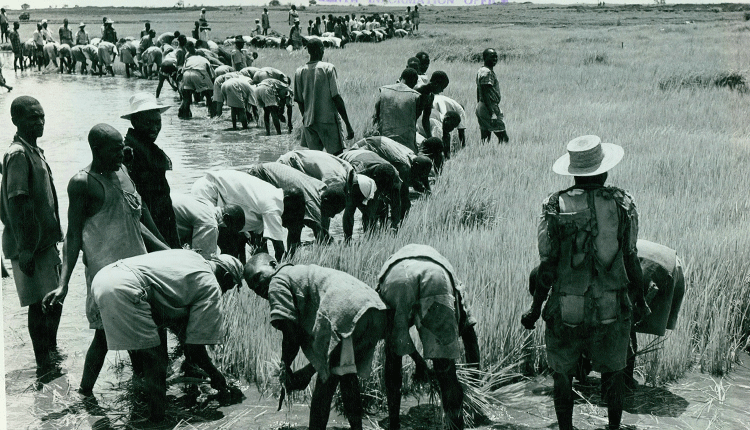
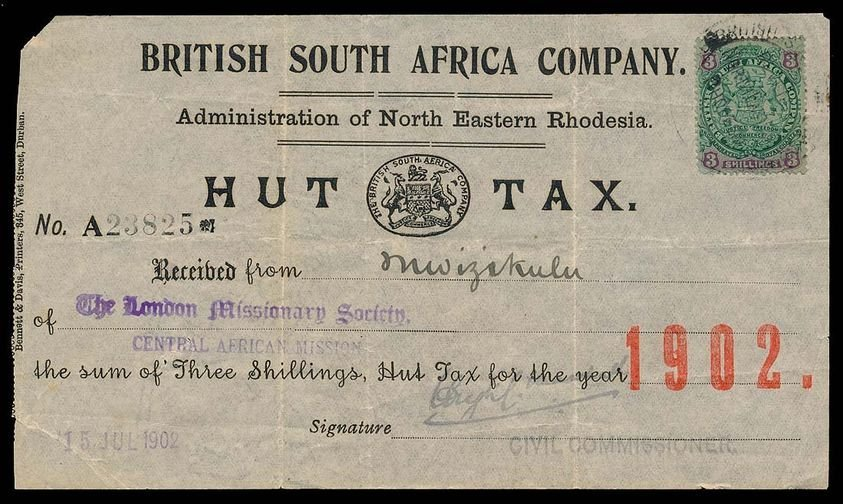
The Hut Tax of 1901 and the Poll Tax of 1910 required every African male to pay an annual cash levy — money that could only be obtained by working for wages in the colonial economy. As Opolot Okia’s research on communal labour demonstrates, the myth of the “lazy African” who needed to be compelled to work was the administrative justification for a coercive system deliberately designed to create wage dependency where none had previously existed.
Okia’s research reveals the cynicism of the “communal labour” framing: Africans laboured for no pay on government projects and were beaten, imprisoned, or fined if they refused. The colonial state normalised this coercion by wrapping it in the language of “community” and “tradition.” Ironically, communal labour was more akin to slavery than government labour recruitment, yet attracted less humanitarian criticism because it appeared to respect African custom.
The Kipande system
The Kipande System of 1919 introduced a compulsory identity document that every African male over 16 was required to carry at all times. The kipande contained the holder’s employment record, tax payments, and — critically — could only be cancelled or updated by an employer. An African who left a job without his employer’s consent could be arrested. The system bound workers to their employers with near-total legal control, functioning as a form of internal passport that restricted African movement throughout the colony.
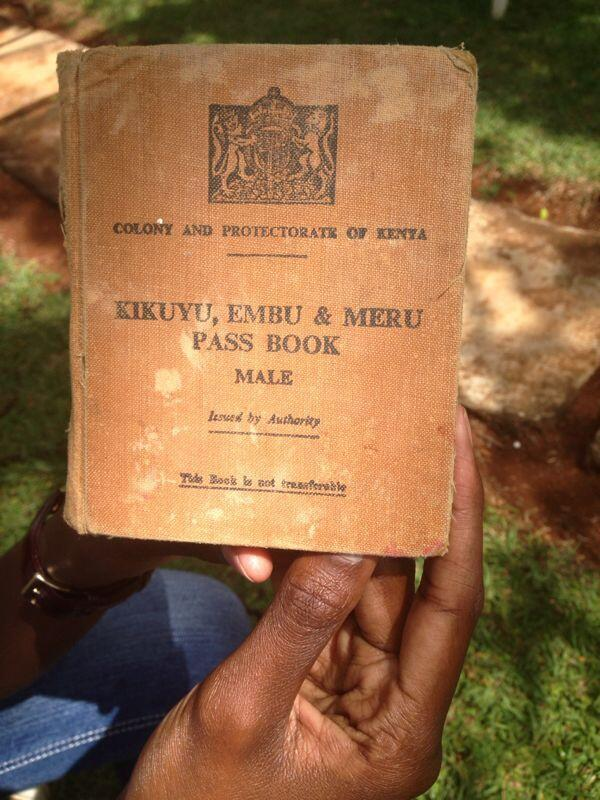
These labour conditions generated Kenya’s earliest organised labour movements. The Mombasa Dockworkers Strike of 1947 — Kenya’s first major mass industrial action — demonstrated that the colonial labour system had created exactly the kind of organised resistance it had been designed to prevent.
Racial Segregation and the Settler Economy
Kenya’s colonial economy was explicitly organised by race. Europeans owned the large farms and ran the major businesses. Asians dominated retail trade and the skilled artisan sector. Africans provided unskilled labour and were legally barred from most forms of economic advancement. This racial hierarchy was not incidental to colonialism — it was its structural purpose, ensuring that the wealth generated by African land and African labour flowed primarily to European settlers and to Britain.
Urban areas were racially segregated through pass laws and residential zoning. African workers in Nairobi lived in designated locations — Pumwani, Eastleigh, Mathare — separate from European and Asian residential areas. Movement after curfew required a pass.
The 1948 Colonial Annual Report reveals the stark wage differential that sustained this system. European clerks earned £10–15 per week; senior European engineers earned £27 per week. African labourers — who constituted the overwhelming majority of the workforce — earned wages far below this. The report’s clinical language, recording African adult male labour statistics in terms of available “able-bodied” units rather than individuals with rights, is itself evidence of the dehumanising framework of colonial administration.
Chloe Campbell’s research on eugenics in colonial Kenya adds a further dimension: a group of British doctors operating in Kenya between the wars actively developed racial pseudo-science to justify segregation and differential treatment. Their work — using Kenya’s prisons and psychiatric institutions as “laboratories” — found support from prominent British scientists before Nazi adoption of eugenics brought it into disrepute.
Education Under Colonial Rule
Education was one of the most consequential — and most contested — arenas of colonial policy. European schools prepared settlers’ children for administrative and commercial roles, while African education was confined largely to missionary schools offering basic literacy, agricultural training, and Christian instruction.
The battle for control of African education between missionaries, settlers, and the colonial government was one of the colonial era’s most revealing conflicts. Settlers wanted Africans educated just enough to be useful workers and no more. Missionaries wanted conversion and basic literacy. The Kikuyu Independent Schools movement of the 1930s, which established African-run schools outside the missionary network, became a major vehicle for nationalist consciousness.
When the colonial government moved to suppress independent schools in 1952 during the Emergency, it confirmed what Kikuyu educators had always suspected: that African-controlled education was considered a political threat.
Early Armed Resistance (1895–1920)
African resistance to British colonialism began immediately and never fully stopped. It took many forms — armed uprisings, passive non-compliance, flight from reserves, and cultural assertion — and involved communities across the country. The British described these resistances as “disturbances” or “punitive expeditions,” framing them as policing operations rather than as responses to invasion and dispossession.
The Nandi Resistance (1895–1906)
The Nandi of the Rift Valley mounted the most sustained armed resistance to colonial rule in Kenya. Under Koitalel arap Samoei, their spiritual and military leader, the Nandi conducted a decade-long campaign of raids, ambushes, and sabotage that significantly disrupted railway construction and settler expansion. The resistance ended in 1905 only when Koitalel was assassinated by the British commanding officer at a staged peace meeting — shot during what was presented as a handshake. The Nandi were subsequently confined to a reserve and their cattle confiscated as collective punishment.
The Giriama Rebellion (1913–1914)
The Giriama of the coastal hinterland resisted colonial incorporation through economic self-sufficiency and deliberate non-compliance. Cynthia Brantley’s research shows that the Giriama were prosperous farmers and traders whose independence made them unattractive to plantation developers needing cheap labour. When the colonial government moved to force the Giriama into the labour market in 1912–13, the result was a rebellion led by Mekatilili wa Menza — one of the few women at the centre of a major anti-colonial uprising in East African history.
The British response was punitive: their forces burned the Giriama’s sacred kaya forests, confiscated livestock, and forcibly relocated the community southward. The kaya forests that survived have since been recognised as UNESCO World Heritage Sites.
Political Mobilisation (1920s–1940s)
As armed resistance was systematically crushed, Africans turned to political organisation — petitions, associations, newspapers, and the emergent trade union movement. The shift was not from resistance to accommodation: it was a tactical adaptation to conditions in which armed resistance had become too costly.
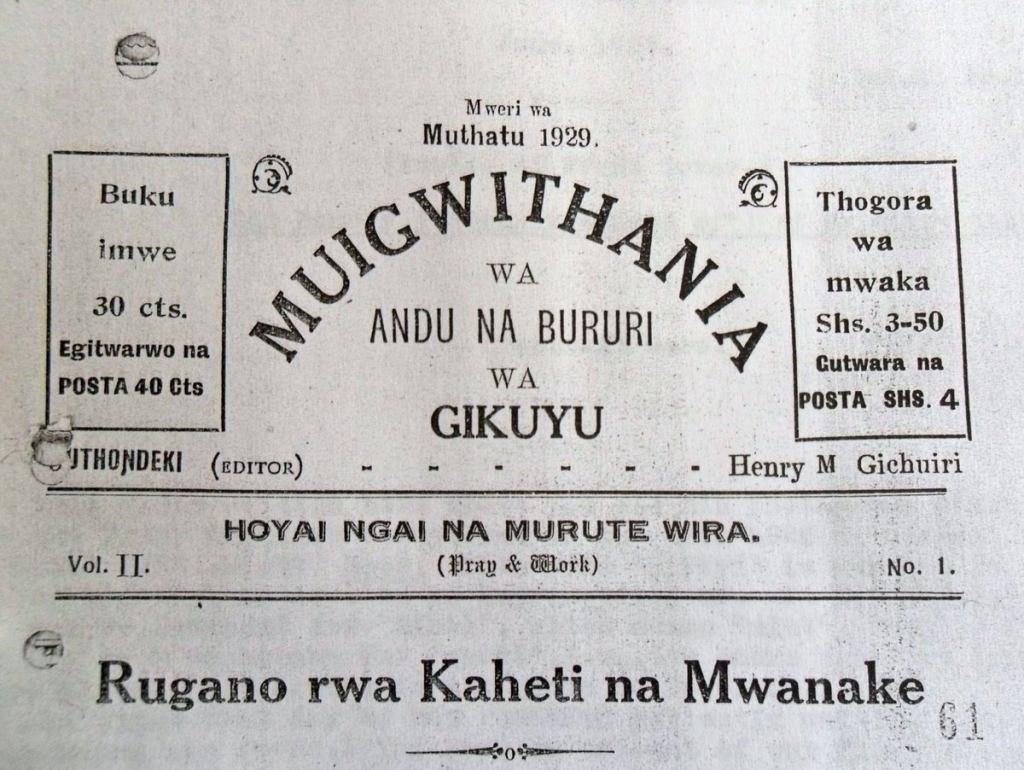
The Kikuyu Central Association (KCA), founded in 1924, became the leading political organisation of the inter-war period. Its demands were consistent: land restitution, an end to the kipande system, African representation in the Legislative Council, and recognition of the independent schools movement. Its most prominent member was Jomo Kenyatta, who spent the years 1931–1946 in Britain, presenting Kikuyu grievances to the Colonial Office and writing Facing Mount Kenya — an ethnographic and political defence of Kikuyu culture and land rights.
Harry Thuku, an earlier figure, was arrested in 1922 after organising African workers against the kipande system. His arrest sparked protests in Nairobi — the colonial police fired into the crowd, killing at least 25 people in what became known as the Nairobi Massacre of 1922.
Approximately 100,000 Kenyans served in the British forces during the Second World War — in the Burma Campaign, in the East African campaign, and in the Carrier Corps. They returned having fought for the “Four Freedoms” that Allied propaganda promised, to find that those freedoms did not apply to them. The political contradictions this produced accelerated the nationalist movement dramatically.
The Kenya African Union (KAU), founded in 1944 and led by Kenyatta from 1947, became the main political vehicle for the nationalist movement. Its inability to achieve meaningful concessions through constitutional means set the conditions for what came next.
The Mau Mau Uprising (1952–1960)
What caused the Mau Mau rebellion?
The Mau Mau Uprising was caused primarily by the accumulated grievances of land dispossession, forced labour, racial exclusion, and the failure of constitutional political channels to deliver any meaningful change. It was not a sudden outbreak of irrational violence, as British colonial propaganda portrayed it. It was a coherent — if internally divided — armed movement whose fundamental demands were land and independence.
The movement drew its core support from the Kikuyu, Embu, and Meru communities — the peoples most directly dispossessed by the White Highlands policy. Its oath-taking ceremonies bound members through ritual obligation, and its forest guerrilla campaigns from the Aberdares and Mount Kenya demonstrated sustained military organisation that the colonial government had not anticipated.
The name “Mau Mau” was a colonial invention whose exact origins remain disputed. The movement’s members referred to themselves as the Land and Freedom Army.
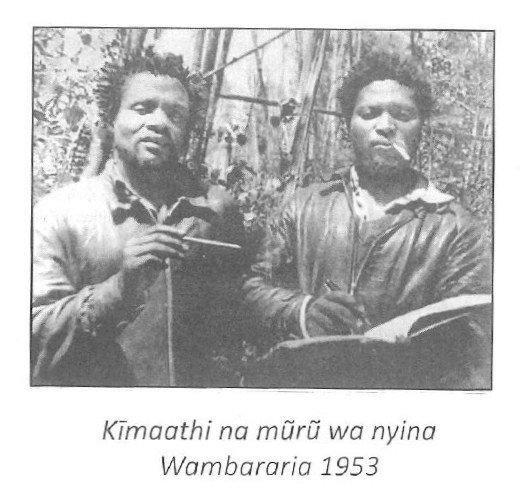
Kimathi na muru wa nyina — Dedan Kimathi photographed in the forest with a companion in 1953. Kimathi was the most prominent Mau Mau field commander; he was captured in October 1956 and hanged in February 1957.
The British response
The colonial government declared a State of Emergency in October 1952. The British response was characterised by mass detention, collective punishment, and systematic torture — documented through the Hanslope Park Archive of secret colonial documents suppressed until 2011, released only following a compensation suit by Kenyan survivors.
Key features of the British campaign:
- Operation Anvil (April 1954) — a comprehensive sweep of Nairobi in which the entire African population was screened and tens of thousands detained. Fabian Klose’s research notes that British military intelligence officer Frank Kitson used the Kenya operation as a laboratory for counterinsurgency methods subsequently shared with French forces in Algeria and studied by colonial powers worldwide.
- Villagisation — the forced resettlement of over one million Kikuyu into “protected villages” surrounded by barbed wire and trenches, cutting the forest fighters off from their support networks.
- Mass detention — the detention camp system held an estimated 150,000 people at its peak, involving systematic physical abuse, forced labour, and psychological coercion.
- Pseudo-gangs — small units of former Mau Mau fighters, recruited from detention camps and deployed under white officers to infiltrate and kill their former comrades. Kitson’s pseudo-gang concept later became a template for British counterinsurgency doctrine.
Detention Camps and State Violence
The British detention system during the Emergency represents one of the most extensively documented instances of systematic state violence in colonial history — documented only after the British government was compelled to release classified documents in 2011 following the Mau Mau torture compensation case.
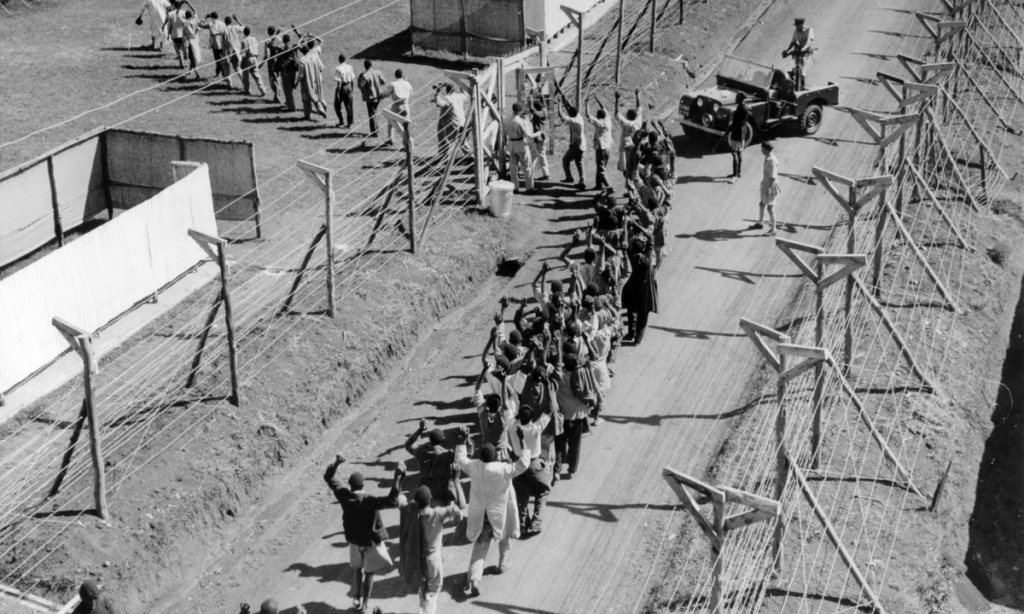
Documents from the Hanslope Park Archive — explored in Riley Linebaugh’s Curating the Colonial Past — reveal that the British Colonial Office in London oversaw the destruction and removal of sensitive documents from Kenya as independence approached, systematically eliminating evidence of abuses officials knew were legally and morally indefensible.
What survivor testimony and the released documents confirm:
- Systematic beatings during interrogation, including with tools specifically designed for this purpose
- Sexual violence against both male and female detainees
- The “dilution technique” — a policy of progressive physical coercion applied to detainees who refused to confess
- Approximately 8,000 women detained under Emergency Powers, held in Kamiti Detention Camp and a second facility at Gitamaiyu established specifically for “hardcore” female detainees
- The execution of 1,090 people — the largest number of executions carried out under British colonial rule anywhere in the empire
In 2013, the British government agreed to pay £19.9 million in compensation to 5,228 Kenyan survivors of colonial detention — an acknowledgment, however qualified, that the abuses had occurred and that the state bore responsibility.
Women in the Resistance
Women’s resistance to colonialism has been systematically underrepresented in conventional accounts of Kenyan history. This is not because women were passive: it is because colonial administrators and many later historians looked for resistance in forms — armed combat, formal politics — from which women were largely excluded by the structure of the colonial system itself.
Women’s resistance took forms appropriate to their situation. In rural areas, women were vital providers of food, shelter, and information to forest fighters. Wives and daughters in Emergency villages maintained covert supply networks under conditions of intense surveillance. Shiraz Durrani’s research documents women fighters who rose to senior ranks in the Mau Mau structure: Field Marshall Muthoni,
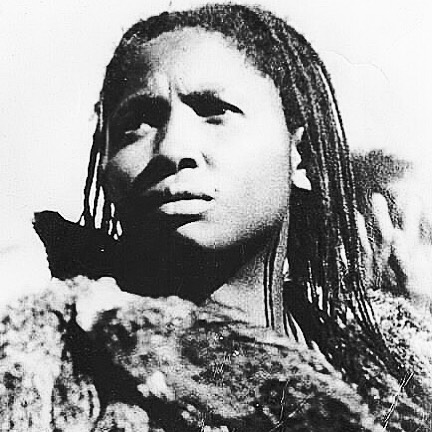
who joined the forest fighters on the principle that the land had to be returned; Muthoni Mathenge, who recruited, administered oaths, composed mobilising songs, and was subjected to torture — colonial police burned a cigarette into her ear in an attempt to extract information she refused to give. She was arrested and detained at Kamiti prison in 1955, spending more than four years imprisoned.
Earlier, Mekatilili wa Menza led the Giriama rebellion of 1913 — making her one of the most remarkable anti-colonial figures in East African history, and one of the least known outside Kenya.
The Road to Independence (1960–1963)
When did Kenya gain independence?
Kenya gained independence on 12 December 1963, with Jomo Kenyatta as Prime Minister. It became a republic on 12 December 1964, with Kenyatta as President. The date — now celebrated as Jamhuri Day — marked the formal end of 68 years of British rule.
The path to independence was accelerated by three convergent forces: the internal pressure of the Mau Mau rebellion; the broader tide of African decolonisation (Ghana in 1957, Nigeria in 1960) that made continued British colonial rule untenable internationally; and the Hola Massacre scandal of 1959, which destroyed the credibility of the colonial government’s claims to benevolent administration.
The Lancaster House Conferences
The Lancaster House Conferences of 1960 and 1962 brought together British officials, European settler representatives, and African nationalist leaders to negotiate the constitutional framework for independence. The central unresolved tension was land: the Kikuyu and other dispossessed communities wanted land restitution; the European settlers wanted their farms protected; the British wanted an orderly transition that would preserve economic stability.
The compromise that emerged — the “willing buyer, willing seller” land transfer scheme, funded by a British government loan — satisfied nobody completely. The land question was not resolved at independence. It was deferred.
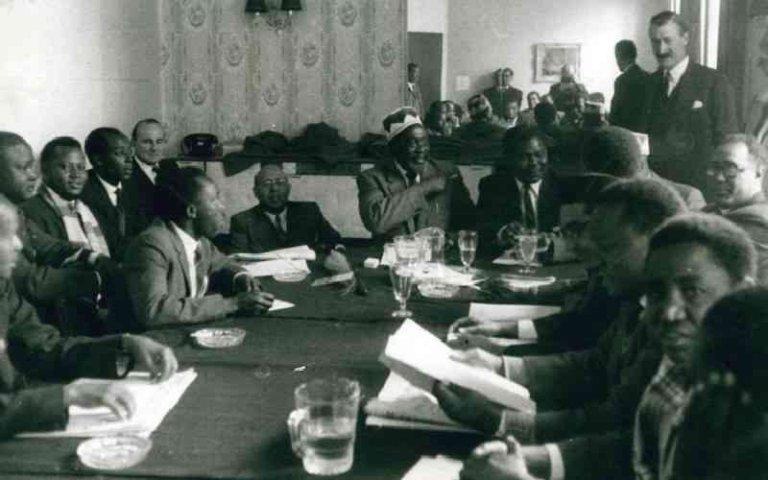
African nationalist leaders in conference during the negotiations that led to Kenya’s independence, c. 1960–62. The Lancaster House Conferences resolved the constitutional framework but deferred the land question that had driven the independence struggle.
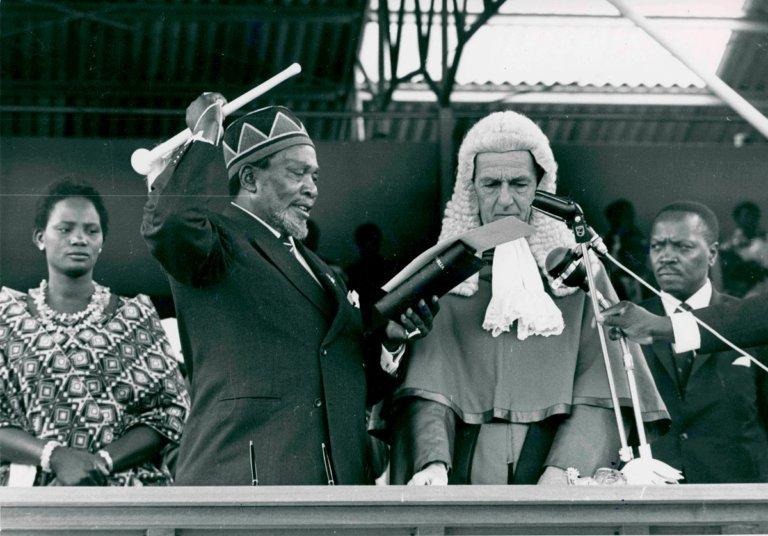
Jomo Kenyatta being sworn in as Kenya’s first Prime Minister on 12 December 1963 — Jamhuri Day. He would become President when Kenya became a republic exactly one year later.
Colonial Legacies in Modern Kenya
The colonial period ended in 1963, but its structural legacies have not. The most significant:
Land inequality.
The White Highlands land transfer at independence was partial and market-based. Large farms that had been European-owned passed to a Kenyan African elite — not to the communities from which the land had been taken. Today, land inequality in Kenya remains among the highest in sub-Saharan Africa, and land disputes rooted in colonial allocations continue to generate violence, particularly in the Rift Valley.
Ethnic political divisions.
The colonial state’s manipulation of ethnic boundaries — through Native Reserves, administrative groupings, and the selective promotion of compliant chiefs — hardened what had been fluid identities into fixed political categories. The ethnic mobilisation patterns in Kenya’s post-independence politics reflect divisions entrenched under colonial rule.
Suppressed historical memory.
The British government’s systematic destruction of colonial documents means that the full record of what was done in Kenya’s name between 1895 and 1963 will never be known. What has been recovered — through survivor testimony, the Hanslope Park documents, and the work of historians — is sufficient to establish that the colonial project involved systematic violence, dispossession, and dehumanisation on a scale that official British accounts consistently minimised. The 2013 compensation settlement was an acknowledgment. It was not a reckoning.
Economic structures.
Kenya’s position in the global economy — as an exporter of agricultural commodities and an importer of manufactured goods — was established by colonial policy and has proved remarkably durable. Understanding colonial history is not an academic exercise. It is the prerequisite for understanding why Kenya looks the way it does today.
References
Brantley, C. (1981). The Giriama and Colonial Resistance in Kenya, 1800–1920. University of California Press.
Campbell, C. (2007). Race and Empire: Eugenics in Colonial Kenya. Manchester University Press.
Great Britain Colonial Office (1949). Annual Report on the Colony and Protectorate of Kenya for the Year 1948. HMSO.
Kanogo, T. (1987). Squatters and the Roots of Mau Mau, 1905–1963. James Currey.
Klose, F. (2013). Human Rights in the Shadow of Colonial Violence: The Wars of Independence in Kenya and Algeria. University of Pennsylvania Press.
Linebaugh, R. (2023). Curating the Colonial Past: The Migrated Archives and the Struggle for Kenya’s History. Cambridge University Press.
Ogot, B. A. & Kieran, J. A. (1968). Zamani: A Survey of East African History. East African Publishing House.
Okia, O. (2012). Communal Labor in Colonial Kenya: The Legitimization of Coercion, 1912–1930. Palgrave Macmillan.
Presley, C. A. (1992). Kikuyu Women, the Mau Mau Rebellion, and Social Change in Kenya. Westview Press.
Wolff, R. D. (1974). The Economics of Colonialism: Britain and Kenya, 1870–1930. Yale University Press.
