
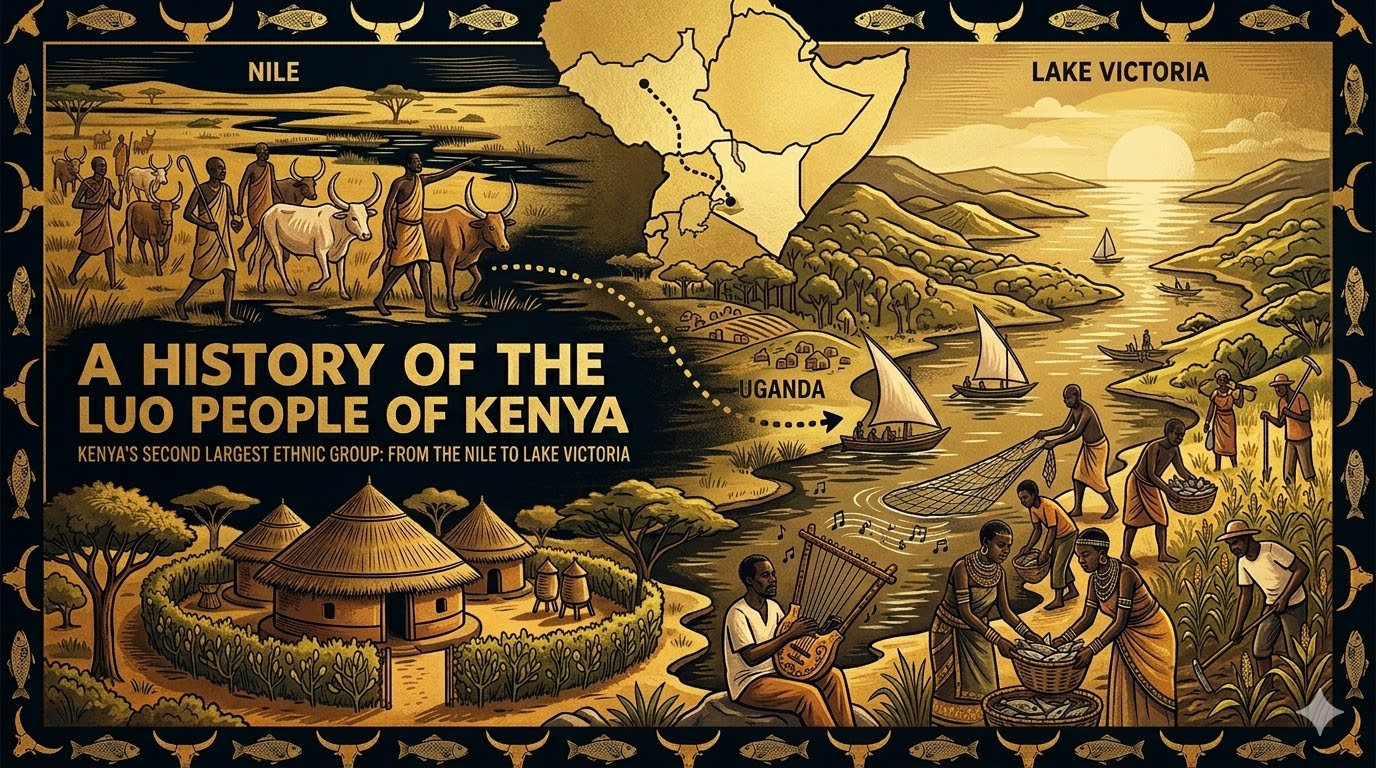
The Luo — known to themselves as the Joluo or Jaluo, meaning “people of Luo” — are the second largest ethnic group in Kenya and one of the most significant in the history of East Africa. Numbering over six million in Kenya alone and extending into Tanzania, Uganda and beyond, they inhabit the shores of Lake Victoria in the Nyanza region of western Kenya, a landscape of rolling savannah, fertile lakeshores, and the great inland sea they know as Nam Lolwe. Their language, Dholuo, belongs to the Western Nilotic branch of the Nilo-Saharan family and is spoken with mutually intelligible variation by the Alur, Acholi and Padhola of Uganda and South Sudan, a linguistic kinship that encodes the memory of a shared journey southward across the centuries. The Luo are one of Kenya’s many remarkable peoples whose distinct heritage has shaped the nation.
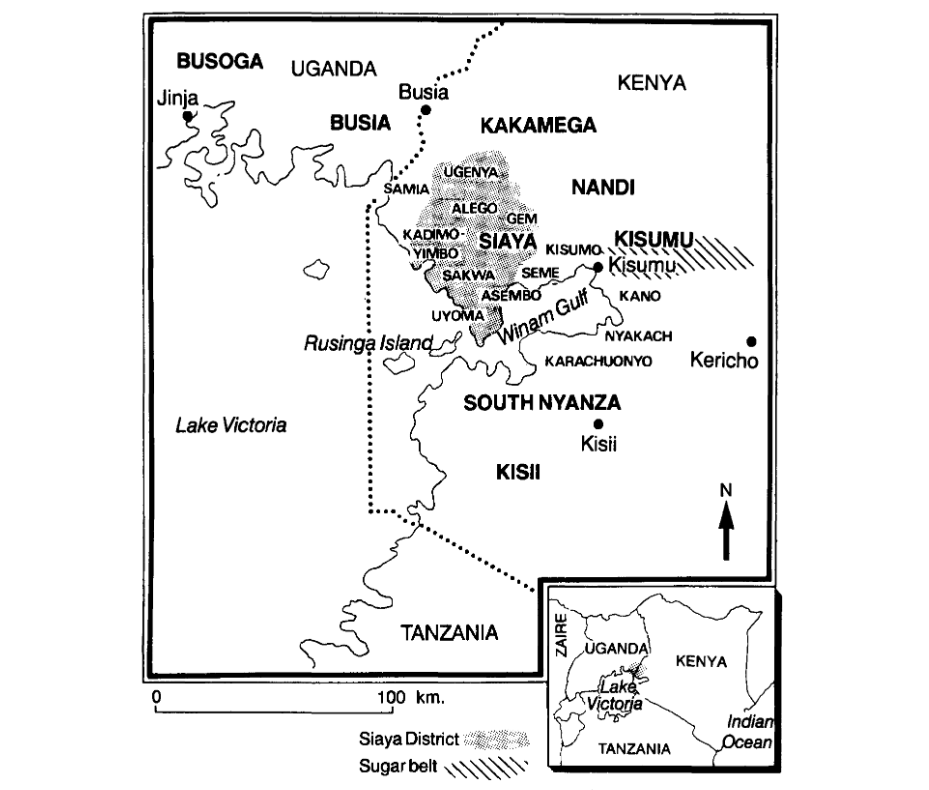
To understand the Luo is to understand one of Africa’s most remarkable stories of migration, assimilation, and political formation. Their history begins in the Bahr el-Ghazal region of what is now South Sudan, passes through the kingdoms of Uganda, and culminates in the lake basin of western Kenya — a journey of roughly five hundred years that transformed a relatively small group of semi-nomadic pastoralists into the dominant population of the Nyanza basin. Along the way they absorbed, displaced, and were absorbed by dozens of other peoples, creating the hybrid, composite society that historian Bethwell Ogot describes as “a good example of a hybrid population.” Their colonial encounter produced Kenya’s most formidable labour force and its most combustible political opposition; their post-colonial story is inseparable from the long contest between Luo and Kikuyu for the soul of independent Kenya.
This article traces that story in full, drawing on Bethwell Ogot’s systematic analysis of Luo oral traditions (A History of the Southern Luo, 1967), Hugh Fearn’s economic history of Nyanza Province (An African Economy, 1961), A.B.C. Ocholla-Ayayo’s study of marriage and cattle exchange (1979), E.E. Evans-Pritchard’s ethnographic account of marriage customs (1950), and the oral evidence preserved in the “Grasp the Shield Firmly” collection on Luo and Bantu migrations to Tanzania.
Origins: The Nilotic World and the Bahr el-Ghazal Homeland
The Nilotes and Their Homeland
The Luo are Nilotic — a designation that places them within the great family of peoples whose ancestral home lay in the upper Nile basin of northeastern Africa. The Nilotes had separated from the other members of the East Sudanic language family by about the third millennium BC, eventually differentiating into Northern Luo (the Shilluk, Acholi, Langi, Alur and Padhola, remaining largely in South Sudan and Uganda) and Southern Luo (the Kenya and Tanzania Luo, the furthest-travelled branch). The ancestral dispersal point for the Southern Luo was the Bahr el-Ghazal region of modern South Sudan, near the confluence of the Meride and Sue rivers. Here the proto-Luo community subsisted primarily through cattle pastoralism — an attachment to cattle so deep that it encoded itself into every aspect of their social, ritual and economic life.
Ocholla-Ayayo’s study of marriage and cattle exchange establishes how central cattle were to Nilotic identity long before Kenya was reached. “The Nilotic Luo were preeminently pastoral,” he writes. “Cattle were not only important regarding the economics of subsistence, but through a long attachment to cattle it became a part of the socio-cultural ideology: in marriage, ritual ceremony, and the prestige of wealth.” The Luo subtribes measured everything in cattle — blood compensation, bridewealth, status, alliance, warfare, friendship. This deep connection to livestock echoes across Kenya’s pre-colonial religious and spiritual world, where cattle featured centrally in ritual and sacrifice across many communities.
A cattle plague at the close of the nineteenth century destroyed much of the Luo livestock, and with it the scale of the pre-colonial bridewealth system. Before the plague, Evans-Pritchard records, the Luo paid anything between twenty and forty head of cattle as bridewealth. By 1936 the figure had settled between fifteen and twenty, and by 1969 it had dropped to twelve. The material loss was accompanied by a cultural and economic reorganisation — the shift toward fishing and agriculture that Fearn analyses in his study of the Nyanza economy — but the ideological centrality of cattle never fully disappeared.
Why They Moved: The Long March South
The migration of the Luo southward from the Bahr el-Ghazal region was not a single event but a multi-generational process covering roughly five hundred years, from approximately 1490 to 1900. Ogot identifies a sequence of causes: population pressure, livestock scarcity, political instability, and inter-lineage competition. The route followed was broadly southward from the Bahr el-Ghazal through the Acholi and Padhola homelands of northern Uganda, then westward toward Lake Victoria — the same corridor later used by the Indian labourers who built the Uganda Railway linking the lake to the coast. Ogot’s analysis of oral traditions shows that the migration was never a unified movement. As he writes, “the settlement was carried out in isolated detachments and was only very gradually completed.” Clans and sub-clans travelled independently, sometimes decades apart, sometimes fighting each other over grazing rights. The story of Luo settlement in Kenya is a story of fragmentation, local heroism, and eventual coalescence rather than conquest by a single, united force.
The Four Waves: Settlement in Nyanza, c. 1490–1800
Ramogi Hill and the Joka-Jok: The First Wave
Ogot identifies four major divisions among the Kenya Luo migrants, arriving in sequence over roughly three centuries. The first and largest was the Joka-Jok (“people of Jok”), led — at least in the memory of tradition — by the figure of Ramogi. Their first permanent settlement was on Ramogi Hill (4,824 feet) in Kadimo location — a strategically ideal site bounded by the River Yala to the east, Yala swamp to the north, and Lake Victoria to the west. The hill provided commanding views for defence and access to the broad savannah lowlands in which Luo pastoralists could practise their seasonal movement with cattle. The town that would eventually grow up at the head of the Kavirondo Gulf — Kisumu — lies within the territory first settled by these earliest Luo migrants, its very name derived from the Luo word for “place of barter.”
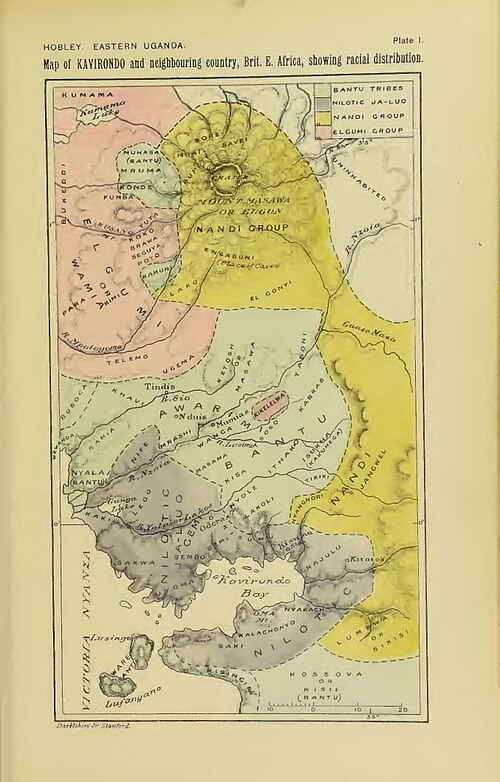
Ogot notes that this first intrusion into the Nyanza basin should not be characterised as conquest. The traditions describing the Joka-Jok’s arrival “are characterized by the lack of any references to wars or encounters.” They settled in areas adjacent to, and probably unsuitable for use by, the agricultural Bantu and Nilo-Hamitic peoples already inhabiting the region. The land was not empty. But the pastoralist Luo occupied the drier, flatter lakeshore zones that the agricultural Bantu had not fully taken up, and for two or three generations a precarious co-existence obtained.
From Ramogi Hill the Joka-Jok radiated outward: one large party under Alego moved eastwards across the River Yala to found settlements in what became Alego location; another under Chwanya moved southwards into modern Uyoma; a third group under Nyikal moved into Sakwa before settling in Asembo; groups under Julu settled at Ong’ielo Hill in Asembo; a party under Oywa moved northwards to Nyakach. Their immediate western neighbours were the Bantu peoples of Kavirondo — the ancestors of the Luyia — whose prior settlement of the region is documented in its own rich tradition.
The Jok-Owiny and Jok-Omolo: The Second and Third Waves
The second major division, the Jok-Owiny (“people of Owiny”), had separated from Adhola’s followers at Budola in Busoga during the Padhola migration through eastern Uganda. Led by the aggressive Owiny Sigoma, they crossed Samia-Bugwe, defeating the Bagwe en route — earning the clan name Karuoth (“the royal clan”). The Jok-Owiny reached Alego approximately ten to twelve generations ago and immediately began to expand aggressively. Their arrival marked the beginning of the “real conquest” of the lakeshore region that Ogot distinguishes from the peaceful first-wave settlement.
The third wave, the Jok-Omolo, followed a similar route through Uganda. Together with various smaller groups that Ogot characterises as “miscellaneous” — including elements that would later evolve into the Kano, Asembo, Uyoma and Sakwa sub-tribes — they completed the occupation of Central Nyanza between seven and twelve generations ago (roughly 1590 to 1790). Each new wave intensified pressure on the existing settlements, triggering further migrations southward.
The Suba and the Fourth Wave: Assimilation and Transformation
The fourth major wave into Nyanza included the Suba — originally Bantu-speaking people who had migrated from Tanzania and Uganda through Lake Victoria, fleeing civil strife. The Suba settled in South Nyanza, particularly on Rusinga and Mfangano islands, and were over time completely assimilated into Luo culture and language — one of the most dramatic examples of what Ogot calls “a quiet and effective process of cultural assimilation.” Their Bantu origins placed them in the same broad linguistic family as the Wanga Kingdom to the north, though by the time of colonial contact the Suba were fully Luo-speaking. Ogot documents numerous other absorbed groups — the Kagwa in Asembo and Uyoma, the Kanyibule on Rusinga, the Nyang’ori of Kadimo. The Kenya Luo are, as he concludes, “a hybrid population” — Nilotic at their cultural core, but enlarged and transformed by four centuries of encounter with the peoples of the lake basin.
Society, Kinship, and the Architecture of Luo Life
The Dala, the Gweng, and the Lineage
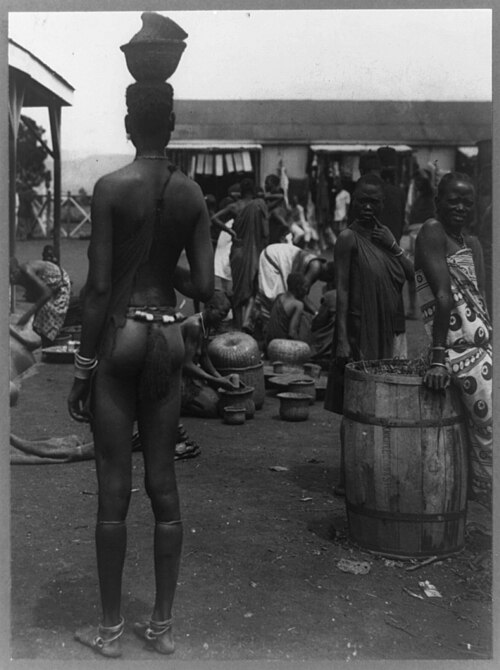
The foundational unit of Luo social life was the dala — the homestead. A traditional Luo homestead was a circular compound enclosed within a euphorbia-tree hedge, its internal layout precisely governed by custom. The husband built his first wife’s house (ot) directly opposite the main gate; the second wife’s house stood to her left, the third wife’s to the right, and so on. The eldest son of each wife built his house in the northwest corner. Everything about the dala — the positions of granaries, the direction of doorways, the arrangement of cattle enclosures — was determined by rules that encoded the social hierarchy of the extended family.
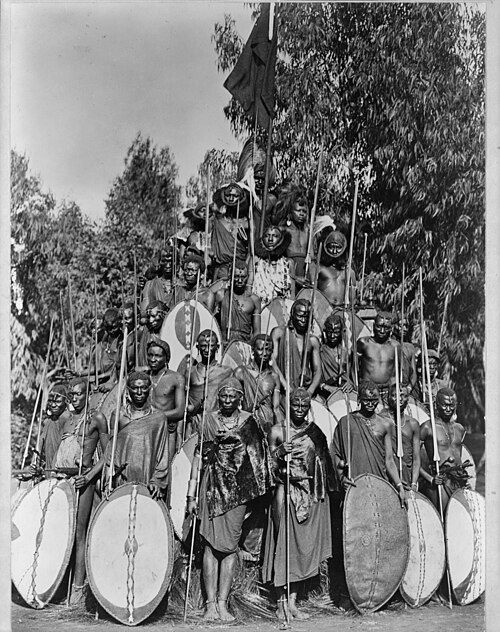
Multiple dalani formed a gweng (village or community), headed by a jaduong gweng (village elder) whose authority rested on genealogical seniority and earned respect. Multiple gwenge constituted a piny (sub-tribe or territorial state), which in some areas was headed by a ruoth (chief) — a hereditary position in the eldest son, though the ruoth ruled with the counsel of a council of elders (jodongo) representing all clans in the territory. Statelessness was the original Nilotic condition; chieftainship emerged from the experience of conquest and assimilation.
The homestead itself had a three-generation life cycle. A man must always marry in the homestead of his father rather than his grandfather; when his eldest son is ready for marriage, the son establishes a new dala of his own. When the last inhabitant of a homestead dies, the settlement — now called gunda — is left fallow and then converted to farmland. The landscape of Luoland thus carries the memory of its past inhabitants in the gundni visible across the land, identified by the name of the ancestor who founded them, and serving as anchors for lineage claims to territory.
Cattle, Marriage, and Social Reproduction
Marriage among the Luo was — and in many communities remains — one of the most elaborate and socially significant processes in the entire life cycle. Evans-Pritchard’s account, based on fieldwork in Alego in 1936, documents the full sequence of ceremonies: the simba (bachelor’s dormitory courtship), the meko (formal abduction of the bride), the diero (the morning-after party demanding an ox), the lupo (the bull-killing ceremony at the bride’s family), the duoko (the return of the bride to her parents), the riso (the binding ceremony when the wife becomes fully married in a domestic and legal sense), and the sepo (the final ceremony when the wife begins cooking in her own home).
The central exchange — the bridewealth (miloha, dho keny, or dho i keny) — was not a single payment but a years-long series of named transfers to specific relatives of the bride. Evans-Pritchard distinguishes the dho keny (named cattle earmarked for particular relatives: the mother’s cow, the father’s bull, the bow cow for the father’s brother, the cow of fresh milk, the calf of the knife) from the dho i keny (an additional and negotiable number of extra cattle, conventionally five to seven in 1936). The cattle never simply purchased a wife; they established an enduring web of obligations between two families that could last for three generations.
Ocholla-Ayayo’s economic analysis reveals the structural consequences of this system. He demonstrates that at twenty head of cattle per marriage, with a minimum of two thousand marriages per year among the two major closed exogamous blocs (totalling 207,172 inhabitants), approximately 40,000 head of cattle could leave those blocs in a single year. This structural drain, combined with the great rinderpest of 1895, produced the conditions for the Luo’s turn toward intensive fishing and agriculture in the colonial period.
Religion: Juok, the Ancestors, and the World of Spirits
Traditional Luo religion centred on Nyasaye — the creator God, omnipresent and generally benevolent — and on an elaborate world of ancestor spirits (jochiende). Pre-colonial Kenyan spirituality across many communities shared this structure of a high creator deity mediated through ancestors and diviners, and the Luo tradition fits squarely within that broader pattern. The jabilo — the diviner and spiritual advisor — diagnosed the spiritual cause of affliction and prescribed the appropriate sacrifice. The sacred spear (tong liswa), possessed only by founders of clans or maximal lineages, was both a symbol of legitimacy and a ritual object whose age allowed Ogot to date some of the earliest Luo settlements — the sacred spear of the Seje clan in Alego was estimated by colonial officer Owen in 1934 to be between 350 and 400 years old, placing the clan’s foundation between 1534 and 1584.
The Colonial Encounter: Economy, Labour, and Resistance
First Contact and the Establishment of British Rule
British contact with the Luo was initially mediated by the completion of the Uganda Railway, which reached Kisumu (then called Port Florence) on Lake Victoria in 1901. This linked the Luo homeland to the wider colonial economy and provided the infrastructure for the cash-crop regime that Fearn analyses. The full story of how colonialism reshaped Kenya bears heavily on the Luo experience: the early colonial administrators found a society of settled homesteads, pastoral communities, and active indigenous markets, but nonetheless proceeded to impose the familiar instruments of colonial subjection. The principal mechanisms of incorporation were the hut tax (introduced in 1902 at two rupees per hut — a system whose full costs are explored in Who Really Paid for Colonial Kenya), labour conscription for public works, and the attempted imposition of cotton as a cash crop.
Unlike the Kikuyu, who experienced the most severe land dispossession in colonial Kenya, the Luo were not subject to mass alienation of their homesteads to European settlers. The Nyanza highlands were less attractive to white farmers than the Central Province, and the Luo reserve — though periodically encroached upon — remained more intact. This comparative protection from land loss would later feed the political resentment of the post-independence period: the Luo had cooperated in the colonial economy and had received, from their perspective, little reward.
The Cotton Failure and the Turn to Maize
The central economic drama of the early colonial period in Nyanza was the failure of cotton. From 1908 onward the colonial government promoted cotton cultivation as the export crop that would make Nyanza productive within the imperial economy. But the Luo and other Nyanza communities were deeply reluctant to grow it — not irrationally, as Fearn argues, but because their economic calculus based on subsistence security, kinship obligation, and the cattle economy did not make cotton attractive. By 1930 the cotton experiment in Central Nyanza had effectively failed. What transformed the Nyanza economy after 1930 was not cotton but maize. The discovery of gold at Kakamega in 1931, the rapid development of European tea estates at Kericho, and the extension of the railway created a local market for African foodstuffs. Nyanza became, in Fearn’s phrase, “the granary of East Africa” — exporting surplus maize to feed workers in the mines, tea estates, and towns. The Second World War and the post-war commodity boom accelerated the process, and with it came the emergence of a class of African traders and larger-scale commercial farmers.
The Fishing Economy: Lake Victoria and the Kavirondo Gulf
Running parallel to the agricultural transformation was the development of the fishing economy. The Luo had always fished Lake Victoria and the Kavirondo Gulf using indigenous technologies: the kek (fish trap built across a river mouth), the ngogo (a funnel-shaped papyrus enclosure for trapping omena, the tiny silver fish), and various other methods. The colonial economy transformed the industry in the 1930s through the introduction of dhow-fishing with gill nets. By the early 1950s the Kavirondo Gulf fishing industry — centred on Kisumu — had become one of the most productive in East Africa. The omena trade, dried and transported to inland markets across Kenya, became one of the first major African-controlled commercial supply chains in the colony.
Labour Migration and the Urban Luo
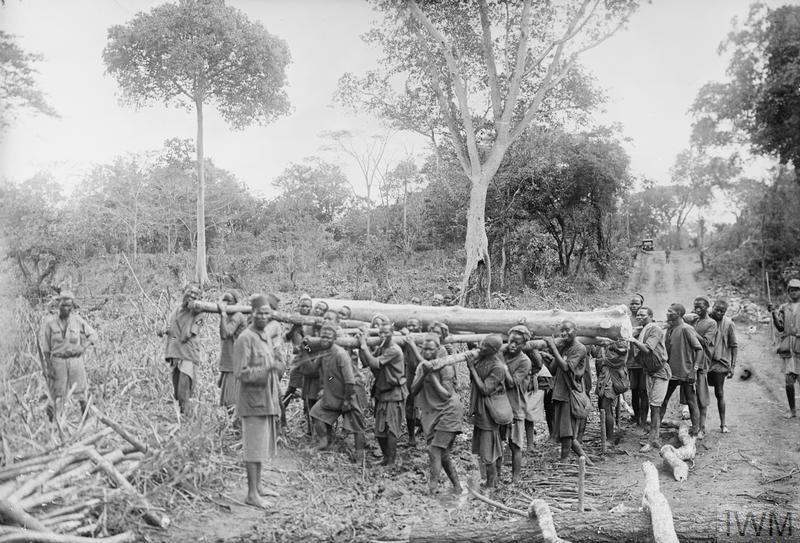
Perhaps the most consequential development of the colonial period was labour migration. Hut tax, land pressure, and the monetisation of bridewealth drove Luo men out of Nyanza in steadily increasing numbers — to Nairobi, to the White Highlands, to Mombasa, to Uganda. Fearn’s analysis shows that Nyanza was one of the principal sources of attested contract labour for the rest of Kenya Colony throughout the 1920s, 1930s and 1940s. Labour migration produced the urban Luo — a community exposed to Western education, political ideas, and inter-ethnic contact. It was from this community that the political leadership of the independence movement would emerge. Jaramogi Oginga Odinga, from Bondo in Central Nyanza, trained as a teacher at Makerere before entering business and politics. The mission school system — the CMS station at Maseno, established in 1906, being the most significant for the Luo — gave the community a generation of literate men that would supply the independence generation.
Independence, Power, and the Long Aftermath
The Luo and the Independence Movement
The Luo contribution to Kenya’s independence struggle was decisive and has been underacknowledged in narratives that foreground the Mau Mau uprising as the sole driver of decolonisation. While the Kikuyu bore the greatest physical violence of the colonial system, the Luo — through legal agitation, trade unionism, and constitutional politics — provided some of the movement’s most effective architects.
Jaramogi Oginga Odinga emerged in the 1950s as one of the most prominent African voices in Kenya’s Legislative Council, campaigning tirelessly for Kenyatta’s release from detention and serving as Vice Chairman of KANU from its foundation in 1960. When Kenyatta was finally released in 1961 and KANU swept to electoral victory, Odinga became the first Vice President of independent Kenya — the first in the long line of Kenyan Vice Presidents whose stories track the shifting alliances of national politics. His willingness to subordinate the Luo claim to national leadership in favour of Kikuyu Kenyatta was both a strategic calculation and an expression of genuine pan-African nationalism.
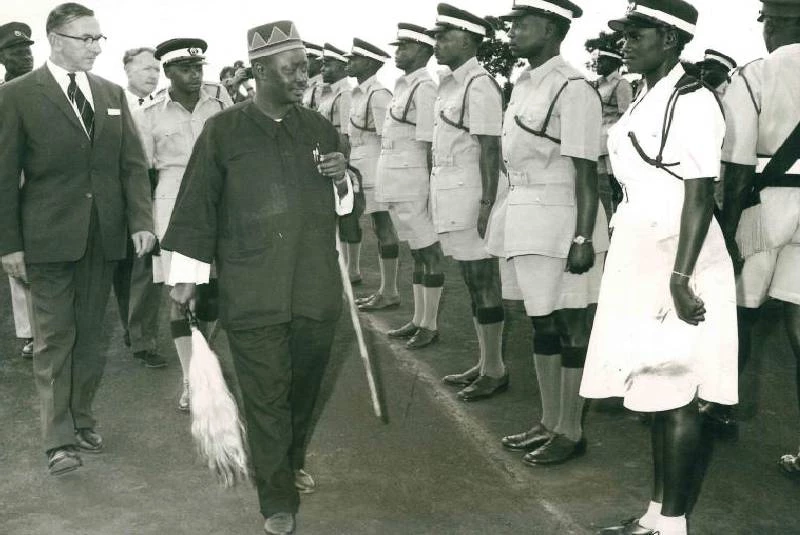
Tom Mboya’s contribution was different but equally critical. As Secretary-General of KANU and one of Africa’s most gifted public intellectuals, Mboya provided the organisational and rhetorical energy of the independence campaign. His “airlift” programme of 1959 sent hundreds of Kenyan students to universities in the United States, training the technocratic elite that would staff the new state. The independence celebrations of December 1963 brought both men to the world stage as architects of a new nation.
The Kikuyu-Luo Rupture and the Kisumu Massacre
The fracture that has defined Kenyan politics since independence — the persistent tension between the Kikuyu and Luo communities — was not inevitable and was not simply ethnic. It was produced by specific political decisions in the years after 1963. Kenyatta’s government increasingly concentrated economic benefits and political appointments within the Kikuyu community while marginalising the Luo political leadership. Odinga’s growing frustration with what he saw as a betrayal of independence’s social promises led him to resign from the government in 1966 and found the Kenya People’s Union (KPU), which explicitly challenged KANU’s direction. The full story of this party formation is traced in the history of Kenyan political parties.
The government’s response was repressive. KPU branches were denied registration; members faced economic and political harassment; KPU activists were detained without trial. The crisis reached its violent climax in October 1969, when Kenyatta visited Kisumu for a political rally. The confrontation between Kenyatta and Odinga escalated into violence; security forces opened fire on the crowd, killing an estimated dozens of people in what became known as the Kisumu Massacre. KPU was banned, and Odinga was detained. When Tom Mboya — the Luo figure most closely associated with Kenyatta’s government — was assassinated in Nairobi in July 1969, the Luo community’s sense of exclusion and betrayal deepened further. The political alliance between Kenya’s two largest communities, which had made independence possible, was shattered. Its shards have shaped every subsequent Kenyan election, including the political career of Raila Odinga — Jaramogi’s son — who has carried the Luo opposition standard through four decades of national politics.
The Odinga Dynasty and Contemporary Luo Politics
The continuity from Jaramogi to Raila is one of the most striking dynastic narratives in African politics. Where the father was detained by Kenyatta, the son was detained by Moi. Where the father founded KPU, the son founded the Orange Democratic Movement. Both ran for the presidency and both were denied it under circumstances their supporters regarded as fraudulent. Raila’s career — spanning his role in agitating for multiparty democracy in the 1990s, his alliance with Mwai Kibaki, the disputed 2007 election and its aftermath, and his subsequent attempts at the presidency — is the through-line of Luo political aspiration in post-colonial Kenya. The full arc is documented in the comprehensive profile of Raila Odinga on this site.
Language, Music, and Cultural Endurance
Dholuo is spoken today by over six million people in Kenya and Tanzania, making it one of the major languages of East Africa. Its phonology and tonal structure encode the community’s Nilotic origins while accumulating the vocabulary of four centuries of encounter with Bantu, Cushitic, and European languages. The language is vigorous and generative: Dholuo-language publishing, broadcasting, and popular music constitute a cultural ecosystem of considerable vitality.
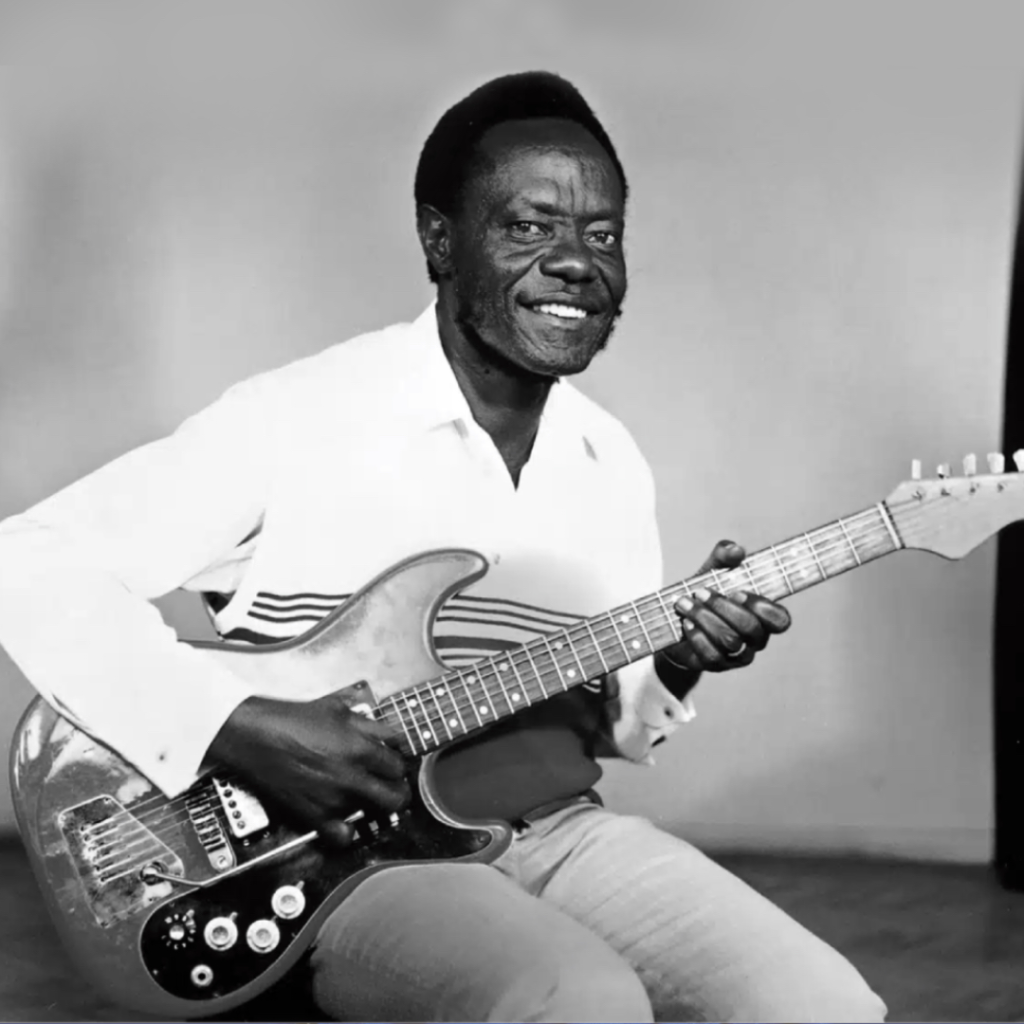
Luo music is among the most distinctive in Kenya. The benga style — a blend of traditional Luo rhythms with acoustic guitar, developed from the 1940s through the 1960s by musicians like Daniel Owino Misiani — became one of Kenya’s most popular musical forms, eventually influencing musicians far beyond Nyanza. The nyatiti (an eight-stringed lyre of ancient lineage) and the orutu (a single-stringed fiddle) remain instruments of ceremony and cultural memory. In contemporary Nairobi, ohangla — an intensely rhythmic style associated with funerals and celebrations — is one of the city’s most energetically performed genres.
Education, Achievement, and the Luo Intellectual Tradition
If there is a single cultural value that the Luo have channelled into the colonial and post-colonial world more powerfully than any other, it is education. Early engagement with mission schools — the CMS station at Maseno, established in 1906, being the most significant — gave the Luo community a generation of literate men earlier than many of their neighbours. The reputation for intellectual achievement that the Luo carry in contemporary Kenya — sometimes described as “the intellectuals of Kenya” — was built at mission schools in the first decades of the twentieth century. That tradition produced, among others, Bethwell Ogot himself — the first serious historian of his own people — and Barack Obama Sr., economist and father of the 44th President of the United States.
From the Nile to Lake Victoria: A Continuing Story
The Luo arrived in Nyanza as semi-nomadic pastoralists seeking new pastures for their cattle. They stayed to become fishermen, farmers, labour migrants, trade unionists, nationalist politicians, economists, and musicians. The journey from the Bahr el-Ghazal to the shores of Nam Lolwe — Lake Victoria — took roughly five centuries and transformed them utterly while preserving the Nilotic core of their identity: the centrality of cattle as social currency, the patrilineal extended family as the unit of life, the attachment to the ancestor-inhabited dala as the physical and spiritual anchor of belonging, and the Dholuo language as the vessel that carries all of it forward. They remain, alongside the Kikuyu, the Kamba, the Somali, the Meru, and the other peoples of Kenya, a community whose story is inseparable from the story of the nation itself.
Sources and Further Reading
Ogot, Bethwell A. History of the Southern Luo, Volume 1: Migration and Settlement, 1500–1900. Nairobi: East African Publishing House, 1967. The foundational work on Luo pre-colonial history, based on a 1965 University of London doctoral dissertation. Ogot’s systematic analysis of oral traditions from the Padhola and Kenya Luo establishes the four-wave migration sequence, dates the first Luo settlement at Ramogi Hill to between 1490 and 1600, and argues for the Luo as a “hybrid population” assembled through centuries of assimilation.
Fearn, Hugh. An African Economy: A Study of the Economic Development of the Nyanza Province of Kenya, 1903–1953. Oxford University Press, 1961. The definitive economic history of the Luo and other Nyanza peoples under colonial rule. Fearn documents the hut tax regime, the cotton failure, the maize revolution, the emergence of the fishing industry, and the structural position of Nyanza within the wider Kenya colonial economy.
Ocholla-Ayayo, A.B.C. “Marriage and Cattle Exchange among the Nilotic Luo.” Paideuma, Vol. 25, 1979, pp. 173–193. A socioeconomic analysis of bridewealth, the cattle circulation system, and the “bloc” structure of Luo exogamy in South Nyanza.
Evans-Pritchard, E.E. “Marriage Customs of the Luo of Kenya.” Africa: Journal of the International African Institute, Vol. 20, No. 2, April 1950, pp. 132–142. Documents the full sequence of Luo marriage ceremonies and the named cattle of the bridewealth system, based on Alego informants.
Siso, Zedekia Oloo, and Jan Bender Shetler (eds.). Grasp the Shield Firmly, the Journey is Hard: A History of Luo and Bantu Migrations to North Mara (Tanzania) 1850–1950. Dar es Salaam: Mkuki na Nyota Publishers, 2010.
Odinga, Oginga. Not Yet Uhuru: An Autobiography. Nairobi: East African Educational Publishers, 1967. The first Vice President’s account of Luo political engagement from the independence struggle through the rupture with Kenyatta.