
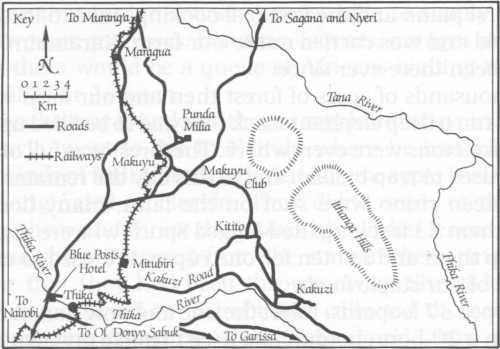
Forty-two kilometres northeast of Nairobi, at the point where the Thika and Chania rivers meet and the plateau begins to drop away toward the eastern plains, there is a town that does not look like a place with much of a story to tell. Its streets are busy rather than beautiful. Its skyline is chimneys and water towers rather than minarets or hill forts. It smells, depending on the wind, of roasting coffee, pineapple processing, and industrial solvent.
But Thika has a story that runs deeper than its industrial present suggests. It is a story told in the rings of a fig tree that the British tried and failed to keep standing. It is told in the colour of a hotel’s veranda posts — painted blue in 1908, still standing today. It is told in the title of a memoir that introduced a generation of readers outside Kenya to what it looked and felt like to arrive as a settler child in the East African highlands and find that the land you had come to farm was not empty, had never been empty, and was watching you with older eyes than you understood.
The Flame Trees of Thika. The name of Elspeth Huxley’s book has clung to the town like smoke — romantic, slightly wistful, and from a perspective that was always only one side of a much larger story. The other side is what this article is about.
The Land Before the Settlers
Before the railway and the coffee estates and the factory smokestacks, the land around Thika was a frontier — one of those zones where different peoples met, traded, clashed, and negotiated, where no single authority held permanent sway and the boundaries shifted with the seasons and the cattle and the fortunes of war.
The predominant people of the area were the Kikuyu, whose agricultural settlements spread across the ridges and river valleys of the central highlands. The Kikuyu were cultivators: they cleared forest, planted bananas, sweet potatoes, sorghum, and millet, and organised their society through the clan and family land tenure system known as githaka. The land around the confluence of the Thika and Chania rivers was particularly valuable — well-watered, with deep red volcanic soil, sheltered from the worst of the highland winds by the ridges above.
But the Kikuyu were not alone. Maasai pastoralists grazed cattle across the open plains to the east and south, periodically raiding Kikuyu settlements for livestock. The Kamba, based further east, ran their long-distance trade networks through the area, exchanging ivory, iron goods, and livestock with both the Kikuyu and the coastal Swahili traders. The confluence of the rivers was a meeting point — a place where paths crossed and deals were made and disputes were settled, or not settled.
The name Thika itself carries this history. It derives from the Kikuyu word Guthika, meaning “to bury” — a reference, in one telling, to a burial mound from an inter-ethnic conflict, in another to a legendary act of sacrifice during a drought when people buried their grain to conceal it from raiders. Some accounts say the name refers simply to the rocky course of the Thika River, whose stony channel the Maasai also remembered in naming the area. Whatever its precise origin, the name is Kikuyu, rooted in the landscape and its history long before any European arrived to rename it.
Mugo wa Kibiro: The Prophecy and the Tree
In the town’s central business district there is — or was, before its final collapse — the remnant of a giant fig tree, a mugumo, growing in what is now called Mugumo Gardens in Section 9 Estate. This tree was not simply a tree. It was the site where Mugo wa Kibiro, the most celebrated Kikuyu prophet and seer, was said to have made his most extraordinary prediction.
Mugo wa Kibiro lived and prophesied in the 19th century, and his reputation spread across the central highlands as a man whose visions of the future were not allegory but fact. Among the predictions attributed to him was one that described strangers arriving from the coast — people dressed in cloth, who would build a great road of iron that moved by itself, and who would eventually rule the land. He warned the Kikuyu: the mugumo tree at Thika would stand as long as the strangers ruled. When it fell, they would leave.
The British colonial administration, when they learned of this prophecy, took it seriously enough to reinforce the tree with concrete and iron supports to prevent it from falling naturally. Their efforts were only partially successful. The tree split and fell in two stages in 1963 — the year of Kenyan independence. Whether this is coincidence, a self-fulfilling prophecy whose narrative was shaped retrospectively, or something else entirely is a question Thika residents have debated ever since. The Mugumo Gardens that bear the tree’s memory remain one of the town’s few explicitly historical landmarks.
The Railway and the Settlers
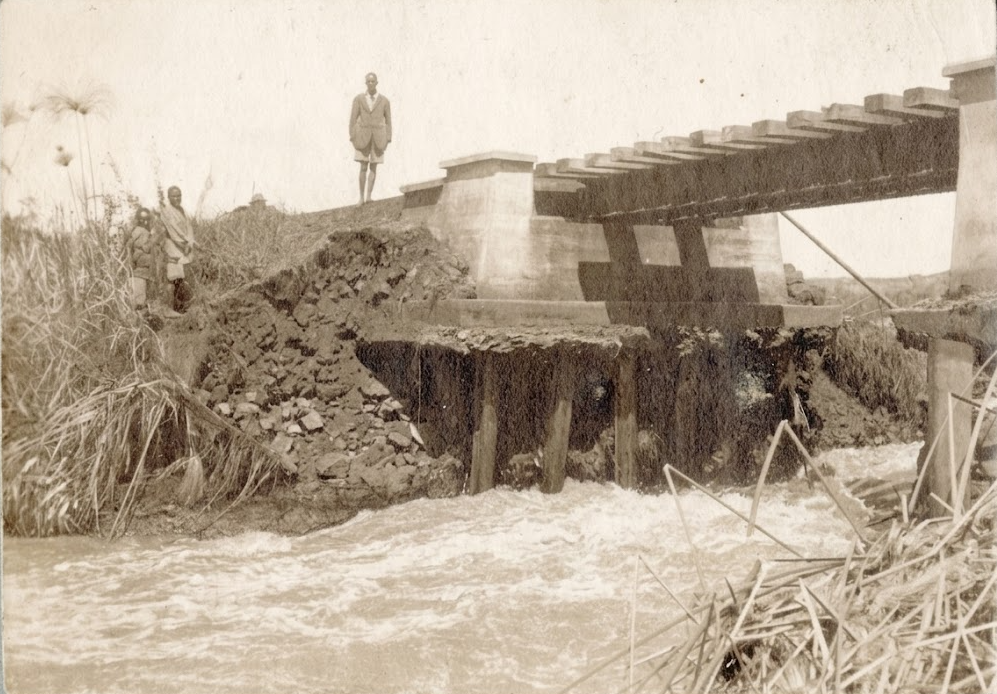
The town that exists today began, like Nakuru and Eldoret and most Kenyan towns, with the railway. The Uganda Railway’s main line from Mombasa reached the area in December 1901, opening the highlands to settler access in ways that ox-cart travel had never allowed. Thika was not yet a town — it was a stopping point, a rest camp, a convenient staging post between Nairobi and the upcountry farms that British land grants were beginning to populate.
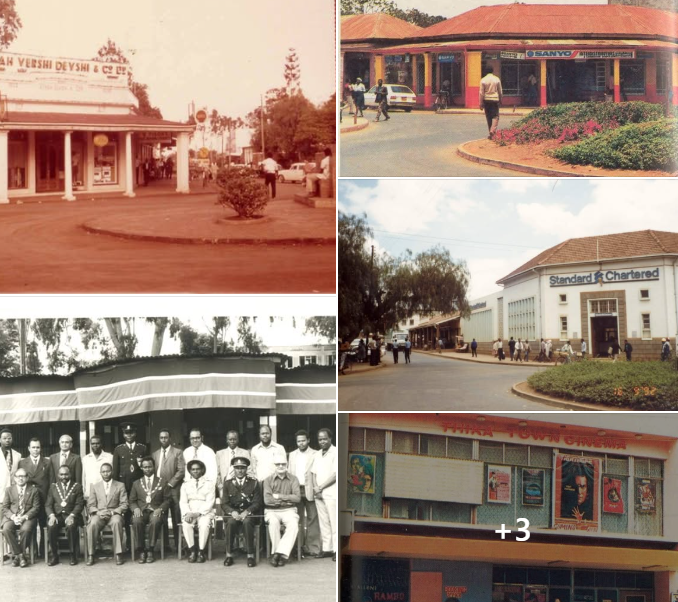
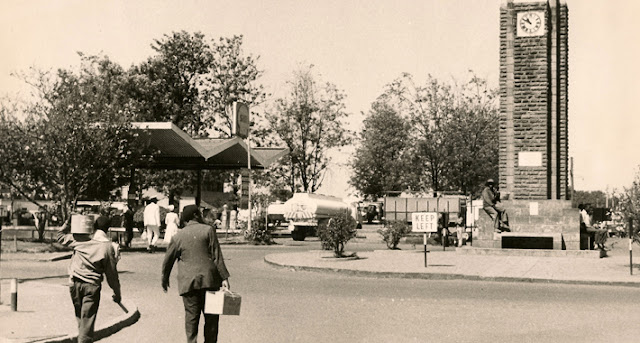
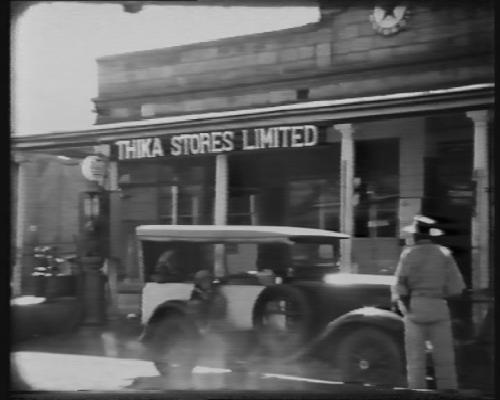
The first permanent traders to arrive were Indian. Shah Meghji Ladha and Meghji Kanji, who arrived around 1910, were among the earliest to establish shops at what would become Thika’s commercial centre, building from iron sheets the provisional stores that sat beneath the old clock tower on what is now Kwame Nkrumah Road. The Asian community that followed them built the retail and wholesale infrastructure of the town — the dukas, the grain stores, the hardware shops — that made it possible for European farmers to buy what they needed without travelling to Nairobi.
The European settlers came for the land. And what land it was. The red volcanic soil of the Thika plateau was among the most fertile in East Africa — warm enough at 1,600 metres altitude to grow coffee, cool enough to avoid the worst of the tropical disease burden, with reliable rains and a landscape that reminded homesick British settlers, if they squinted past the acacias and the red dust, of Devon or the Cotswolds. By 1913 Thika was established enough to be a favourite camp for big-game hunters, the last town before the bush and the plains began in earnest.
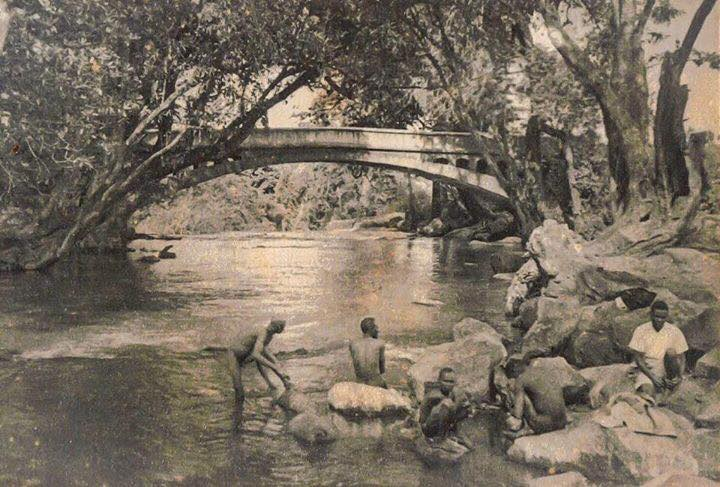
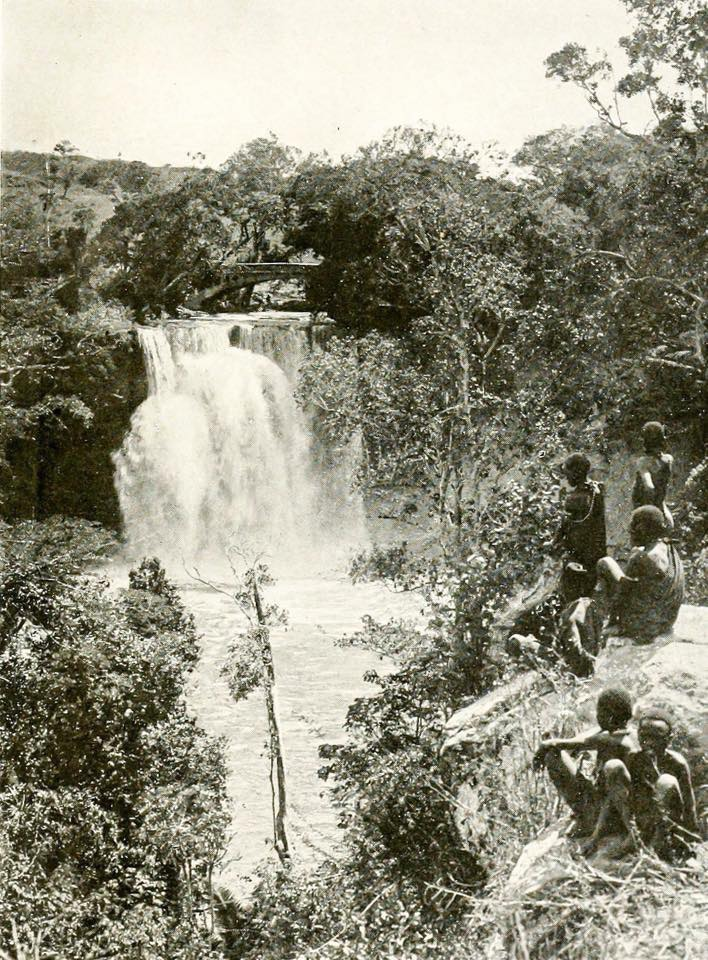
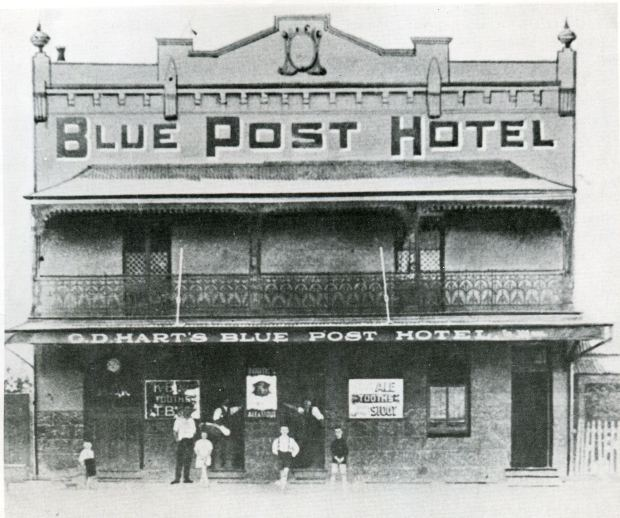
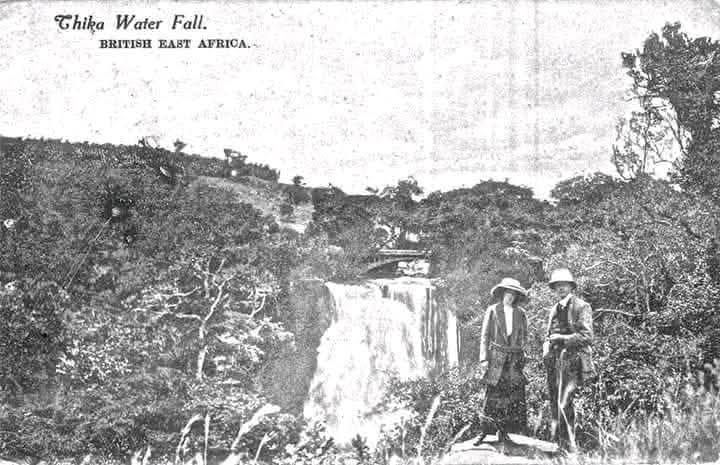
The Blue Post Hotel, founded in 1908 by Edward Sergent — who had acquired the property from its original owner, Captain Ward — became the social heart of settler Thika. The hotel was built on the banks of the Chania River where it meets the Thika, its veranda posts painted blue in the style of the era, giving it its name. Positioned above a natural waterfall where the river crashed over a rocky ledge in a twenty-foot cascade, the Blue Post occupied one of the most beautiful spots in the highlands. It is still standing today, still trading under the same name, still positioned above the same falls — one of the few genuinely colonial buildings in Kenya that has survived more or less intact.
Coffee and the Kikuyu Question
The crop that defined Thika’s colonial identity was coffee. French missionaries from Réunion Island had introduced Bourbon Arabica to Kenya in the 1890s, planting the first trees at Bura, Kibwezi, and Kikuyu. By 1904 the first commercial plantations had been established near Thika, and the British colonial administration — recognising the extraordinary potential of the highland soil and climate for premium Arabica — moved quickly to monopolise it.
The mechanism of monopolisation was familiar from the White Highlands pattern across Kenya: the best land was declared available for European settlement, the African communities who had farmed it were pushed into Native Reserves on inferior ground, and Africans were legally prohibited from growing coffee on their own land. The reasoning, never stated honestly, was economic: if Kikuyu farmers could grow and sell coffee, they would not need to work on European plantations. The prohibition kept the labour supply for settler farms artificially inflated and cheap.
The Kikuyu who had grown food crops on the red soil around Thika found themselves transformed into labourers on estates built on what had been their githaka land. The coffee that grew from that soil — the same deep red soil their grandparents had cleared of forest — was exported to Britain and Europe and fetched prices that bore no relationship to the wages paid to those who picked it. The British planters who prospered in Thika were farming Kikuyu land with Kikuyu labour and sending the profits home.
It was into this world that Elspeth Huxley arrived in 1912, at the age of five, when her father Robin Grant purchased a 500-acre farm near Thika in the bar of the Norfolk Hotel in Nairobi from a man wearing an Old Etonian tie. The farm was, as Huxley later wrote with dry precision, not nearly what its seller had claimed — five hundred acres of scrubland infested with ticks and white ants, with no house, no cleared fields, and no labour force. What it did have was the red soil and the highland climate and the view, and a Kikuyu foreman named Njombo who became the real foundation of the farm and the most vivid character in the book Huxley would eventually write about it.
“In an open cart Elspeth Huxley set off with her parents to travel to Thika in Kenya. As pioneering settlers, they built a house of grass, ate off a damask cloth spread over packing cases, and discovered — the hard way — the world of the African.”
The Flame Trees of Thika, published in 1959 and adapted for television by Thames Television in 1981 with Hayley Mills playing Tilly Grant, introduced the town to a global audience — but through the lens of settler experience. The Kikuyu in Huxley’s memoir are vivid and sympathetically observed, particularly Njombo, but they are supporting characters in a story whose protagonist is the settler family finding its feet in Africa. The story of what was being lost on the other side of that encounter — the land, the githaka, the livelihood, the legal right to grow the crop your own soil was perfectly suited for — is told elsewhere, in the political histories of the Kikuyu people and in the records of the Mau Mau uprising that Thika’s surrounding area helped generate.
Sisal was the other colonial crop. The first commercial sisal plantation near Thika was established in 1904, at Punda Milia, with the fibre processed into rope, twine, and sacking for global markets. Sisal required large quantities of labour, paid almost nothing, and was brutal to work with — the plant’s spines left cuts that festered in the highland damp. By the 1920s, Thika’s surrounding area was a patchwork of coffee estates, sisal plantations, and game ranches, all drawing from the same pool of Kikuyu labour that the colonial tax and land system had created.
War, Resistance, and the Mugumo
The First World War interrupted the settler idyll. When war broke out in 1914, the East Africa Campaign drew European men away from their farms and into uniform. The Huxley family, like others, was forced to curtail their Thika experiment — Robin Grant went to war, Tilly and the young Elspeth returned to England. Many settler farms were left half-developed, their coffee trees still young and unproductive, their debts mounting.
But the war also changed the political landscape in ways that outlasted the fighting. African soldiers and labourers who had served in the Carrier Corps returned having seen something of the wider world and having survived conditions that gave the lie to any notion of European superiority. The Kikuyu of the Thika area were among the most politically conscious in Kenya — educated partly through missionary schools, connected to Nairobi, and living cheek-by-jowl with the settler farms that occupied their ancestral land. The Kikuyu Central Association, founded in 1924, drew heavily on this community. Jomo Kenyatta, who would later lead the country to independence, was a Kikuyu from Kiambu, the district of which Thika was a part.
The Mau Mau uprising of the 1950s reached Thika directly. The farms and plantations around the town were sites of political oath-taking, of labour strikes, and of colonial reprisals. The Emergency declared in October 1952 brought detentions, the villagisation of Kikuyu communities into protected settlements, and the suspension of normal life across the central highlands. The coffee estates of Thika, which had been built on Kikuyu labour, were now guarded by Home Guards against the very workforce that had created them.
And the mugumo tree continued to stand in Mugumo Gardens, propped up by colonial concrete, watched by a community that remembered Mugo wa Kibiro’s prediction. In 1963, as the Union Jack came down and the new Kenyan flag was raised, the tree finally split and fell — in two stages, as if it had been waiting for the right moment to complete the prophecy.
From Coffee to Cans: The Industrial Town
Independence transformed Thika’s economy more rapidly and more completely than almost any other Kenyan town. The change had begun even before 1963. In 1948, two companies arrived that would define the town’s industrial character for decades: the Kenya Tanning Extract Company, which processed wattle bark from the surrounding farms into leather tanning chemicals, and City Brewery, which began producing beer for the rapidly growing Nairobi market from a plant on Thika’s outskirts.
The pineapple industry told the most remarkable story. A farmer named Bobs Harries, who had been trying to make coffee work on his land, began growing pineapples for the local market during the war years. After the war, an English industrialist named Theo West — who ran a canning operation back home — spotted the opportunity and went into partnership with Harries’ family. In 1949 they established Kenya Canners Ltd, which within a few years was processing tens of thousands of tonnes of pineapples for European markets annually.
In 1965, Del Monte — the American food giant — took over the operation, renamed it Del Monte Kenya Limited, and expanded the plantation to become one of the largest single pineapple operations in Africa. Del Monte’s arrival cemented Thika’s position as an industrial rather than agricultural town. The plantation required thousands of workers. The cannery required more. The population, which had been around 4,500 in 1948, began growing rapidly. By the 1970s, Thika was producing cooking oils, textiles, motor vehicle components, chemicals, cigarettes, and animal feed alongside its coffee and pineapple.
The coffee ban on African farmers — one of colonialism’s most enduring agricultural injustices — was lifted after independence, and Kikuyu smallholders began growing the crop that had been forbidden to them for sixty years. Kenya’s coffee cooperative movement grew rapidly in the Thika area, with small-scale farmers delivering cherries to centrally managed wet mills and receiving a share of the auction price that their parents could never have imagined. The irony — that the best coffee from the very land that settler farms had occupied was now being grown by the families of the labourers who had worked those farms — was not lost on anyone paying attention.
Ol Donyo Sabuk and the Rivers
Thika is framed by natural landmarks that its residents have lived alongside for generations and that outsiders rarely associate with a factory town. To the southeast, rising from the Athi plains, is Ol Donyo Sabuk — “the big mountain” in Maasai — a volcanic hill that now houses a national park. Lord and Lady Northrup McMillan, American-born settlers who came to Kenya in the early 1900s, built their estate at the mountain’s base and are buried on its summit; their graves, and those of their Somali servant and his dog, remain one of the park’s distinctive features.
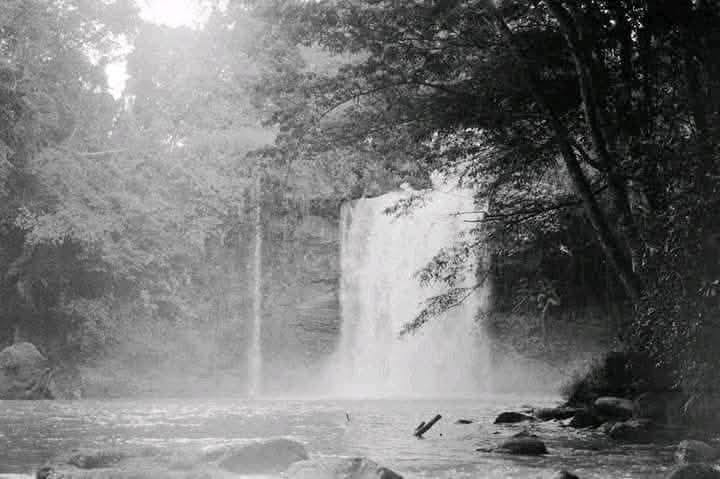
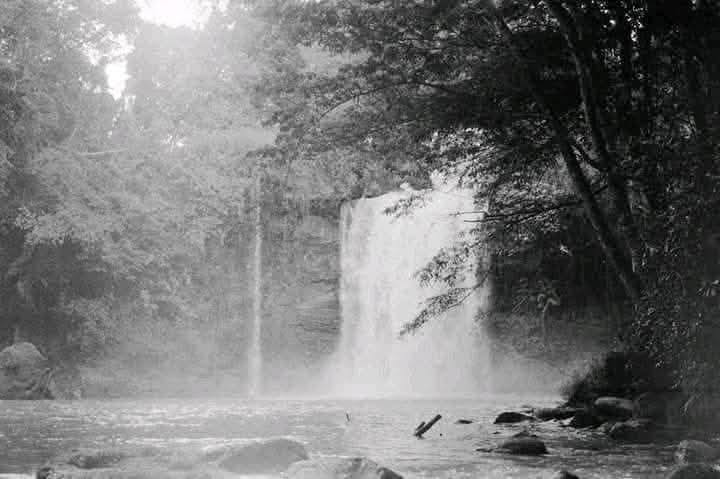
The Thika and Chania rivers provide the town’s most dramatic natural theatre. The Fourteen Falls on the Athi River, a few kilometres from town, drop over a 27-metre natural weir in a broad cascade that the Kikuyu called Githioro — “roaring” — and that became a tourist attraction in the colonial period. The falls on the Chania at the Blue Post Hotel, where Elspeth Huxley’s family picnicked and the settler community gathered on weekends, are smaller but sit at the historical heart of the town.
Thika Today
Thika today is a city of nearly 300,000 people — the largest urban centre in Kiambu County, though the county headquarters is elsewhere. Its industries are diverse: pharmaceutical, textile, food processing, cement, and the agricultural processing that has always been its core. Three universities serve a student population that gives the town an energy its industrial exterior does not immediately suggest. The A2 highway connecting it to Nairobi — expanded and upgraded as the Thika Superhighway in 2012 — turned the 42-kilometre journey from an hour’s drive into a twenty-minute commute, effectively making Thika part of Nairobi’s extended economic geography.
The Blue Post Hotel still stands above the Chania falls, still serving drinks to travellers who stop to hear the water. The Mugumo Gardens still marks the spot where a prophet’s tree once stood and a colonial administration once tried to prevent a prophecy from coming true. The coffee estates that Elspeth Huxley’s parents struggled to establish, and that the British colonial system built on Kikuyu land and Kikuyu labour, are now owned and farmed by the descendants of those labourers.
The flame trees — the African tulips, Spathodea campanulata, with their crimson flowers that give the town’s most famous literary title its image — still line the older roads and farm tracks. They were planted by settlers who wanted to beautify a frontier. They are still there, still flowering, indifferent to who owns the land beneath them.
Further Reading on This Site
- The Kikuyu People — the community whose land became Thika’s coffee estates
- The History of Coffee and Tea Farming in Kenya — how Thika became Kenya’s coffee heartland
- Kenya’s White Highlands — the colonial land system that built Thika’s plantation economy
- The Mau Mau Uprising — the rebellion that the Thika area’s Kikuyu communities were central to
- Colonialism in Kenya: Origins, Impact, and Resistance — the wider context of what the coffee ban and land alienation meant
- The Kamba Community — the traders whose networks passed through Thika before the settlers arrived
- The History of Nairobi — the city that Thika has always been in orbit around
- Kenya in the First World War — the conflict that disrupted Thika’s early settler farms
- Jomo Kenyatta — Kenya’s first president, a Kikuyu from Kiambu, the district that contains Thika