
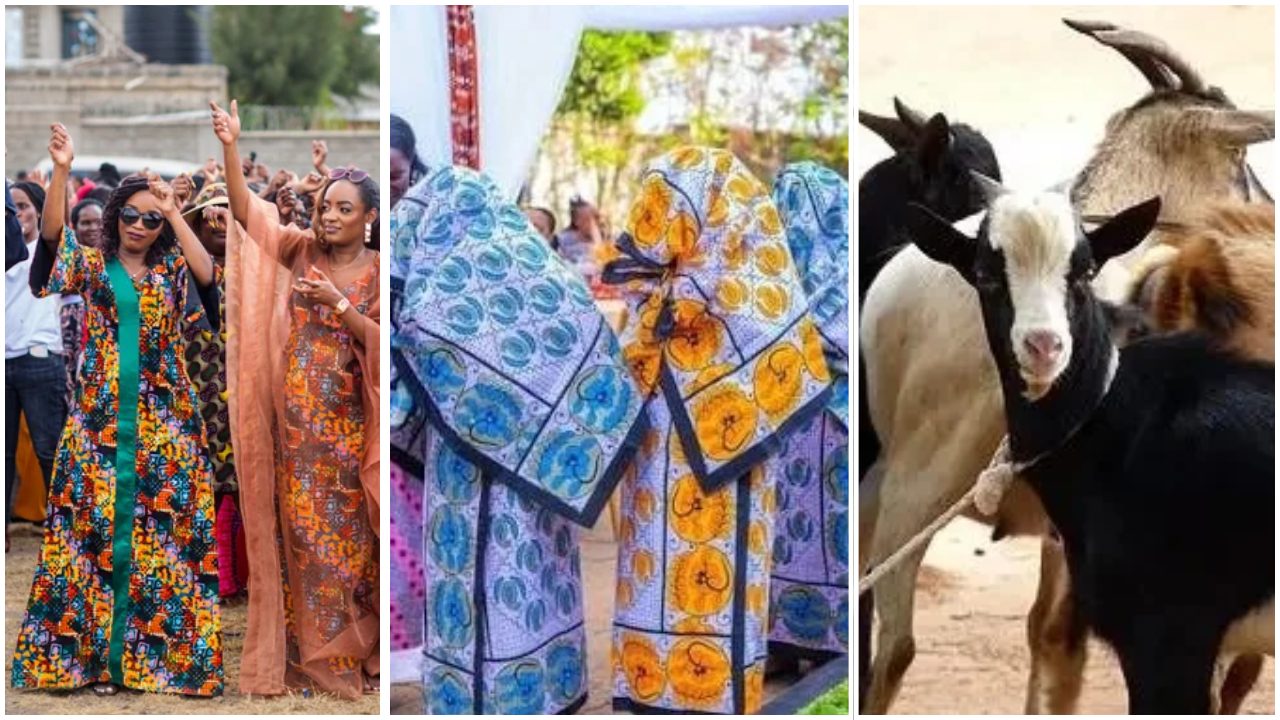
Among the Akamba, marriage was never only a union of two people. It joined two clans, moved livestock between two homesteads, and was sealed in stages, each with its own goats, beer and witnesses. The stages are still recognised today, and Kenyan courts have been asked to rule on them. This article walks through Kamba traditional marriage customs in the order they happened, and notes where accounts differ.
Practice varied by clan and by area. The details below come mainly from Kenyan press interviews with Kamba elders and from court records, so treat the numbers as typical, not fixed. For the wider setting, see our guide to the history and culture of the Kamba community.
1. Courtship and the Fathers’ Consent
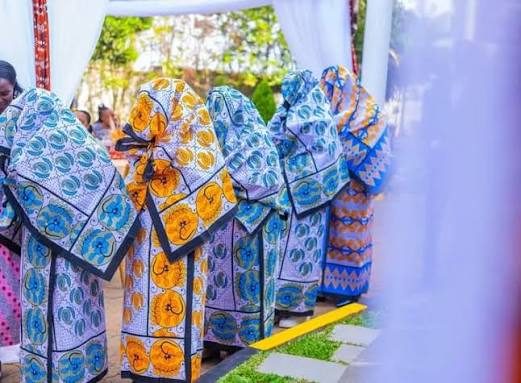
According to an account gathered in Kitui, a man who had chosen a woman courted her quietly, provided both were of age and had completed the required initiation rites. When the time was right, each told their parents. The two fathers discussed the match, and if they agreed, the formal sessions began.
Marriage also had to respect clan rules. Our article on the Kamba clans of Kenya explains why the clan sat at the centre of every such decision.
2. Ntheo: The Goats That Seal the Marriage
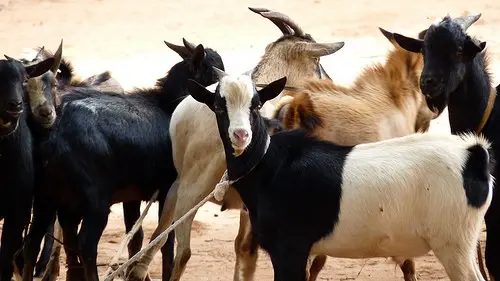
The first formal step was ntheo. The groom’s representatives, at least three of them, visited the bride’s family with mbui sya ntheo, the “marker goats”: a billy goat and two nannies. An odd number of goats mattered, because an even number was believed not to bind. They also brought gifts such as kaluvu (local brew), honey, sugarcane and bananas.
If the bride accepted, the billy goat was slaughtered. A strip of its skin, the mukwa, was returned to the groom’s parents as a sign of consent and blessing. Another account adds that the couple each ate a piece of soft meat from the goat, the kikonde, as an oath to keep the marriage covenant.
Ntheo carried real weight. Elders say a woman who died before ntheo was performed could not be buried by her husband, and even a bride who died at her parents’ home after ntheo would be buried in her husband’s homestead. Kenyan courts have also treated it as the key step: in one ruling, a judge described ntheo as the most essential step in an Akamba customary marriage, and said that once it was performed, a valid customary marriage existed. Variations exist. One cultural account describes two goats, not three, to mark the start of the in-law relationship (uthoni).
3. Ngasya: Negotiating the Dowry
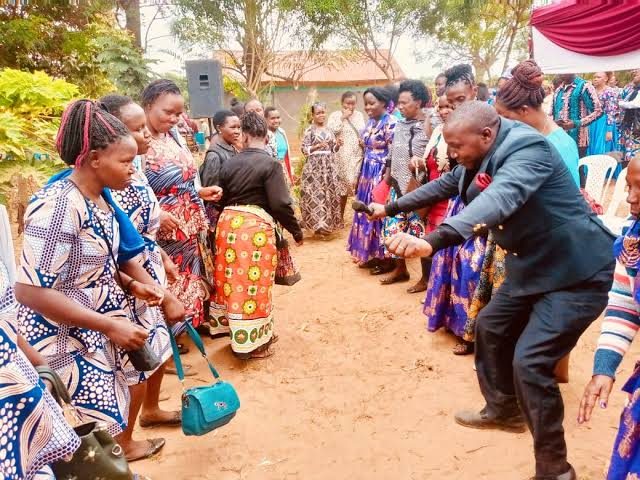
Dowry, called ngasya, followed. Each side sent at least four clan members, chosen for experience and eloquence. The groom stayed silent and spoke only when addressed. Grooms sometimes hired well-known negotiators.
The amount was paid mostly in livestock. One account says that in the old days the payment averaged 36 goats, six bulls and three heifers, with extra money if the bride had been educated. Today’s figure is given as 48 goats, three bulls and eight heifers, usually paid in cash at livestock prices. A different press account lists 48 goats plus two drums of honey, two blankets and two bedsheets, and a large goat called ndua itaa to show that the bride’s bed had now been paid for. An elder testifying in a 2024 court case gave 40 goats. The differences show how much clans varied.
Payment did not have to be made at once. Sticks representing the agreed amount were placed in a sisal basket, and each time part of the price was paid, a stick was handed back, like a receipt. If a groom delayed too long, the council of elders could step in. Because the clan carried the cost, a poor man from a wealthy clan could still afford to marry. Traditionally the groom’s parents and clan paid, but today the husband often pays himself, according to one academic study.
4. The Feast, Ilute and Mathaa
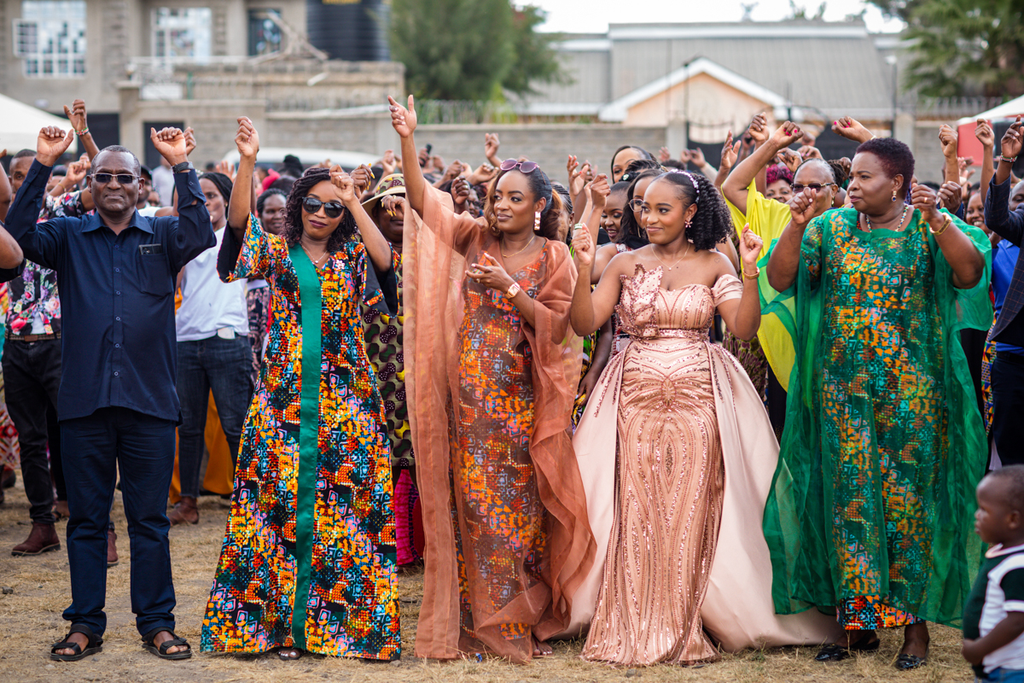
Once the bargain was struck, the groom’s clan brought food, firewood, water and cooking utensils to the bride’s homestead and cooked a feast. They served the bride’s clan first and ate only when their hosts had eaten their fill. The couple was considered married at this point, yet the groom went home without his bride.
Later visits followed, which differed by clan. Ilute was one, when the groom brought a bull for slaughter. The night before the bride left for her new home, her clan held mathaa, dressing her up and showering her with gifts. Today, one account notes, some couples hold mathaa straight after the dowry talks and the gifts take the form of money.
5. Faith, Beliefs and Marriage Rules
Marriage customs sat inside a wider system of belief and prohibition. Read more in our pieces on taboos in Kamba society and the Akamba spirit world.
6. When Marriages Ended
Divorce was recognised, and it had its own rules. A press account says the husband and his parents took two goats, one male and one female, called mbui sya maleo (“goats of divorce”), to the bride’s family. The groom’s side could then claim back the dowry, or let it go. Court evidence suggests that where there were children, a husband could not claim a refund, and that a woman’s later marriage was not seen as valid under custom until the earlier dowry had been returned.
Marriage Customs in Kenyan Courts Today
These customs are not only history. In September 2026, a Machakos magistrate refused a man’s request for a refund of Sh1 million after his wife left within 30 days, according to a Pulse Kenya report. The magistrate said traditional steps such as clan elder meetings had to be exhausted first, and that Kamba custom recognises only items like the ntheo goats and ngasya livestock as true dowry. He also noted that dowry is never paid to the bride herself.
Key Terms at a Glance
| Term | Meaning |
|---|---|
| Ntheo | The first step, with an odd number of goats, which seals the marriage |
| Mbui sya ntheo | The “marker goats” given at ntheo |
| Ngasya | The dowry, paid mostly in livestock |
| Ilute | A later visit, with a bull slaughtered for the bride’s family |
| Mathaa | The night the bride is dressed and given gifts before leaving home |
| Mbui sya maleo | The “goats of divorce” |
Conclusion
Kamba marriage was built in stages: courtship, ntheo, ngasya, the feast and mathaa. Each stage tied two clans closer, and the goats at each step were a public record, not only a payment. Some details have changed, such as who pays and how, but ntheo and ngasya remain the markers that elders, families and even courts look for. Different clans will tell the story differently, and any family wanting the exact rules should ask its own elders.
Sources
- Akamba nuptials, The Standard (2011)
- Ntheo, Kamba traditional marriage clincher, The Standard (2012)
- Essentials of Akamba customary marriage, AfricanLII (2019)
- Wambua v Mutave and another, Kenya Law (2024)
- JMK and another v JMM, Kenya Law (2019)
- Paukwa Kenya, Akamba marriage ceremonies
- Ndwae ngone mwaitu, Journal of International Women’s Studies, vol. 24
- Court denies Machakos man Sh1 million dowry refund, Pulse Kenya (2026)
