
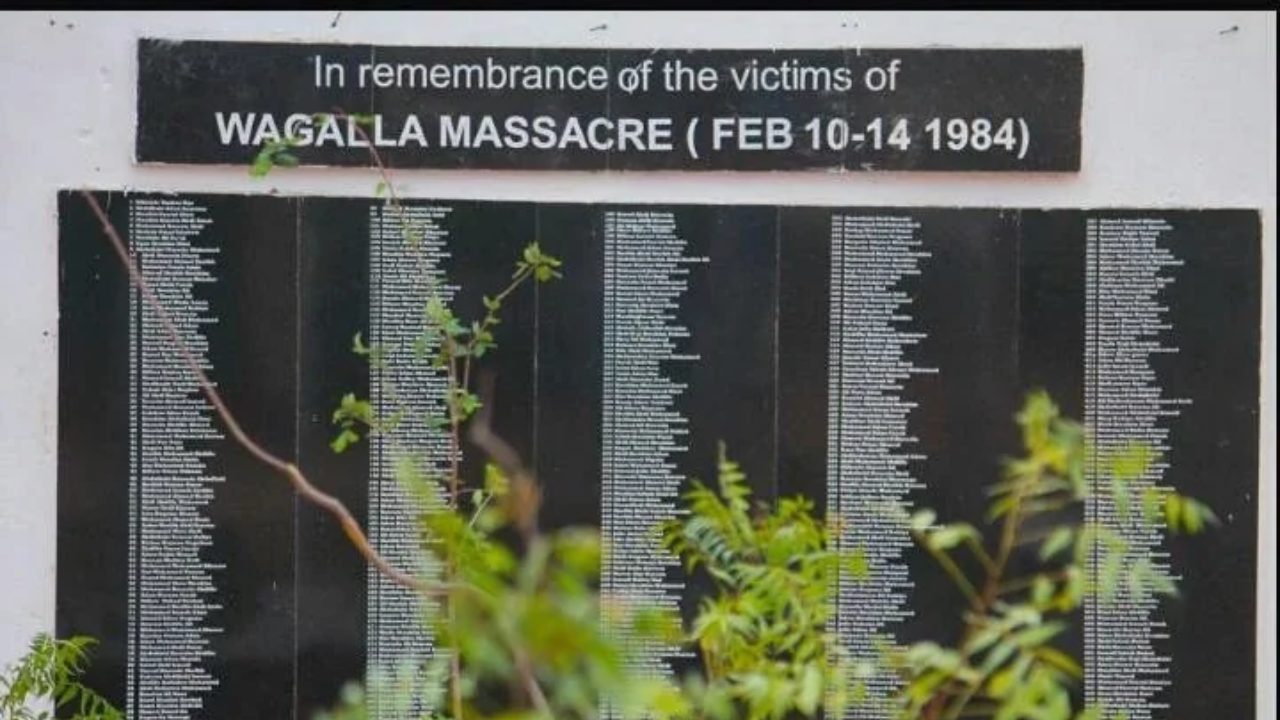
In the second week of February 1984, Kenyan security forces swept through the villages around Wajir town in what was then North Eastern Province. They rounded up thousands of Somali men and boys from a single clan, the Degodia, and took them to a remote, newly built airstrip at Wagalla. Over four days many of them were held in the open, stripped, beaten and denied food and water. By the time the operation ended, hundreds, possibly thousands, were dead.
For almost three decades the Kenyan state played down what happened, officially admitting to 57 deaths. Survivors and witnesses told a very different story. It was only when Kenya’s Truth, Justice and Reconciliation Commission (TJRC) held hearings in 2011 that the massacre was examined in public. This article explains the background, what happened at Wagalla, the dispute over the death toll and the long struggle for recognition and justice.
Background: A Region Under Suspicion
Decades of emergency rule in the north
To understand Wagalla, you have to go back to independence. In the early 1960s many Somalis in Kenya’s Northern Frontier District wanted to join the newly independent Somali Republic. The conflict that followed, known as the Shifta War, lasted from 1963 to 1968 and left a legacy of emergency laws, collective punishment and deep distrust between the state and the region’s people. For background, read our articles on the Shifta War and the Northern Frontier District.
Even after the war ended, the north remained under heavy security control. Historian David Anderson describes a policy of “collective punishment,” in which whole communities were held responsible for the actions of a few. For more on the communities of the region, see our history of the Somali people of Kenya.
Clan Conflict in Wajir
A rivalry over land and water
In the early 1980s Wajir District was troubled by clashes between Somali clans, particularly the Degodia and the Ajuran, over grazing land and water. Banditry and the spread of illegal firearms added to the tension. The government’s stated aim in February 1984 was to restore order and recover illegal guns. Instead, the operation targeted one clan as a whole.
What Happened at Wagalla: 10 to 14 February 1984
Four days on an open airstrip
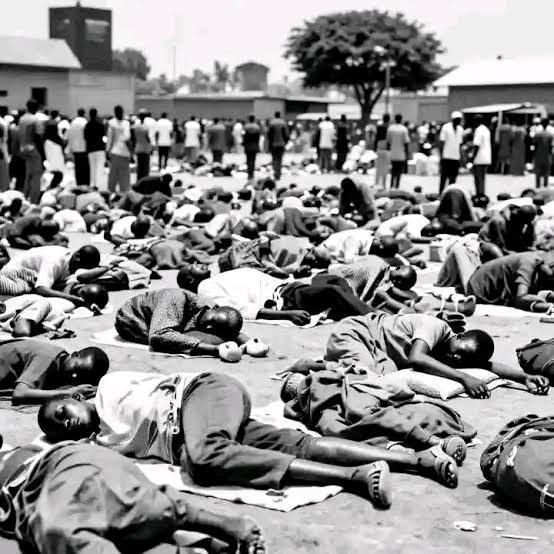
In the early hours of 10 February 1984, heavily armed security officers began rounding up Degodia men and boys from their homes in and around Wajir. According to survivors, all males over the age of about 12 were taken. They were transported to the Wagalla airstrip, roughly nine miles (about 15 km) from Wajir town.
Survivors told the TJRC that detainees were forced to strip and lie face down on the hot ground, and were held for days without food or water. Many were beaten and tortured. The ordeal ended on the morning of 14 February amid a stampede and shooting. In the villages, witnesses described rapes, the burning of homes and the killing of livestock.
How Many People Died?
57, hundreds or 5,000?
The death toll remains disputed. In 1984 the government told Parliament that 57 people had been killed. Survivors, witnesses and community leaders have long put the figure far higher, with some estimates reaching around 5,000.
Historians who have studied the evidence are more cautious. David Anderson, writing in the Journal of Eastern African Studies, concludes that several hundred Degodia died, whether 500, 1,000 or more is unknown, and calls Wagalla the worst atrocity in Kenya’s modern history. What is clear is that the official figure was a serious undercount.
Silence and Denial
Decades without an inquiry
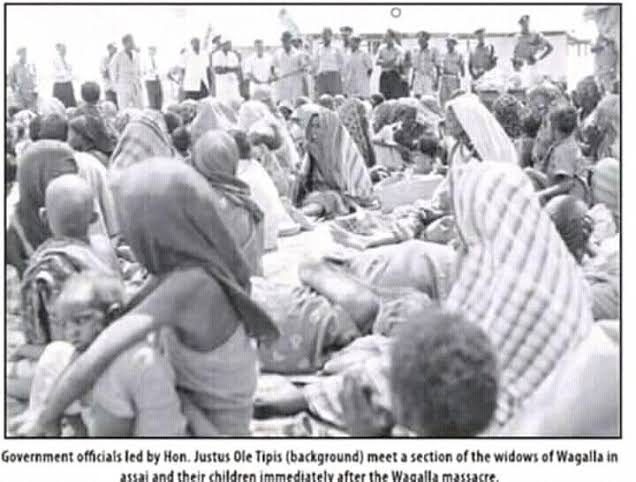
At the time, the government presented the operation as a legitimate security exercise. Northern Kenya was remote, access was restricted and the press was tightly controlled during the Moi era. No official investigation was carried out, and for years speaking openly about Wagalla carried risks. Survivors lived with trauma, widows raised children alone and the Degodia community carried the memory largely in silence. For more on state repression in this period, see our article on the Nyayo House torture chambers.
The TJRC Hearings
Testimony finally heard in public
Kenya’s Truth, Justice and Reconciliation Commission was set up after the 2007–08 post-election violence to investigate historical injustices since independence. In 2011 it held hearings in Wajir, where survivors, widows and former officials gave evidence. Former administrators and security officers also testified, some describing the operation as unprofessional or bungled, though their accounts were often inconsistent.
In its final report, published in 2013, the TJRC found that the massacre, including the detention, torture and killing of Degodia men at the airstrip and the rapes, killing of livestock and burning of homes in the villages, was a systematic attack on the community. Its findings gave official weight, for the first time, to what survivors had been saying for nearly thirty years.
Remembering Wagalla
Monuments, books and annual commemorations
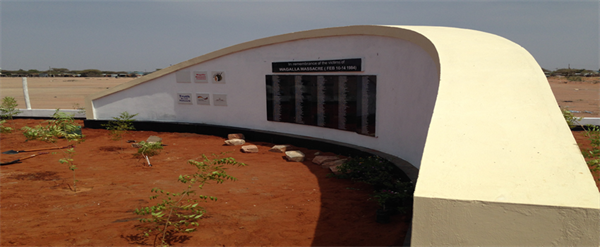
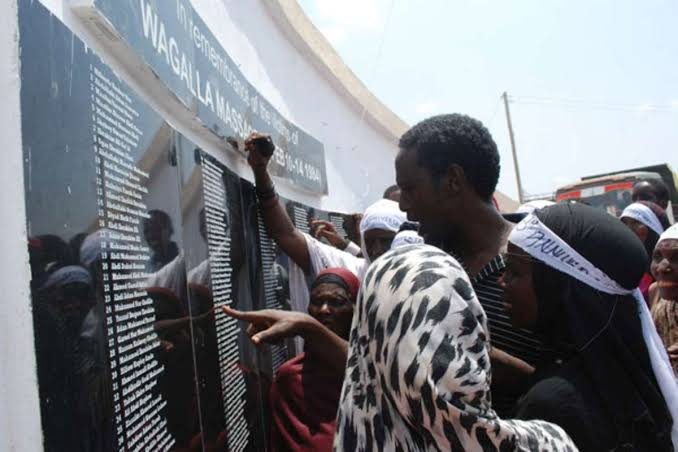
On 14 February 2014, thirty years after the massacre ended, a monument to the victims was opened in Wajir. Survivors and families gather each February to remember the dead. The writer Salah Abdi Sheikh documented the massacre and its survivors in his book Blood on the Runway, one of the most important accounts of the event.
Calls for justice continue. In 2015 the Wajir County government said it would work with human rights organisations to seek justice for the victims, and many families are still waiting for full recognition, reparations and accountability.
Why Wagalla Matters Today
Wagalla is a reminder of how state power was used against citizens in northern Kenya, and of how long it can take for such events to be acknowledged. It sits alongside other dark chapters of Kenyan history, from colonial atrocities like the Hola Massacre to post-independence violence. Remembering it honestly is part of building a country where every community’s story is heard.
Sources
- David M. Anderson, “Remembering Wagalla: State Violence in Northern Kenya, 1962–1991”, Journal of Eastern African Studies (2014)
- The Star: Chronicles of the Wagalla Massacre
- The Star: No answers or justice on 1984 Wagalla massacre
- Daily Nation: Wagalla operation bungled, team told
- The Standard: Ghosts of Wagalla Massacre linger as Wajir hosts Madaraka Day fete
- Wikipedia: Wagalla massacre
