
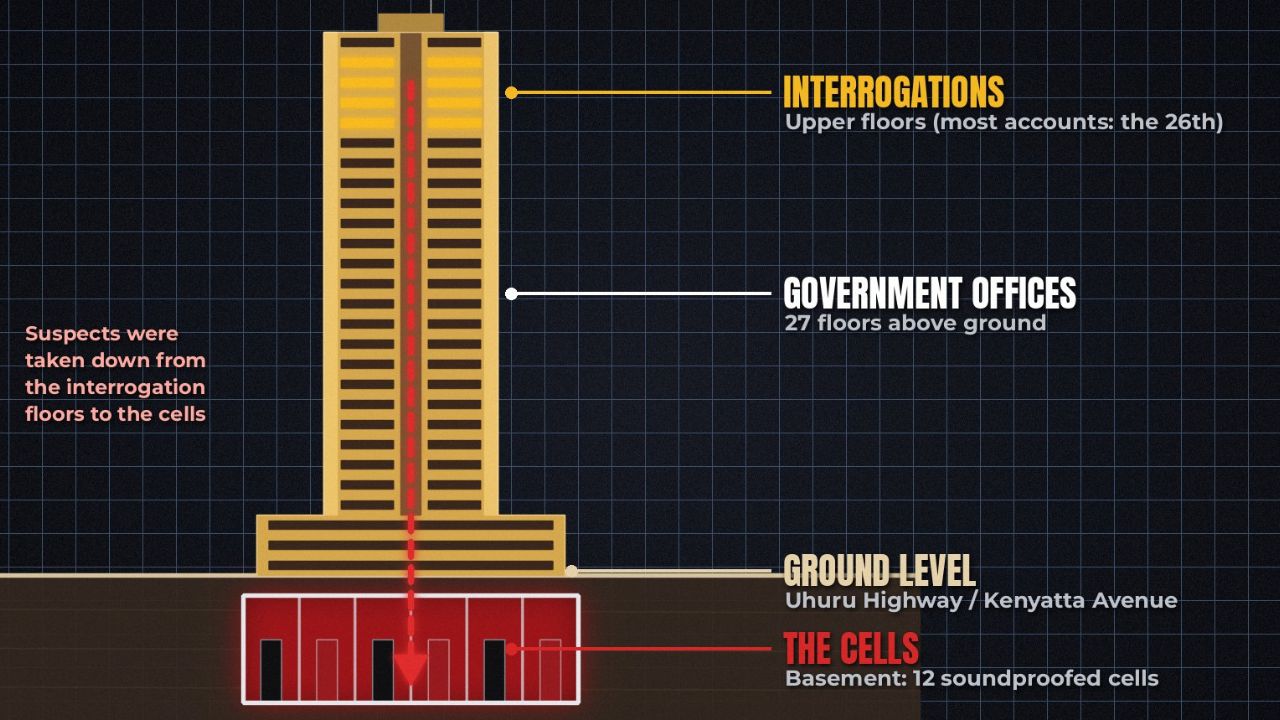
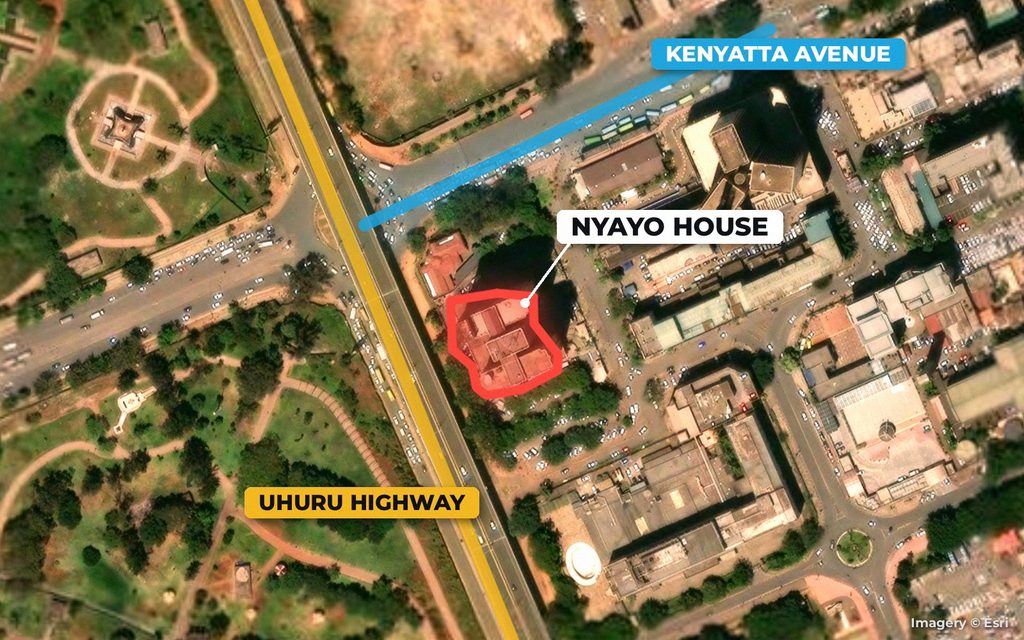
Every working day, thousands of Kenyans queue at Nyayo House for passports and visas. The yellow tower on the corner of Uhuru Highway and Kenyatta Avenue is one of the best-known government buildings in Nairobi.
For most of the 1980s, almost none of them knew what lay beneath their feet. Under the tower, the Special Branch kept a row of soundproofed cells where suspected dissidents were held in darkness, flooded with cold water and questioned until they confessed.
This is the story of that basement: who built it, who was held there, the one death that reached a courtroom, and why, more than twenty years after it was opened to the press, Kenyans still cannot walk in.
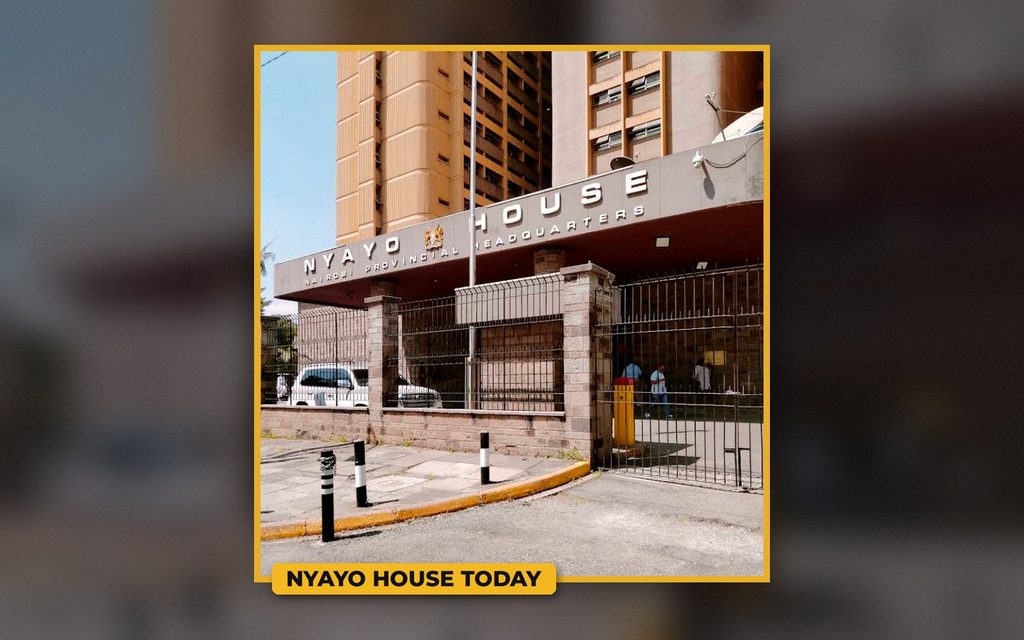
[IMAGE 1] Nyayo House from street level, full height of the tower.
A tower for the Nyayo era
Nyayo House was planned in 1973 under a different name, Nairobi House. Construction began in 1979, the year after Daniel arap Moi became president, and the building was finished in 1983. By then it carried the name of his political philosophy: Nyayo, “footsteps”.
It rises 27 floors, about 84 metres, over one of the busiest junctions in the city. Officially it was a block of government offices, and that is what most Nairobians took it to be.
Its timing matters. The tower was completed a year after the August 1982 coup attempt by Air Force rebels. After the coup, Moi’s government tightened its grip on dissent, and the security services grew more powerful. Nyayo House became one of the places where that power was exercised out of sight.
[IMAGE 2] The Nyayo House entrance sign.
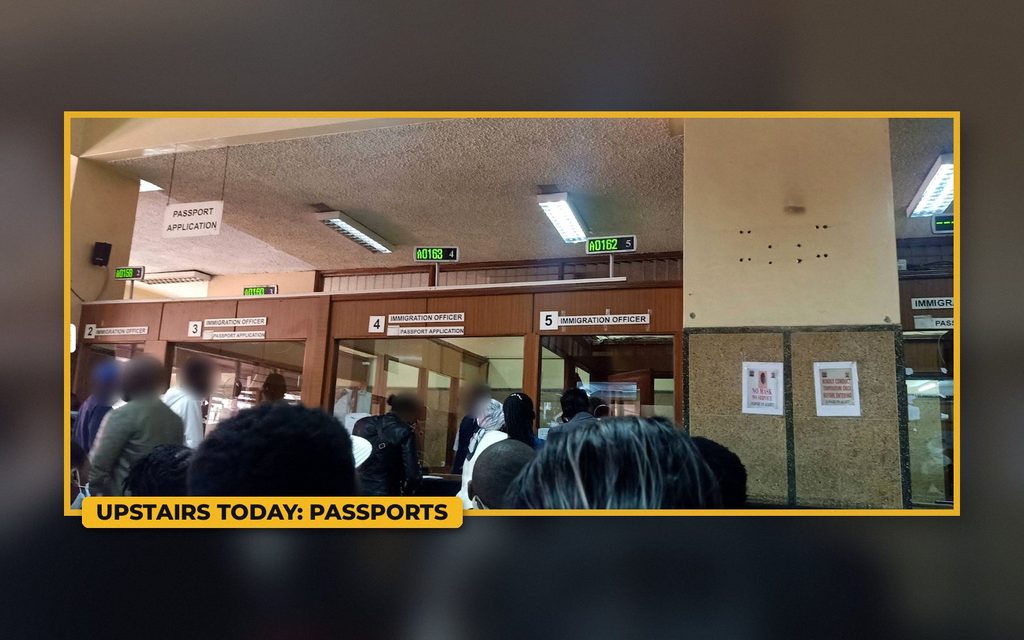
[IMAGE 3] The immigration hall inside Nyayo House, faces blurred.
What was in the basement
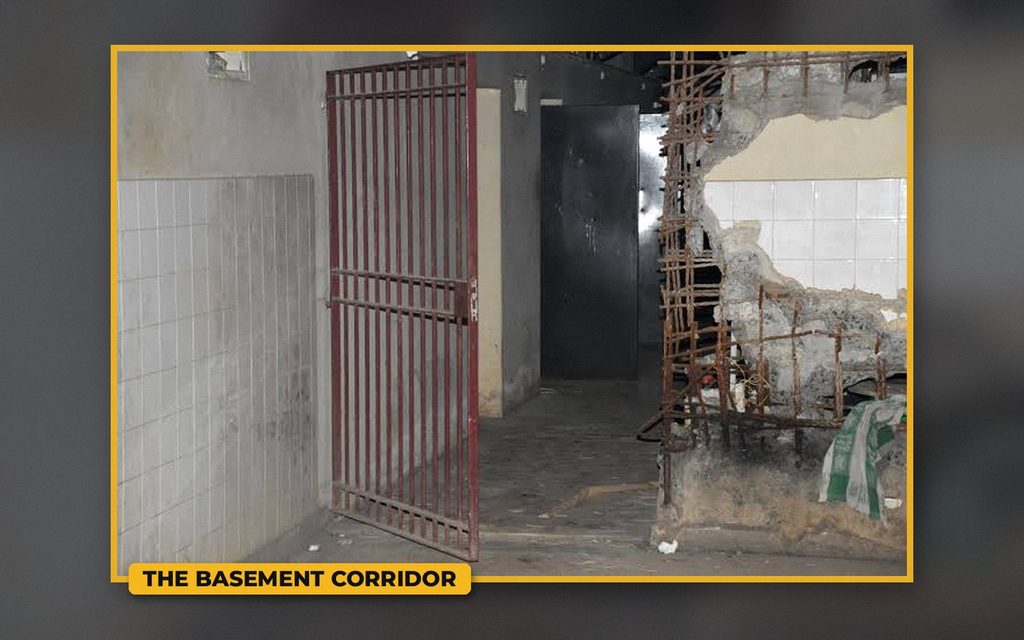
Below ground, the building held two rows of cells. The Daily Nation counted twelve, six to a row; a Scotsman reporter who toured them in 2003 counted fourteen. A 2025 architectural study of the building also describes twelve rooms below ground.
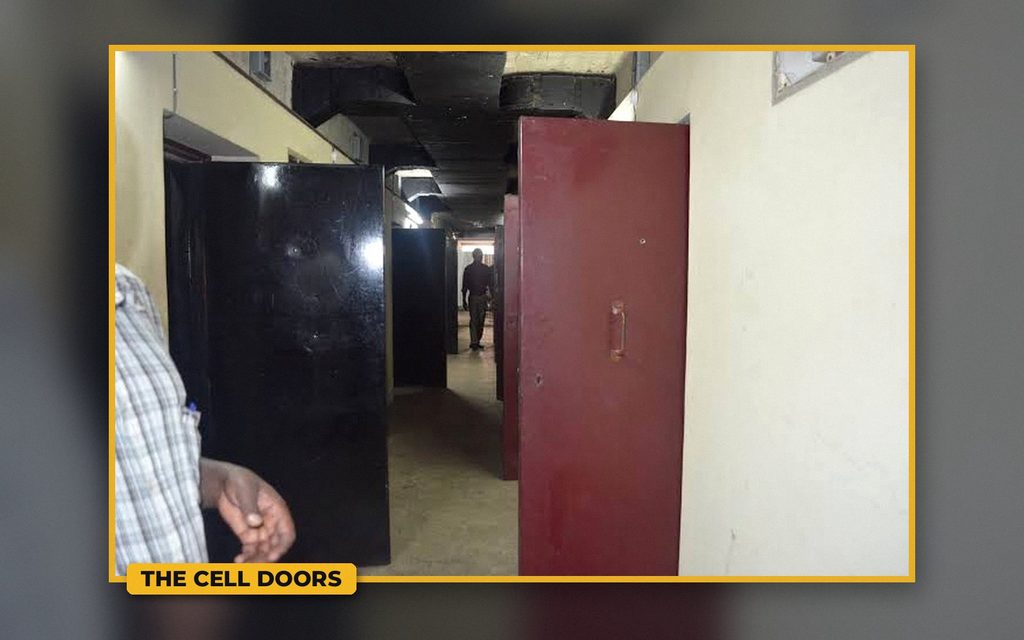
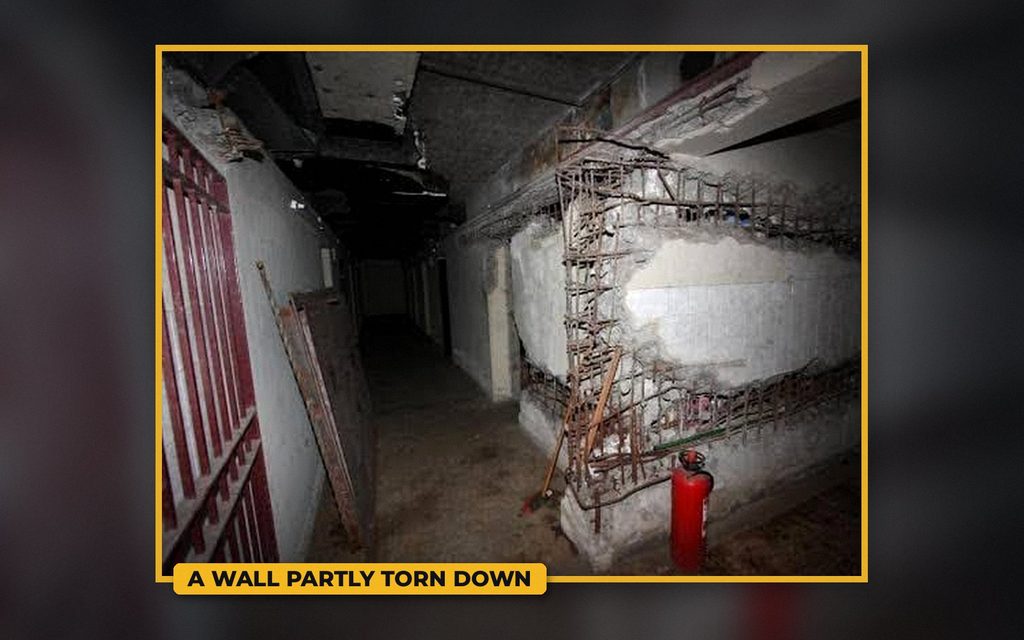
The cells were built for one purpose. Their walls were double and soundproofed, and they had no natural light or ventilation. The doors were steel, with peepholes, and they were painted black or red inside.
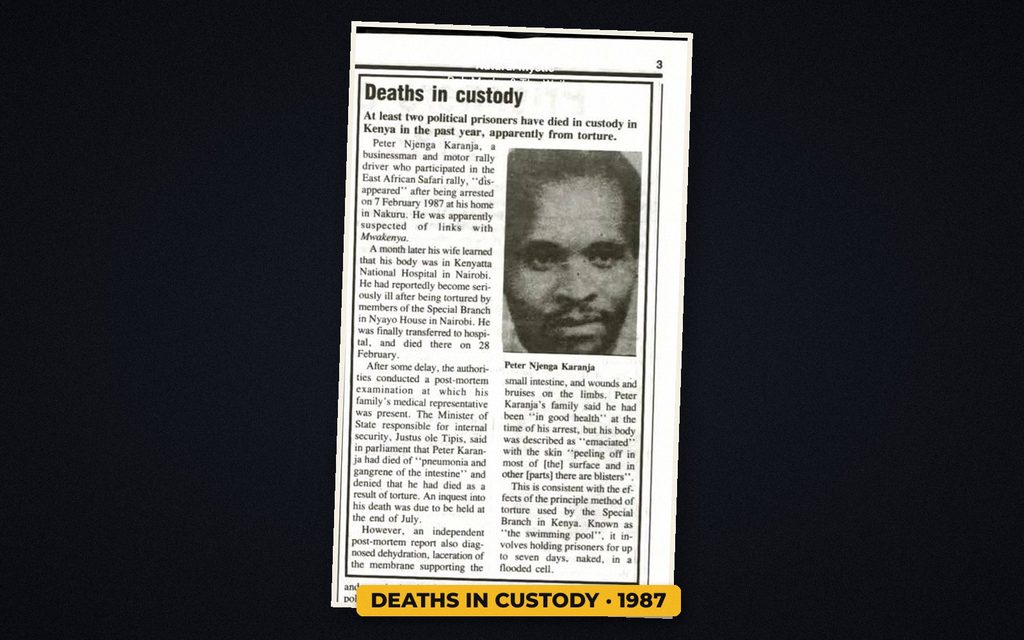
The most notorious feature was the plumbing. Rubber seals under the doors let a cell be flooded so that a prisoner stood knee-deep in water. Vents could pump in freezing air, or hot, gritty, dusty air. A 1987 report on deaths in custody called the method the “swimming pool”: a prisoner held naked in a flooded cell for up to seven days.
The Special Branch and Mwakenya
The cells were run by the Special Branch, the police intelligence unit that later became the National Security Intelligence Service. Interrogations took place on the upper floors of the tower. Accounts differ on the exact floor, from the 23rd to the 26th. Suspects were then taken down to the basement.
Survivors describe the same routine: stripped naked, kept in the dark, made to stand in water, often denied food, then brought back upstairs to be questioned again.
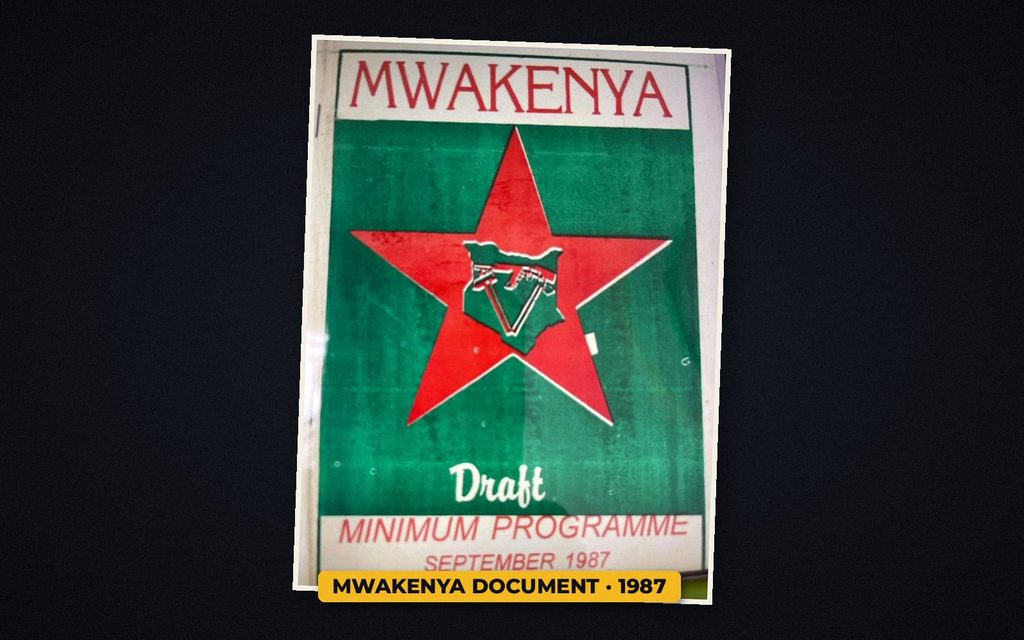
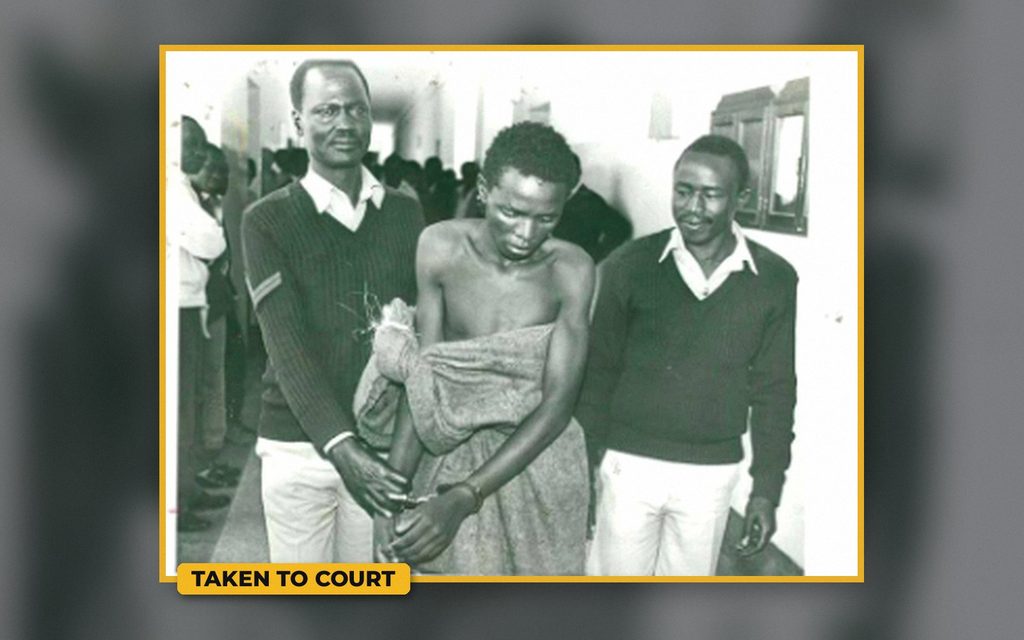
Many of those held were accused of belonging to Mwakenya, an underground movement opposed to Moi’s government that circulated pamphlets calling for change. The crackdown peaked in 1986 and 1987. Detainees were tortured until they admitted membership. Many were then driven to court in the evening, without a lawyer, and pleaded guilty to sedition the same day.
Human rights groups later estimated that more than 100 people were interrogated and tortured at Nyayo House between 1983 and 1996. Activists put the figure as high as 2,000. No official count has ever been published.
[IMAGE 7] Cover of the Mwakenya “Draft Minimum Programme”, September 1987.
Credit: [source]
The survivors
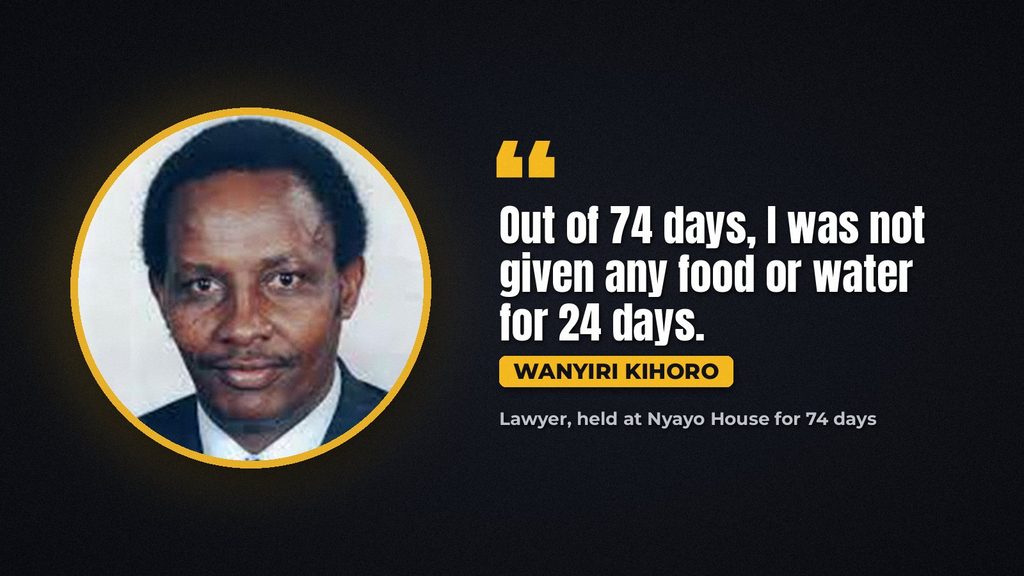
The lawyer Wanyiri Kihoro spent 74 days in Nyayo House. He later told reporters that for 24 of those days he was given neither food nor water.
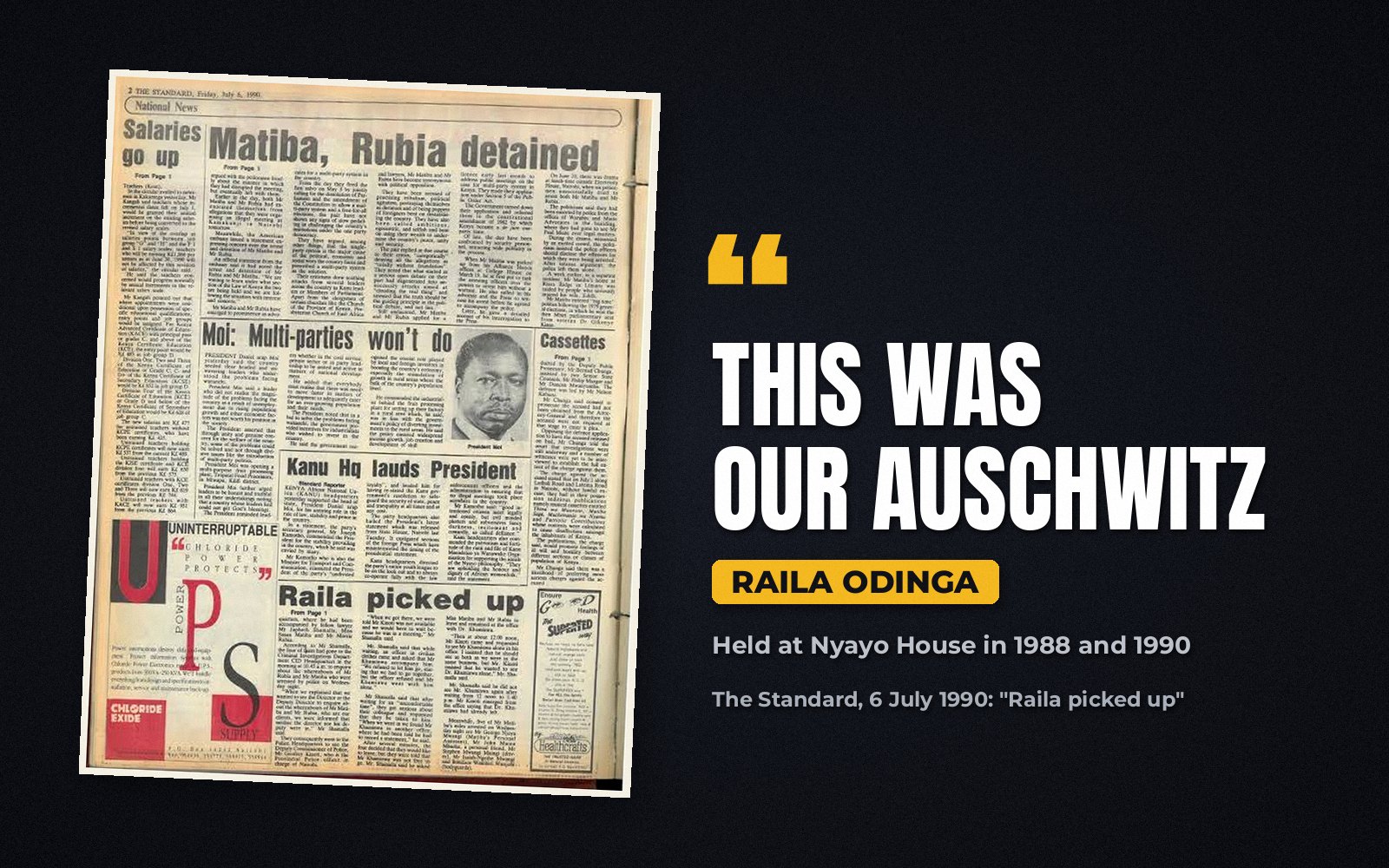
Raila Odinga was held there too, in 1988 and again in 1990. Returning to the basement in 2003, he described it simply as “our Auschwitz”.
They were among the few who could later tell their stories in public. Most of those who passed through the cells never had that chance.
Credit: The Standard, 6 July 1990
The death that reached a courtroom
Peter Njenga Karanja was arrested at his home in Nakuru on 7 February 1987, suspected of links to Mwakenya. Three weeks later, on 28 February, he died at Kenyatta National Hospital.
The government’s explanation came from minister Justus ole Tipis, who told Parliament that Karanja had died of pneumonia and gangrene of the intestine. An independent post-mortem told a different story. It found dehydration, lacerations and bruising on his limbs.
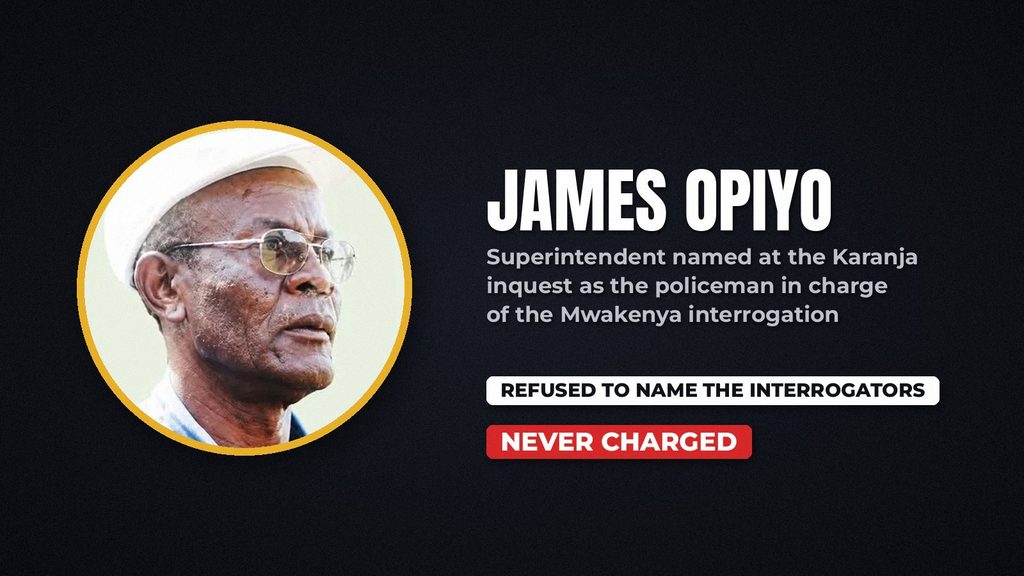
An inquest followed, and by January 1988 it was under way with international observers watching. In his ruling, Chief Magistrate Joseph Mango named Superintendent James Opiyo as the policeman in charge of the Mwakenya interrogations. Opiyo refused to identify the officers who had questioned Karanja, citing state security.
The magistrate asked the Attorney General to investigate. According to survivors’ accounts compiled in 2003, no further investigation was carried out. Opiyo was never charged. He retired in 1999 as a Deputy Commissioner of Police.
February 2003: the basement opened
Moi left office at the end of 2002. In early February 2003, the new NARC government opened the Nyayo House basement to journalists, and survivors walked back into the cells where they had been held. Some broke down and wept.
Part of one basement wall had been knocked through. A 2025 study of the building records that the outgoing government had tried to remove evidence, then stopped when it realised the walls were holding the building up.
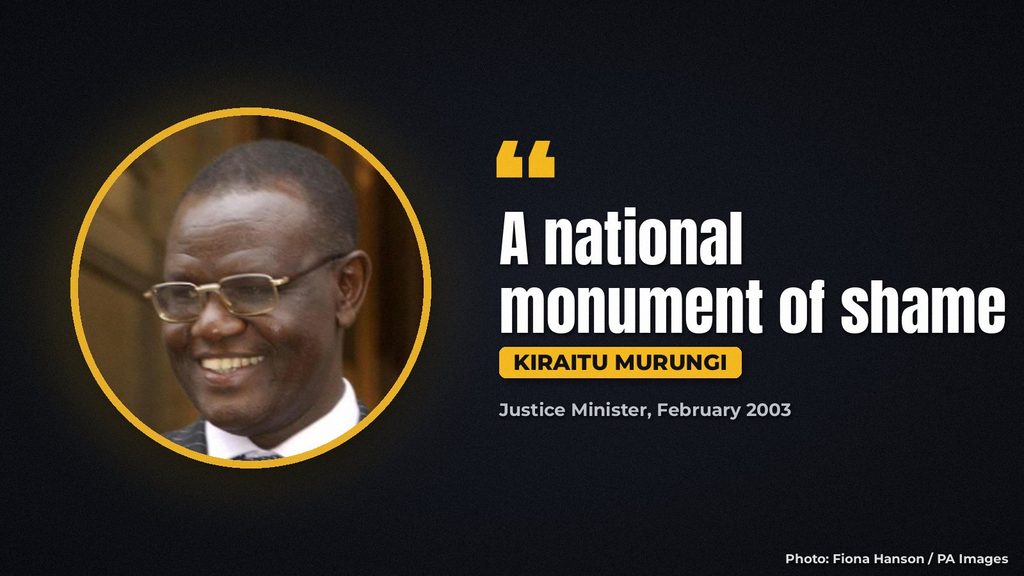
Justice Minister Kiraitu Murungi promised that the cells would be preserved as a “national monument of shame”.
Still locked
The monument was never built. Nyayo House remains a restricted area under a 1991 legal notice. Anyone who wants to see the basement, survivors included, needs permission from the National Intelligence Service, and photography there is prohibited by law.
The Truth, Justice and Reconciliation Commission recommended that the cells be opened to the public. In June 2024, survivors, the Kenya Human Rights Commission and the Law Society of Kenya went to court to have the basement declared a national monument. At the time of writing, no ruling has been published.
Upstairs, the passport queues move as they always have.
Did you, or someone in your family, pass through Nyayo House, or queue there without knowing what was below? Share your memories in the comments.
- A tower for the Nyayo era: Read more: How the 1982 coup attempt changed Moi’s Kenya.
- The Special Branch and Mwakenya: Read more: Daniel arap Moi, the man behind the Nyayo era.
- The survivors: Read more: Raila Odinga’s life, from detention to the national stage.
- February 2003: Read more: How Kenyans won back multiparty democracy.
- Still locked: See the city around the tower: Nyayo Nairobi in photographs, 1978–1990.
Sources
- Voice of America, report on the opening of the Nyayo House cells, 25 February 2003 (Kihoro and Raila Odinga quotes)
- The Scotsman, 2003 (cell count, survivor accounts, Kiraitu Murungi’s “monument of shame” pledge)
- Mail & Guardian, 17 April 2003 (survivor accounts, activists’ estimate)
- Daily Nation: “Inside the walls of the house that kept Kenya’s dark secrets”; “How Moi’s building of torment came to be”; “The Dark Legacy” (excerpting We Lived to Tell: The Nyayo House Story, Friedrich Ebert Stiftung / Citizens for Justice, 2003)
- The Standard, 6 July 1990 (Raila Odinga’s arrest) and 6 June 2018 (James Opiyo)
- “Deaths in custody”, 1987 report on the case of Peter Njenga Karanja
- UK Hansard, 15 January 1988 (the Karanja inquest)
- N. F. Frayne, “Memory in the Walls: An Exploration of Temporality in the Architecture of Nyayo House”, Architecture and Culture 13:1-2 (2025)
- Kenya Human Rights Commission, Petition E275 of 2024
