
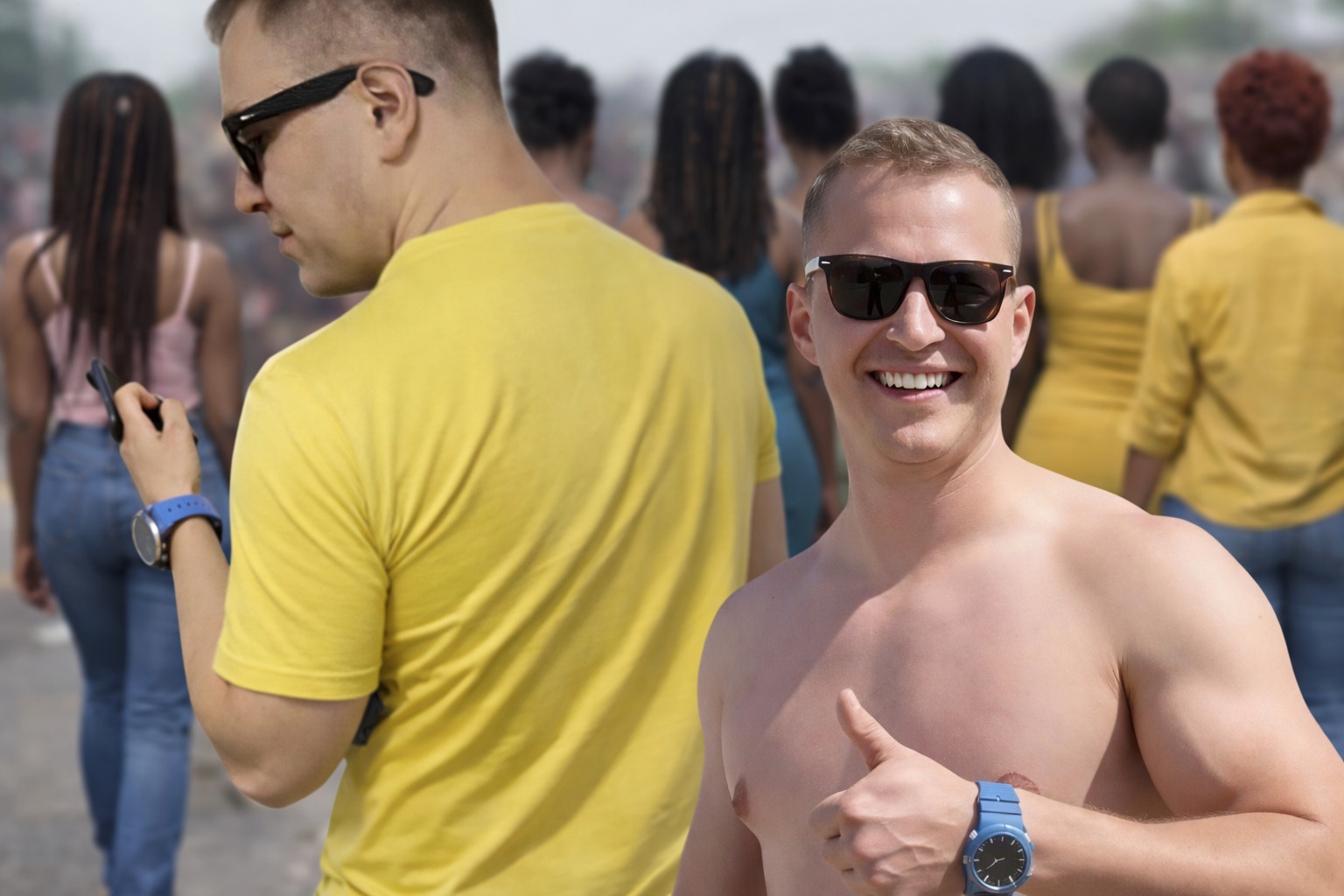
A shocking scandal has been trending across African social media: a **Russian man identified as “Yaytseslav” secretly filmed intimate encounters with women in Kenya, Ghana, South Africa and beyond. Over the past few days, short video clips have circulated showing this man approaching young women in public – on city streets and in malls – showering them with compliments and boldly asking for their phone numbers. In the videos, some women reject his advances, but the shere majority atleast the ones he posts giggle and agree to accompany him, unaware of what will follow. He typically lures the willing women back to his apartment or Airbnb, where he secretly capture their private moments without consent.
The Viral Russian Seduction Scandal in Kenya and Ghana
Revelations of Yaytseslav’s activities have sparked outrage across Africa. It emerged that he shared short teaser clips on TikTok and YouTube for free, then sold full-length explicit videos via a private Telegram channel at a subscription fee. In other words, he monetized these non-consensual recordings, charging about $5 per month for access. Tech enthusiasts noted the man often wore Ray-Ban smart glasses (also known as Meta glasses) equipped with mini-cameras – a likely tool for his covert filming. Indeed, “he has been secretly recording private encounters with different women across Africa and sharing the videos on his social media pages,” a Kenyan news site reported. The scandal only came to light after he posted a series of videos with Ghanaian women, prompting netizens to investigate further. By then, dozens of videos featuring women from Kenya, Ghana, South Africa, and other countries had been leaked, indicating a widespread pattern of predatory behavior.

In Ghana, for example, footage showed him prowling the Accra Mall area, smoothly chatting up random women and then inviting them to his hotel room. All the while, he wore what looked like ordinary eyeglasses – likely the hidden camera – to record both the initial flirtation and the ensuing bedroom encounter. The full videos were then uploaded for his online followers. Not only is this a gross violation of privacy and consent, but he did so explicitly to gain fame and money, echoing the exploitative tactics of so-called “passport bros.” The term “Passport Bros” refers to men (often from wealthier nations) who travel abroad to pursue women, believing foreign women are easier to woo or more submissive than women back home. This Russian content creator’s exploits fit that mold disturbingly well. He leveraged his status as a European traveler to disarm local women, essentially turning their interactions into a form of voyeuristic sex tourism for online consumption. As one commentary noted, passport-seeking men intentionally flock to countries with lower economic opportunities so they can leverage their financial position – an advantage that creates an imbalance in any relationship, and they know it. In many ways, Yaytseslav’s behavior is an extreme example of this “passport bro” phenomenon: a modern twist on old colonial power dynamics, where outsiders exploit local people under the guise of romance.
Public Outrage and Official Responses
The public reaction in Kenya, Ghana, and other African countries has been swift and intense. On social media, users have expressed anger, disgust, and humiliation at how a foreigner so easily exploited local women. In Kenya, the story has dominated trending topics for days. Many Kenyans are calling for the man’s arrest and extradition to face charges for filming and disseminating intimate content without consent. One Kenyan man even staged a solo protest in Nairobi’s Central Business District, holding a placard that read: “I will stand here until the Russian guy is investigated and arrested… If a Russian man comes into our country, exploits women, secretly records them… what does this indicate about us if we stay silent?”. This poignant question struck a national nerve – highlighting concerns about sovereignty, justice, and self-respect.
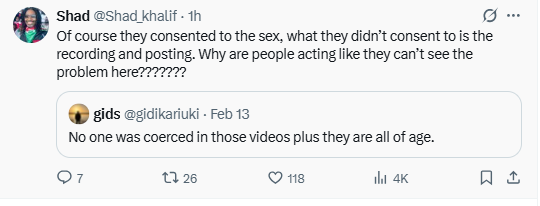
Kenyan influencers and celebrities also weighed in. One popular influencer, Easter Kojwang, bluntly blamed Kenyan men for failing to protect their women. She argued that if this had happened in neighboring countries, local men would have immediately had the perpetrator caught, but “Kenyan brothers were busy shifting blame and castigating the women. Hold that man accountable,” she demanded. Her comments sparked fierce debate – some agreed that Kenyan men should have done more, while others (mostly men) bristled at being assigned blame for women’s choices. The divide in responses was telling. A segment of (male) commenters instead chose to shame the women involved, calling them “loose” or greedy. For instance, one user scoffed, “The Russian guy is wrong for recording without their consent, but women, too, should change their ways and character.” Another cynically asked, “What crime did he commit?” – implying the women got what they signed up for. These reactions expose a vein of victim-blaming and misogyny that unfortunately often surfaces in discussions of sexual exploitation.
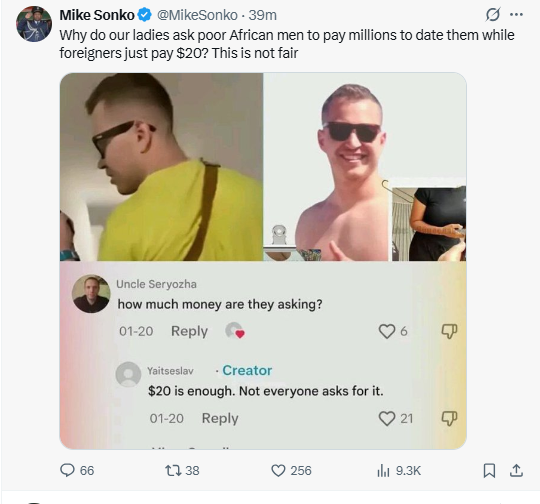
At the same time, however, many voices have risen to defend the women and direct the criticism where it truly belongs – at the perpetrator and the broader social conditions. A particularly insightful comment from a Kenyan netizen captured the heart of the matter: “Most Africans tend to think that white people have money; that’s the issue. Education and reasoning are the problems.”. Here, in one blunt sentence, lies an uncomfortable truth: there is a prevailing mentality in our society that glorifies white foreigners as inherently wealthy or superior, making it easier for someone like Yaytseslav to prey on local women. The commenter suggests that a lack of awareness (“education and reasoning”) is to blame for this misplaced trust in white strangers. Indeed, several of the women in the leaked videos reportedly believed the Russian man was a successful, well-meaning tourist – perhaps even a potential boyfriend – only to discover later that they were one of many being duped.
Authorities in the region have not remained silent either. In Ghana, the Ministry of Gender, Children and Social Protection issued a strong statement vowing to pursue legal action. The Ministry emphasized that the non-consensual recording and distribution of intimate images is a criminal offence and a clear violation of personal dignity and privacy. Ghanaian officials are coordinating with police and even international agencies to track down the culprit, although preliminary information suggests he may have already fled the country. Support services, including counseling and legal assistance, are being offered to the women affected in Ghana. In Kenya, while a formal government statement is yet to be made public as of this writing, there are growing calls for cross-border cooperation to ensure the perpetrator faces justice. Influential Kenyan personalities such as comedian Terence Creative have urged “online detectives” to help find the Russian national so that he can be held accountable. Across the board, the scandal has ignited a broader conversation about consent, privacy, and the treatment of women in the digital age. It also forces a moment of painful introspection: Why were so many local women easily impressed by a random foreigner to begin with?
Not the First Time: A Pattern of Foreign Predators and “Passport Bros”
As sensational as the Yaytseslav saga seems, it is not an isolated incident. In truth, it’s part of a troubling pattern of foreign men taking advantage of local women in Africa – a pattern rooted in power imbalance and “colonial echoes.” Observers have been quick to recall earlier scandals that bear an eerie resemblance. In 2020, another foreign man named Mike Oliver went viral in Kenya after bragging online about sleeping with dozens of Kenyan women. Mike Oliver, a Caucasian tourist, posted on Facebook a series of photos of himself with over 50 different local women he claimed to have been intimate with during his stay. The women were often smiling in the pictures, seemingly proud to be in this white man’s company – until his post went viral and they realized he had been using them as conquests to boost his ego. It later emerged (to public horror) that Oliver was allegedly HIV-positive and had not disclosed this, putting those women at grave risk. The “Mike Oliver affair,” as it came to be known, sparked outrage and debate in Kenya very similar to what we see now. Many Kenyans shamed the women for “throwing themselves” at a mzungu (slang for white man), while others pointed out that the man deliberately exploited their trust and perhaps their economic vulnerability. A Kenyan commenter at the time asked, “Where did our dignity go? What desperation is in our girls, that they’d give in to a dude they know nothing about?”. The parallels with the current case are striking – only that Oliver used Facebook photos, whereas Yaytseslav escalated it to hidden-camera videos on Telegram.
Beyond Kenya, there have been similar episodes in other African countries. In West Africa, reports have circulated of Western expatriates or travelers engaging in “sexcapades” with local women and then sharing the details online – effectively kissing and telling on a grand scale. These cases are often framed by the perpetrators as “exploits” or “exposure of how easy local girls are,” revealing a deeply racist and misogynistic mindset. It’s a mindset that sees African women as conquests to be collected, not human beings deserving respect. In Ghana, for example, the recent videos by Yaytseslav have been dubbed “another case of Passport Bros gone wild,” referencing the broader passport bro trend. Originally, “Passport Bros” referred mainly to American men traveling to Asia or Latin America seeking wives or flings; now it encompasses any men from richer regions who intentionally seek partners in poorer countries, often under the stereotype that women there are more compliant, humble, and impressed by foreigners. The phenomenon has been widely criticized as a form of modern exploitation. As one analysis put it, Passport Bros deliberately flock to locations with significantly lower educational and economic opportunities than their home countries. They know their relative wealth and passport confer an alluring aura of opportunity, which they use to “leverage their financial position” over local women. It’s no coincidence that these men choose destinations where they feel women are less empowered and law enforcement is lax, allowing them to behave in ways they never could back home.
Critics even describe the Passport Bro dynamic as a form of “neocolonialism” in dating – essentially a new way in which men from former colonial or developed nations exert influence and control in developing nations. In the words of Rebecca Peng, who wrote about this trend, “Passport Bros often lack awareness of the damage they cause, which can echo neocolonialism — the indirect control of developing countries by colonial nations.” The “indirect control” here comes in the form of sexual and psychological exploitation, rather than overt political rule, but it harks back to the same old power imbalance: the white or foreign man as the one with resources and allure, and the local woman as the one expected to yield, to please, or to be grateful for his attention.
Importantly, pointing out this pattern is not to paint all interracial or international relationships with a broad brush. Genuine relationships based on respect and mutual love certainly exist between African women and foreign men. However, these high-profile scandals force us to confront the uncomfortable reality that some of these liaisons are rooted in deeply unequal power dynamics and problematic social attitudes. When a man like Yaytseslav can reportedly seduce and film over 100 women across Africa in a short span, it begs the question: what makes it so easy for him to do so? Yes, part of the blame lies in the calculated tactics of the predator – but part of it lies in our society’s vulnerable underbelly that he was able to exploit.
Colonial Mentality and the Lure of Whiteness
Digging deeper, many observers have identified a cultural Achilles’ heel at play: the colonial mentality and “white worship” that persists in African societies. The legacy of colonialism in Africa left behind more than just political and economic disruption; it ingrained in generations of Africans an often unspoken belief that “white is better.” Despite decades of independence, traces of this psychological legacy remain – manifesting as an automatic deference or admiration for white people and foreign things. In the context of the recent scandal, this translated into local women seemingly letting their guard down simply because a polite, light-skinned foreign man was flirting with them. The comment earlier – “Africans think white people have money” – is one aspect of this broader mentality. It’s a stereotype with some historical basis (colonialists and expatriates were typically wealthier than the locals they ruled over), but it has solidified into a damaging generalization: to many, a white face equals prosperity and opportunity. Thus, some women (and men) might be eager to associate with a foreigner, imagining either financial gain, migration chances, or at least social status by proxy. The Russian man in question likely understood this and weaponized it. By flashing a bit of cash, speaking in a foreign accent, and acting like a smitten gentleman, he played into the “white knight” fantasy that some local women unfortunately hold.
This “white knight in shining armour” syndrome is not a new concept. African sociologists and commentators have discussed it for years – how some African women (and men) idealize white partners as more romantic, respectful, or affluent compared to local partners. One Kenyan writer reflected on how Western media influenced girls to favor white men: “If I wished to be treated right by a man… then I needn’t waste my time with black men. White men were the way to go.” Such attitudes are perpetuated by experiences and portrayals that cast local men in a bad light (e.g., unfaithful, domineering) while presenting white men as loving and indulgent. Whether these perceptions are accurate or not, they gain power when local culture itself elevates all things foreign. From education systems that taught us European history and languages but not our own, to media and advertisements that glorify Euro-American lifestyles, the subtle message received is that to be associated with whiteness is to have prestige and success.
One stark indicator of this mindset is the pressure many Africans feel to shed their own accents and speak English (or French) like a native Westerner. Our accents, which carry the melody of our mother tongues, have become a point of shame for some. People fear being judged as “uneducated” or “provincial” if they sound too Kenyan, too Nigerian, too African when speaking English. As a result, you’ll find call center employees, TV presenters, and even ordinary folks on phone calls straining to adopt British or American twangs. This phenomenon was astutely summed up by a Nigerian commentator who invoked Malcolm X’s famous question, “Who taught you to hate yourself?” He noted that it’s hard to ignore the colonial mentality at work in accent bias – “hinged on the assumed superiority of anything foreign, [be it] accents, skin color and all.” In other words, we subconsciously equate speaking like a white person with being smarter or more sophisticated. Indeed, “tying sophistication to how foreign you sound is ridiculous,” as the writer put it, yet it persists as a social reality.
The preference for lighter skin – colorism – is another pernicious legacy. All across Africa (and the diaspora), skin-lightening products sell briskly, and lighter-skinned people are often unfairly regarded as more beautiful or of higher status. A North African activist pointed out that this too traces back to colonial standards: “Clearly, the beauty ideal is white and this is also the main concept of colonialism: White is better, white is smarter, white is more beautiful.” From hair textures (straight hair seen as “more professional” than natural Afro hair) to facial features, Eurocentric standards still dominate what our societies consider “attractive” or “presentable.” It’s a “white supremacy” deep in the cultural psyche, often unrecognized, that leads people to bleach their skin, straighten their hair, or feel inferior if they don’t meet those imported standards. When you combine this internalized bias with economic realities (whites historically controlled wealth, and today Western nations are far richer on average), you get a potent mix: Africans associating white people with wealth, beauty, and success.
So when a white stranger appears and offers attention or flattery, individuals who have absorbed these notions might overrate the stranger’s value or benign intentions. They might think: “He must be rich/kind/different – he’s from abroad.” This can override the usual caution they’d exercise with a local man. The tragic irony is that this historical amnesia – forgetting our own worth and history – sets us up to be exploited. We sometimes forget that our ancestors had rich civilizations, that not everything valuable comes from the West. Colonialism attempted to erase our sense of self; in many cases, it succeeded so well that even now we “have no memory of our own” strength and culture. Pan-African activists have long warned that “a people without knowledge of their past history, origin and culture is like a tree without roots.” If we don’t know our roots, we are easily swayed by whatever wind blows from foreign lands. In the context of this scandal, one might say that many of us (especially the younger generation) were not firmly “rooted” in a confident African identity – making it easier for the winds of white praise to uproot our judgment.
Reclaiming Dignity: Lessons and Way Forward
This Russian predator’s escapades have painfully exposed an underlying social problem: an inferiority complex born of colonial history and modern socioeconomic imbalances. But exposing a problem is also the first step to solving it. As Africa reacts to this scandal, there is an opportunity for collective soul-searching and change. The immediate step is, of course, to support the women who were victimized and to hold the perpetrator accountable under the law. There is encouraging movement on that front – with Ghana pursuing legal avenues and Kenyans rallying for justice. Beyond that, however, the harder but crucial work is cultural self-correction. We must ask ourselves why, in 2026, we are still so susceptible to the “foreign charm” effect.
Part of the solution lies in education – not just formal schooling, but public discourse that reacquaints us with our own value. Our curricula, media, and family conversations should celebrate African history, heroes, and culture, so that young people grow up with pride and critical thinking. If someone approaches you on the street – regardless of their skin color or accent – you judge them by their character and actions, not by the naive notion that foreign equals better. As one Kenyan media outlet bluntly put it, “glorifying foreigners, assuming novelty equals safety, and overtrusting strangers are mistakes that invite judgment.” In the wake of this saga, many commentators have stressed that excitement over a person just because they’re from abroad is a dangerous form of poor judgment. Yes, global connections are wonderful, and interracial relationships can be beautiful, but no one deserves automatic trust or adulation simply for being foreign or white. Respect and trust must be earned on an individual basis.
African women, in particular, have been urged to exercise more caution and self-respect when dealing with strangers. The intent is not to police women’s choices, but to protect them. “Trust carefully and set boundaries,” advice columns are now saying. Meeting a charming tourist at noon in a café is one thing; following him to a private apartment the same day is quite another. Empowerment means having the confidence to say “No” – not out of fear, but out of wisdom that safety and dignity come first. Crucially, the onus is not just on women. Men in African societies also have a role in challenging the remnants of white supremacy thinking. Rather than mocking or slut-shaming the women in these videos, men could reflect on why some local women might perceive foreigners as more desirable. Are there ways in which local men or society at large have failed to uplift women, leading them to seek validation elsewhere? These are uncomfortable questions, but they must be raised.
Finally, the conversation must include what healthy pride and global openness look like, hand in hand. It is possible – indeed necessary – to embrace the wider world without losing ourselves. Speaking English or French is not a problem; thinking that an English accent makes one superior is. Enjoying Western music or dating a European is not wrong; assuming that anything African is second-rate is. We need to consciously unlearn the toxic legacy that tells us our own languages, accents, skin tones, and cultures are something to be hidden. As one opinion writer urged, “Just so we’re clear: commodification and exploitation are not equivalent to cultural appreciation and mutual respect.” In other words, we can engage with foreigners as equals – trading culture, friendship, even love – without fetishizing them or letting ourselves be fetishized in return.
The scandal of a Russian man seducing and secretly filming African women is, at surface, a lurid story of one individual’s depravity. But on a deeper level, it is a mirror pointed at African society. It forces us to see the cracks in our self-image and the gaps in our guardrails. It is a call to restore our collective memory – to remember that we are the descendants of proud peoples, not merely spectators admiring others. If we do not want history to keep repeating in new guises, we must anchor our identity firmly in self-knowledge and self-worth. Only then can we truly say that the age of being easily impressed – or oppressed – by “white supremacy” is behind us. As Africa stands up to demand this Russian voyeur’s accountability, may we also seize this moment to demand accountability from ourselves: to heal from historical amnesia, to educate our sons and daughters, and to unapologetically value our own, so that no opportunist can ever exploit our admiration of “anything slightly foreign” again.
Sources: Recent reports and analyses on the Yaytseslav scandal and related cultural issues