
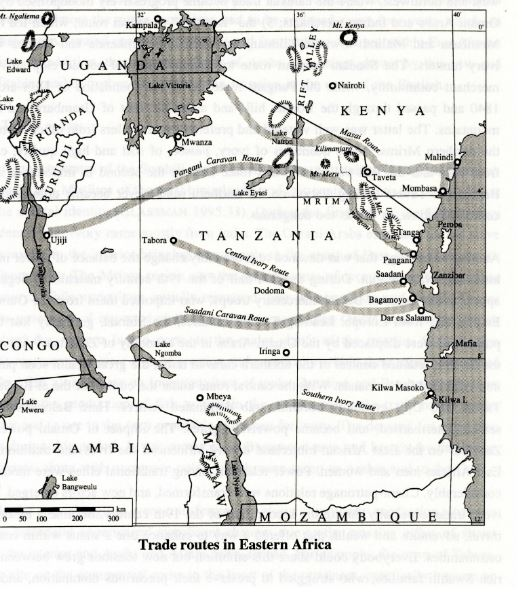
For centuries before the colonial period, the peoples of what is now Kenya were not isolated. They were integral parts of a vast, dynamic economic web that stretched from their inland homesteads to the stone cities of the Swahili coast and beyond, across the Indian Ocean. This long-distance trade was more than just an exchange of goods; it was a complex cultural institution that shaped political structures, social identities, and the very landscape of the region. The story of this trade is a story of African entrepreneurship, of cultural fusion, and of a deep-seated crisis that would ultimately pave the way for colonial rule.
The Engines of Exchange: Global Demand and African Agency
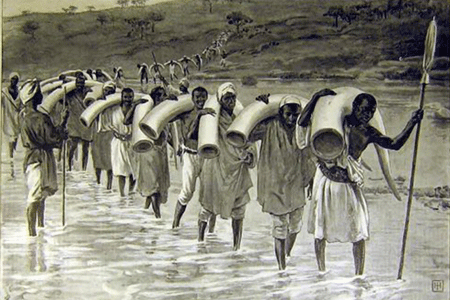
The driving force behind the expansion of these networks in the 19th century was a surge in global demand. The Industrial Revolution in Europe and America created a new middle class that craved luxury goods. Ivory, prized for its softness and workability in making piano keys, billiard balls, and cutlery handles, became a commodity of immense value. Between 6,000 and 12,000 elephants were being killed annually at the peak of the trade to satisfy this demand (Biginagwa 2012: 22, citing Thorbahn 1979 and Milner-Gulland & Beddington 1993). Simultaneously, the Omani Sultanate, under Sayyid Said, had consolidated its power in Zanzibar, turning it into a commercial entrepôt. The Sultan encouraged the development of clove plantations on Zanzibar and Pemba, which, in turn, created an enormous and growing demand for slave labor (Alpers 1968: 10-13). For more on the Omani presence at the coast, see our article on Swahili: The People Who Became the Coast.
To meet these demands, a sophisticated system of long-distance caravan trade emerged. It was a two-way street. From the coast came imports financed by Indian merchants—cotton cloth (especially the unbleached American merikani), glass beads, brass wire, and later, firearms. In exchange, the interior supplied not only ivory and slaves but also hides, rhinoceros horn, beeswax, and copal (a resin used in varnish) (Lindström 2019: 6; Pawelczak 2021: 17). For a deeper look at the coastal cities that anchored this trade, read our piece on The History of Mombasa.
Crucially, this trade was not initiated by coastal Arabs or Europeans. It was pioneered by African entrepreneurs from the interior who extended their pre-existing regional trading networks to the coast. As historian E.A. Alpers argues, challenging the earlier view of Sir Reginald Coupland, “the old stereotyped idea that most slaves were seized by marauding bands of Arab and Swahili traders is just another one of the myths which have grown up around the East African slave trade” (Alpers 1968: 24). Instead, Alpers and others assert that “long distance trade routes between the interior and the coast were established exclusively through African initiative” (Alpers 1968: 15). For more on the earliest contacts between the coast and the interior, see our overview of East Africa’s Early Contact with the Outside World.
The Pioneers: The Kamba, Nyamwezi, and the Making of Caravan Culture
Among the first and most important interior groups to engage directly with the coast were the Kamba of central Kenya. Occupying a semi-arid region between the coast and the highlands, they were ideally positioned to act as intermediaries. By the mid-19th century, they had established themselves as the dominant traders on the “Northern Route,” which stretched from Mombasa and Pangani, through the Taita Hills and past Mount Kenya, to the Kikuyu and beyond (Abir 1968: 106; Robertazzi 1997: 38-40). For an in-depth profile of this community, see our articles on A Look into the History and Culture of the Kamba Community and The Kamba Clans of Kenya.
The Kamba did not simply wait for coastal caravans. Kamba merchants, known for their skill and courage, would travel to the coast in organized caravans, often led by powerful chiefs like Kivoi. They brought ivory, rhinoceros horn, and local products, returning with cloth, beads, and, critically, guns. Their success was not just in travel but in navigating complex political landscapes and controlling access to the interior. They acted as guides, guards, and information brokers, jealously guarding their position as middlemen (Biginagwa 2012: 60; Pawelczak 2021: 30-31). Their story is so central that we have a dedicated article: Ivory Paths and Lost Captives: The Akamba Caravan Route.
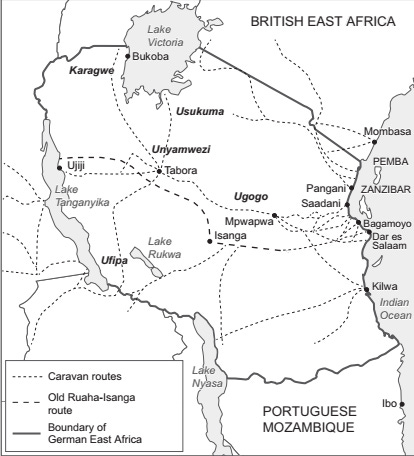
Further south, the Nyamwezi of central Tanzania were the architects of the “Central Route,” the busiest and most important caravan artery. From their homeland near Tabora, they extended their trade networks, which had long dealt in local goods like iron and salt, to the coast. Nyamwezi caravans, sometimes numbering thousands of people, became the institution of the trade. They were the most sought-after porters, renowned for their endurance and for carrying heavy tusks on their shoulders. Their caravan culture—including their leadership structures (wanyampara), their use of magic (mganga), and their system of joking relationships (utani) to secure safe passage—was adopted by coastal traders, making them the carriers of a specific caravan culture (Biginagwa 2012: 126-129; Lindström 2019: 126-127; Pawelczak 2021: 21).
The Chaga of Kilimanjaro and the Northern Frontier
On the fertile slopes of Mount Kilimanjaro, the Chaga peoples built a prosperous society deeply integrated into the trade network. Their location was strategic, controlling a key corridor on the Northern Route. The Chaga were not just middlemen; they were major producers, cultivating bananas and grains and, crucially, controlling sources of iron. Their skilled iron-smiths produced high-quality tools and weapons in demand across the region. In exchange, they received cloth, beads, and later, firearms. The wealth from this trade led to significant political centralization. In the 19th century, powerful leaders like Horombo and later Rindi emerged, attempting to unite the various Chaga chiefdoms into a single, formidable kingdom. They built stone forts and armed their warriors with guns bought from the coast, transforming their society from small agricultural communities into a regional power (Biginagwa 2012: 196-197; Robertazzi 1997: 39).
Further north, the Somali and Galla peoples controlled trade routes from the Banadir coast into the dry northern frontier. Somali merchants from ports like Brava and Mogadishu penetrated as far as the Borana and the Lake Turkana region, trading beads, cloth, and iron for ivory and other goods. This system, which predated the Zanzibari expansion, remained active throughout the 19th century and is explored in our articles on The Somali People of Kenya and The Northern Frontier District.
The Swahili Coast: The Cosmopolitan Interface
The Swahili city-states, such as Mombasa, Malindi, and Lamu, were not merely passive ports; they were sophisticated urban centers that served as the crucial interface between the African interior and the Indian Ocean world. Their society was highly hierarchical and cosmopolitan, a product of centuries of interaction between African, Arab, Persian, and Indian peoples. The very name “Swahili” comes from the Arabic sawahil, meaning “coasts,” reflecting their identity as a people of the littoral (Robertazzi 1997: 40). For a deeper exploration of their origins, see Swahili: The People Who Became the Coast and The Medieval Swahili Civilization.
Wealthy Swahili merchants lived in stone houses with elaborately carved doors—a public statement of their status and creditworthiness. They hosted visiting traders from Arabia and India, conducting business in the privacy of their homes while also operating in a more public market economy with Nyamwezi traders who would haggle for days on the beach. This blend of ritualized gift-exchange and market principles was a defining feature of the coastal economy (Lindström 2019: 303-305; Pawelczak 2021: 20-22). The spread of Islam along these trade routes is covered in Islam on the Coast: From Trade to Politics.
The Swahili world was a place of intense identity politics. A fundamental divide existed between the “civilized” (waungwana) coastal dwellers and the “barbarian” (washenzi) up-country peoples. This distinction was crucial for social status, and the influx of wealth from the caravan trade, along with the arrival of ambitious up-country porters, created immense social friction. As Jan Lindström notes, “the wealthy from the caravan trade… threatened the established order” as newly rich individuals, including some slaves, could now sponsor the competitive feasts and dance competitions (ngoma) that were key to gaining prestige (Lindström 2019: 185; Pawelczak 2021: 28-29).
The Trade’s Profound Impact: From Wealth to Crisis
The long-distance trade networks did more than move goods; they fundamentally reshaped life in interior Kenya.
1. Political Centralization and Conflict: The link between trade and political power was direct. Control over trade routes and the flow of goods gave rise to new, more powerful chiefs among the Kamba, Chaga, and others. The acquisition of firearms, which increased dramatically after 1840—from an estimated 2,000 flintlocks imported annually to 26,000 by the mid-1860s—intensified this process (Biginagwa 2012: 73). The scramble for guns and control over trade led to increased warfare and slave raiding, destabilizing vast areas. In the Lower Pangani, for example, the Zigua, armed with muskets, began “burning and murdering, kidnapping and selling in all directions” (Biginagwa 2012: 100, quoting Burton and Speke 1858). This period is explored further in our article on Colonialism in Kenya: Its Origins, Impact and Resistance.
2. The Rise of New Elites and Social Mobility: The caravan trade created new avenues for wealth and social mobility. Successful traders and caravan leaders rose to prominence. Even slaves could, under certain conditions, accumulate wealth through the trade, purchase their freedom, and become respected members of coastal society. This fluidity, however, also generated fierce competition and new forms of exclusion as established elites tried to maintain their status (Lindström 2019: 166-171; Pawelczak 2021: 27).
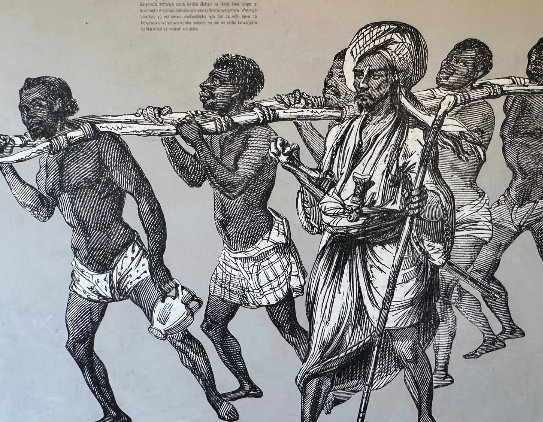
3. A Deepening Crisis and the Transformation of Slavery: By the mid-19th century, the demand for slaves grew exponentially, fueled by the clove plantations of Zanzibar. The same caravan routes that once carried ivory were now used to transport human beings in chains. This “new slave trade” plunged the interior into a period of profound crisis. Warfare intensified as communities raided each other for captives. The Swahili-Arab traders, like the infamous Tippu Tip, carved out personal empires in the interior, using firearms to impose their will. The peace that had allowed trade to flourish was replaced by a spiral of violence that destabilized societies from the coast to the great lakes (Alpers 1968: 17-19; Biginagwa 2012: 71-73). For more on this dark chapter, see our feature on The British Concentration Camps in Kenya, which touches on the legacy of this violence.
4. The Expansion of Islam and Kiswahili: The caravan routes became the primary avenues for the spread of Islam and the Kiswahili language into the interior. Swahili-speaking traders and settlers established communities in key caravan nodes like Tabora and Ujiji, bringing with them their language, religion, and customs. The spread of Islam was often slow and syncretic, with the more egalitarian Sufi brotherhoods like the Qadiriyya gaining popularity among marginalized groups, including slaves (Lindström 2019: 209-216). The German colonial administration later adopted Kiswahili as its administrative language, cementing its role as a lingua franca (Robertazzi 1997: 40). Learn about the impact of Christianity on Kenyan culture as a counterpoint to the spread of Islam.
The End of an Era: Competition and Collapse
The lucrative caravan trade attracted more than just African entrepreneurs. The 19th century saw escalating competition over its control. The Zanzibari Sultanate sought to extend its authority over the mainland, while European colonial powers, first the Germans and then the British, began to intervene. The 1880s were marked by violent conflicts, most notably the “Bushiri Rebellion” of 1888-89, which saw coastal towns like Pangani and Bagamoyo engulfed in fighting against German intrusion. This conflict, sparked by German attempts to seize the Sultan’s flag and collect customs, illustrated the growing friction between local power structures, the Sultanate, and the new European colonizers (Lindström 2019: 189-203; Pawelczak 2021: 27). See our articles on The German-British Battlefront in East Africa (World War I) and The Battlefield Around the Railway in the East Africa WWI Campaign.
The final blow to the caravan trade came from within. The German colonizers, having established a foothold, moved their capital from Bagamoyo to Dar es Salaam and began constructing a railway from the coast to Lake Tanganyika. This new mode of transport made the centuries-old caravan system obsolete almost overnight. As one German official noted, the goal was to make Bagamoyo “fall” (Lindström 2019: 342). With the railway, the economic and political structures that had sustained the interior trade networks for a century collapsed, paving the way for a new era of colonial control. For more on this transformative infrastructure, read The Rails That Built a Colony: East Africa’s Transport Revolution and The Indian Labourers Who Built the Uganda Railway.
Sources
This article draws on a range of scholarly works and primary sources to reconstruct the history of the East African caravan trade. Key sources include:
- Alpers, E.A. (1968). The East African Slave Trade. Historical Association of Tanzania Paper No. 3. Nairobi: East African Publishing House.
- Biginagwa, T.J. (2012). *Historical Archaeology of the 19th-Century Caravan Trade in North-Eastern Tanzania: A Zooarchaeological Perspective*. PhD thesis, University of York.
- Lindström, J. (2019). Muted Memories: Heritage-Making, Bagamoyo, and the East African Caravan Trade. New York: Berghahn Books.
- Pawelczak, M. (2021). “Uncertainty, Risk, and Trust in Nineteenth-Century East African Caravan Trade.” Studies in African History.
- Robertazzi, C. (1997). Africa (8th to 18th Century). Austin: Raintree Steck-Vaughn.
- Sheriff, A. (1987). *Slaves, Spices and Ivory in Zanzibar: Integration of an East African Commercial Empire into the World Economy, 1770-1873*. London: James Currey.
These sources, together with the archival and oral materials cited in the footnotes of the original academic works, provide the foundation for our understanding of the caravan trade and its lasting impact on the peoples of Kenya and East Africa.
Further Reading on KenyanHistory.com
- Ivory Paths and Lost Captives: The Akamba Caravan Route
- Swahili: The People Who Became the Coast
- The History of Mombasa
- A Look into the History and Culture of the Kamba Community
- The Kamba Clans of Kenya
- The Somali People of Kenya
- The Northern Frontier District
- Islam on the Coast: From Trade to Politics
- The Medieval Swahili Civilization
- The Rails That Built a Colony
- The Indian Labourers Who Built the Uganda Railway
- The History of Kisumu
- The Wanga Kingdom and the Rise of Nabongo Mumia
- Lords of the Plains: The Maasai at Their Peak