
Most men who reach the second-highest office in the land spend the rest of their lives trying to climb one step higher. Joseph Zuzarte Murumbi did the opposite. Appointed Kenya’s second vice president in May 1966, he wrote his first resignation letter within weeks and was gone before the year was out. He then turned his back on politics for good and devoted the rest of his life to something he loved far more: collecting, preserving and celebrating Africa’s art, books and heritage.
Today his name lives on less in Parliament than in museums. The Murumbi Gallery, the rare-book library at the Kenya National Archives and the Nairobi Gallery all carry the legacy of a man many Kenyans remember as the gentle dissident of the Kenyatta era. This is his story. For the full line of succession, see our chronicle of Kenya’s vice presidents since independence.
A Goan-Maasai Childhood
Two worlds in one name
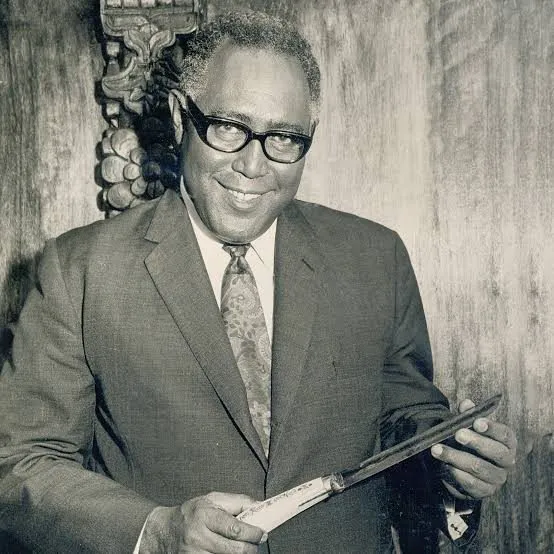
Murumbi was born on 18 June 1911 as Joseph Murumbi-Zuzarte, the son of a Goan trader, Peter Nicholas Zuzarte, and the daughter of a Maasai medicine man. His father had come to the region in 1897, when the Uganda Railway reached the area where Joseph was born. The family name he would later make famous, Murumbi, came from his mother’s side.
His parents separated when he was a toddler, and at about six he was sent to India for his schooling. He studied at the Good Shepherd Convent and St. Joseph’s High School in Bangalore before moving on to a boys’ high school in Bellary. Those years abroad gave him a cosmopolitan outlook, fluency in the world of books and ideas, and connections to Indian nationalists that would prove vital later in his life.
Into the Freedom Struggle
Acting secretary-general in a time of fear
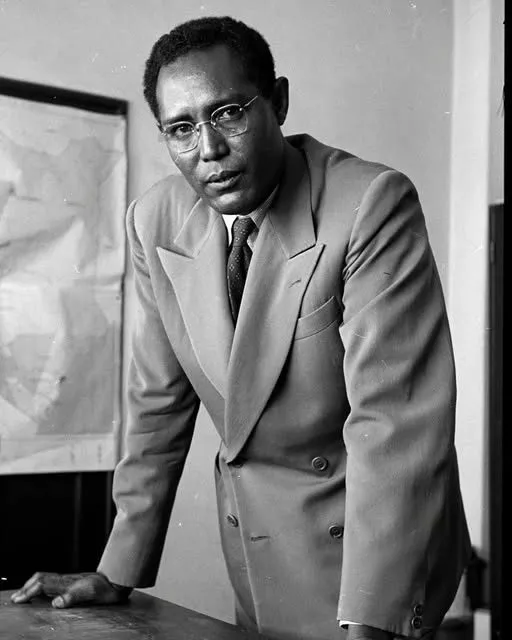
Back in Kenya, Murumbi joined the Kenya African Union (KAU), the main nationalist party of the day. When the colonial government declared a State of Emergency on 20 October 1952 and arrested Jomo Kenyatta and most of the KAU leadership, Murumbi stepped in as the party’s acting secretary-general. It was a dangerous post. He worked to find lawyers for the detainees and, with his close friend Pio Gama Pinto, used Indian newspapers to expose what was happening in Kenya. For the wider context of these years, see our history of the Mau Mau uprising.
By early 1953 the British were closing in. In March of that year Murumbi slipped out of the colony to avoid arrest, helped by India’s High Commissioner in Nairobi, Apa Pant, who arranged an agricultural scholarship as cover.
Exile in India and London
Fighting colonialism with a typewriter and a microphone
For the rest of the 1950s Murumbi lived in exile, moving between India, Egypt and Britain. In India he wrote for the press and broadcast on All India Radio, keeping the plight of Kenya’s detainees in front of a sympathetic audience. In Britain he built a network of anti-colonial contacts and lobbied for Kenya’s cause.
It was in London that he met Sheila Ann Kaine, a librarian. By one account they first met at a dance at the London home of Mbiyu Koinange. Sheila shared his love of books and stamps, and the two would spend the rest of their lives collecting together. Their partnership would eventually give Kenya one of the finest private Africana collections on the continent.
Independence and Kenya’s First Foreign Minister
Opening Kenya’s doors to the world
Murumbi returned home as independence approached and took part in drafting Kenya’s first constitution. After 1963 he served as Minister of State in the Prime Minister’s Office and then as independent Kenya’s first Minister for External (Foreign) Affairs from 1964 to 1966. In that role he toured the world setting up the new nation’s embassies, and he personally opened Kenya’s missions across Africa. Those journeys also fed his growing passion for African art, textiles, jewellery and books.
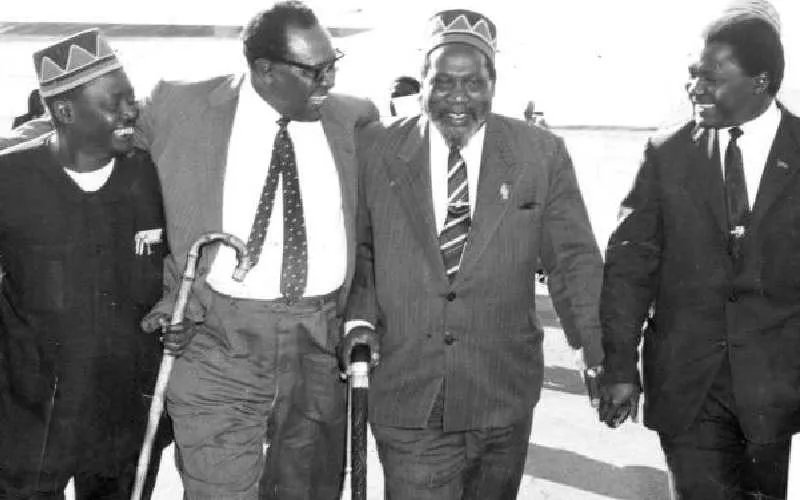
Yet his time at the Foreign Ministry was not easy. Murumbi was seen by some as a socialist, and he later believed that his promotion to the vice presidency was a way of “kicking him upstairs” because the Americans and the British did not like his handling of foreign policy. After his appointment, President Jomo Kenyatta took over the foreign affairs portfolio himself for several months.
The Murder of Pio Gama Pinto
The killing that broke his faith
The turning point in Murumbi’s political life came in February 1965, when his friend and mentor Pio Gama Pinto was shot dead outside his home in Nairobi. Pinto had become an outspoken critic of the direction the new government was taking. Murumbi was devastated; he is said to have wept at the news.
To him the assassination was proof of how far independent Kenya had already strayed from the ideals of the freedom struggle. His business partner Alan Donovan later said the killing “shook his faith in government and in Kenyatta”, although Murumbi believed those behind it were men jostling for the presidency rather than Kenyatta himself. Read more in our profile of Pio Gama Pinto.
Vice President for a Few Short Months
The shortest-serving number two
In 1966 the ruling party split. Vice President Jaramogi Oginga Odinga fell out with Kenyatta, resigned and went on to form the opposition Kenya People’s Union. Kenyatta needed a replacement who would not upset the delicate balance of factions around him, and he turned to Murumbi, who was seen as a less divisive figure. He was appointed vice president in May 1966.
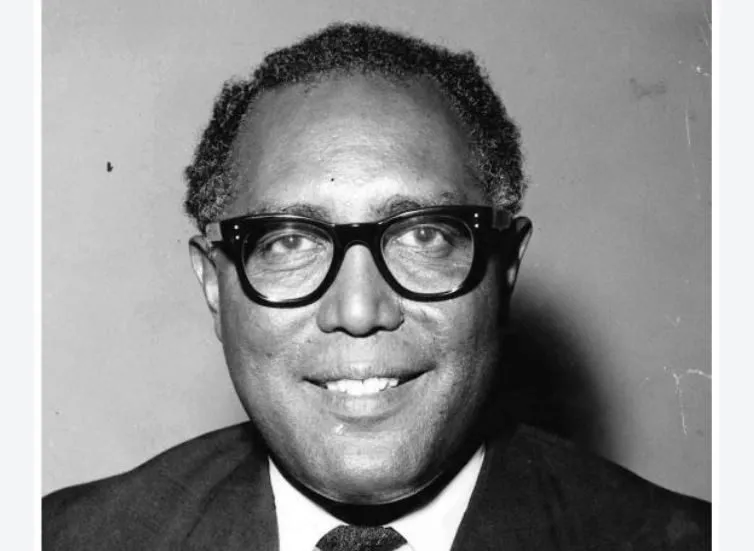
He never settled into the job. As a man of mixed Goan and Maasai heritage with no ethnic power base, he remained an outsider to the president’s inner circle. According to the Daily Nation, he handed in his first resignation letter as early as July 1966, only for Kenyatta to turn his back on him. He stayed on for a few more months but left office in November 1966. Sources give slightly different dates, but by the end of the year he was gone, making him Kenya’s shortest-serving vice president.
Why Did Murumbi Resign?
“Politics is a very dirty business”
The official reason was ill health. Those close to him told a different story. Alan Donovan insisted there were no major problems with Murumbi’s health when he resigned, and that personal security was the main reason he quit. After Pinto’s murder Murumbi grew deeply worried for his own safety, and he received veiled threats. One minister reportedly warned him not to think he would become president if anything happened to Kenyatta.
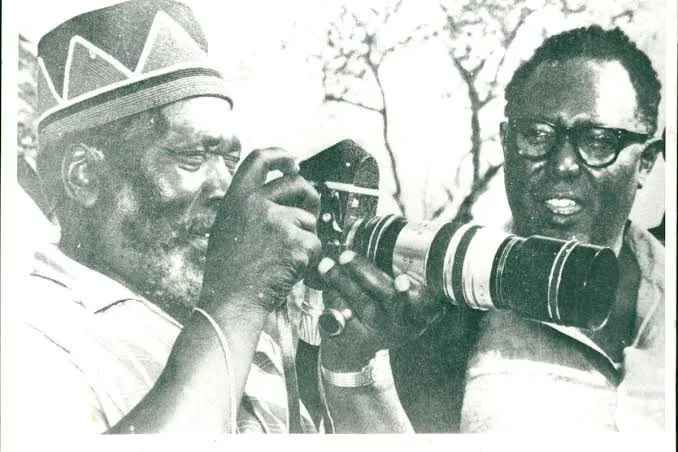
He was also troubled by the scramble for land among the new elite. He believed the fund meant to buy out departing settlers and resettle the landless had been hijacked by a few powerful Africans who were lending the money to themselves. Asked years later by a relative why he had resigned, he answered simply: “Politics is a very dirty business.”
His departure had lasting consequences. It opened the way for Kenyatta to appoint Daniel arap Moi as vice president, the post from which Moi would eventually succeed Kenyatta in 1978.
A Second Life: Art, Books and African Heritage
From statesman to custodian of a continent’s culture
Murumbi left politics without looking back. He went into private business and threw himself into his true passion. In 1972 he co-founded African Heritage in Nairobi with Sheila and the American collector Alan Donovan. It is widely described as Africa’s first Pan-African art gallery, and it championed many of the region’s pioneering artists.
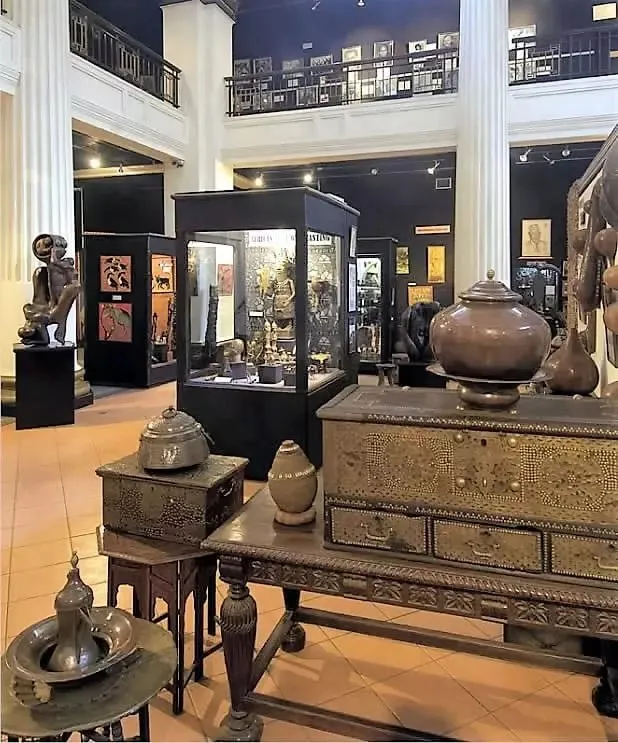
He had already left his mark on the country’s memory. In 1965 he brought the bill to Parliament that set in motion the creation of a national archive, and he later served as the first chairman of the Kenya Archives Service. After a fire devastated the first African Heritage gallery on Kenyatta Avenue in the mid-1970s, he sold much of his collection, along with his Muthaiga home, to the government to raise money to rebuild.
The collection was moved to the Kenya National Archives in 1981, and the first public exhibition opened in January 1982. It includes papers and manuscripts, a huge library of Africana and the Joseph and Sheila Murumbi Pan-African Stamp Collection. Among its treasures are around 8,000 rare books published before 1900.
Final Years and Legacy
A gentle dissident remembered
In 1982 Murumbi was badly injured in a fall at home and spent his final years in a wheelchair. He also suffered strokes and long-term pain. Few of his former colleagues kept in touch, though Moi was one of the handful who visited him in his last year. Joseph Murumbi died in Nairobi on 22 June 1990, aged 79.
He and Sheila, who died in 2003, are buried at Nairobi’s City Park. For years their graves were neglected, until the Murumbi Peace Memorial was opened there on 29 March 2009, surrounded by a sculpture garden of works by East African artists from their collection. His autobiography, A Path Not Taken, was finally published in 2015, a quarter of a century after his death.
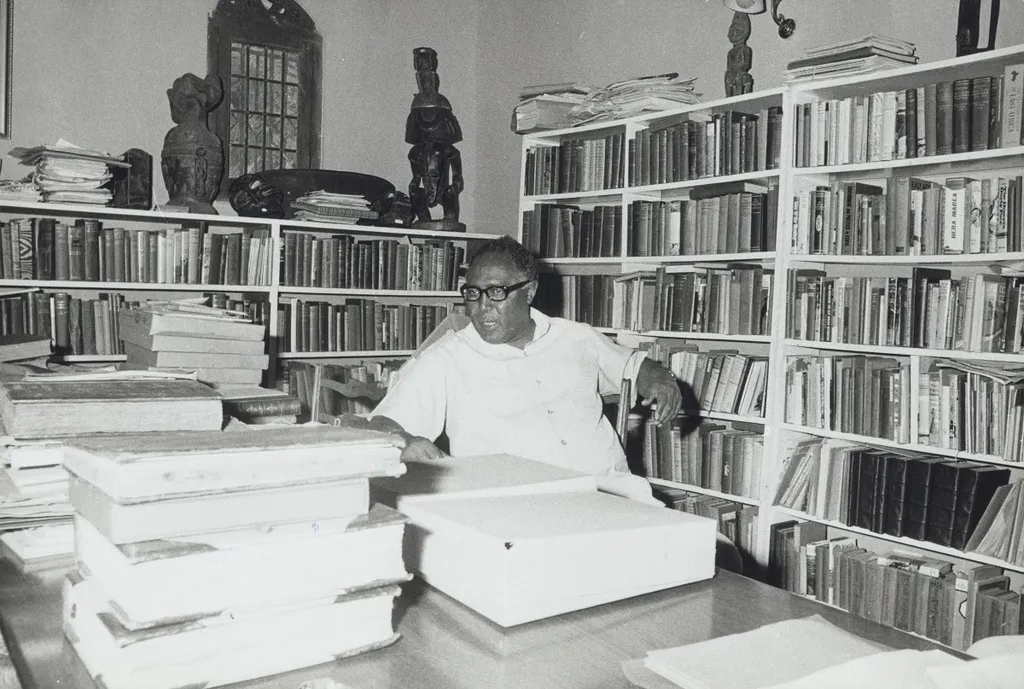
Today, visitors to the Kenya National Archives on Moi Avenue and the Nairobi Gallery near Uhuru Highway can still walk among the artefacts, stamps and books he spent a lifetime gathering. In a political era remembered for ambition, assassinations and land grabbing, Joseph Murumbi stands out as the vice president who chose principle and culture over power.
Sources
- Daily Nation: Joseph Murumbi was nervy about assassination
- Daily Nation: Murumbi, the only man who defied Kenyatta
- The Standard: Joseph Murumbi, vice president who quit after just six months
- Business Daily: Iconic National Archives rise from hosting banks
- Kenya Yearbook: Joseph Zuzarte Murumbi, the art collector
- The Star: Murumbi’s autobiography sheds light on Kenya’s political and art history
