
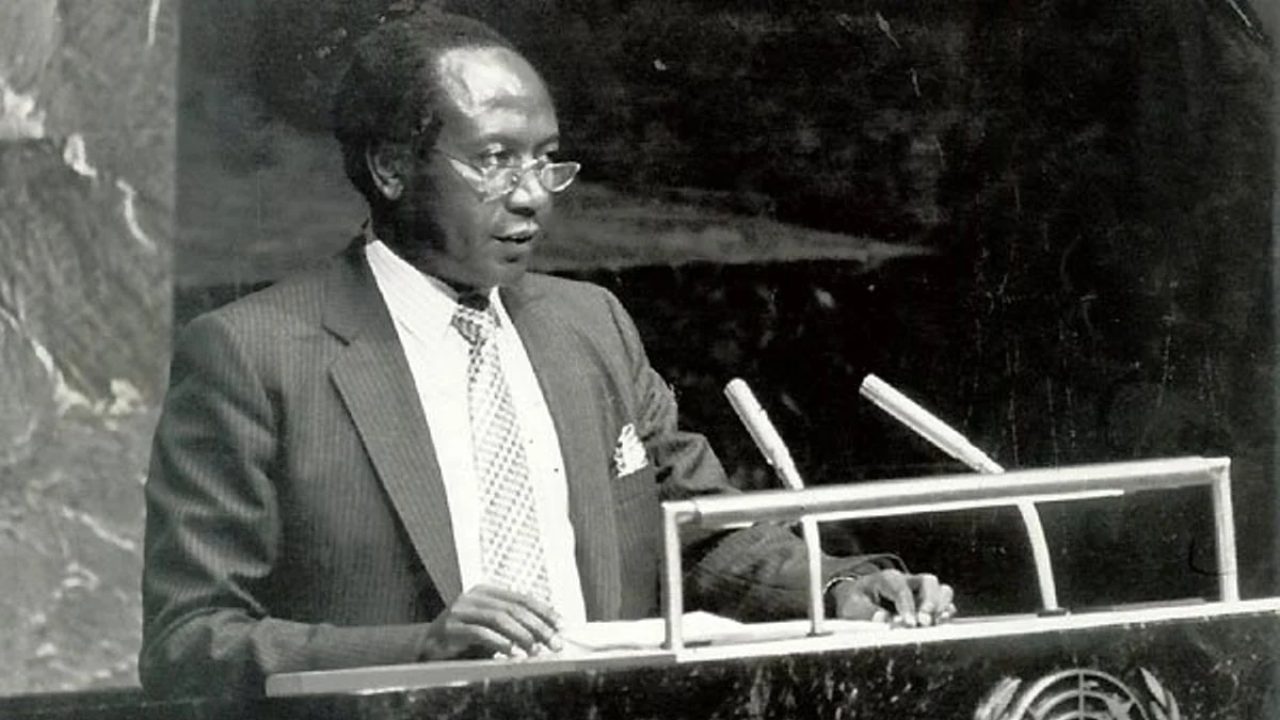
In February 1990, Kenya’s Minister for Foreign Affairs vanished from his farm in Koru, in the sugar belt east of Kisumu. Days later his partly burned body was found at the foot of a hill a short distance away. More than three decades on, after a Scotland Yard investigation, a judicial commission, a murder trial, a parliamentary inquiry and a truth commission, nobody has been convicted of killing Dr Robert Ouko.
The case shook the Moi government at a moment when Kenyans were beginning to demand political change, and it became a symbol of an era of fear, secrecy and impunity. This article walks through who Ouko was, what happened in February 1990, what each investigation found and why the case is still debated today.
Who Was Robert Ouko?
A teacher who became Kenya’s face to the world
John Robert Ouko was born on 31 March 1931 in Nyahera, in what was then Central Kavirondo District in Nyanza. He trained as a teacher at Siriba Teachers Training College and later worked as a revenue officer in Kisii before studying public administration, economics and political science at Haile Selassie University in Addis Ababa, followed by a diploma in international relations at Makerere University.
Ouko rose through the civil service in the late colonial and early independence years and later entered politics. After the collapse of the East African Community in 1977 he became a nominated MP and Minister for Economic Planning and Community Affairs. He was Foreign Minister from 1979 to 1983 and again from 1988 to 1990, by which time he represented Kisumu Town. Polished, articulate and respected abroad, he was one of the best-known faces of Kenya’s government. For background on his home region, see our history of the Luo people and our history of Kisumu.
The Washington Trip
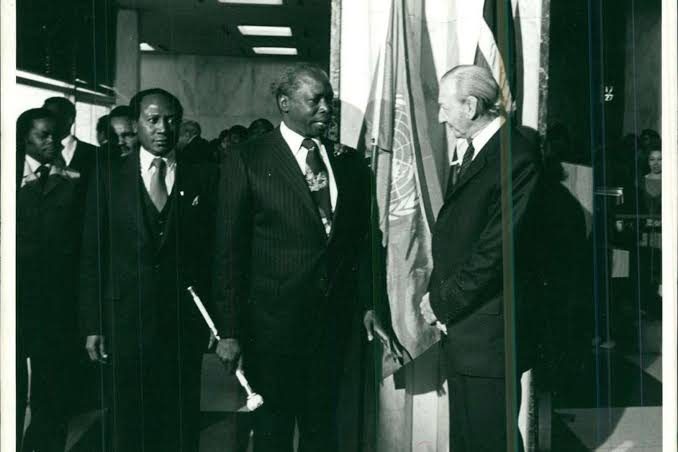
Two weeks before the murder
On 27 January 1990, Ouko left Nairobi as part of a delegation of 83 ministers and officials, led by President Daniel arap Moi, to attend a prayer breakfast in Washington DC. The delegation returned home in early February. This trip would later become the centre of one of the most persistent theories about the killing, that something happened in Washington to put Ouko at odds with powerful figures in government.
The Disappearance and the Discovery at Got Alila
A hill that still evokes terror
After returning, Ouko went to his farm at Koru. Sometime on the night of 12 to 13 February 1990 he disappeared. A housemaid later said she had been woken at about 3 a.m. by a noise like a slammed door.
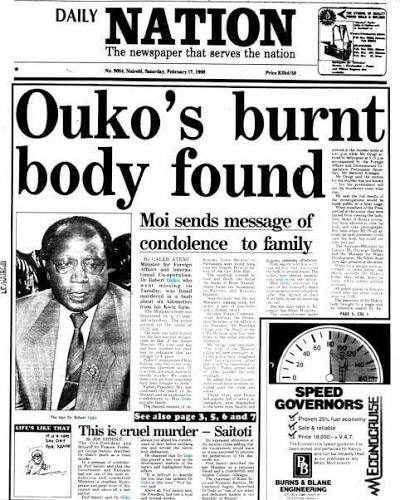
Later that day a local herdsboy found a burning body at the foot of Got Alila Hill, about 2.8 km from the farm. The find was not reported to the authorities, and the body was not officially discovered by police until 16 February, after a search. Forensic evidence pointed to murder: Ouko had been killed by a single gunshot to the head, his body was partly burned and his right leg was broken in two places.
The Suicide Claim
A story few Kenyans believed
Early police reports, supported by the government pathologist, suggested that Ouko had taken his own life. Few people believed it. The idea of a man shooting himself in the head and then setting himself on fire struck the public as absurd, and the claim was widely seen as a cover-up. Riots broke out in Kisumu and Nairobi. Under intense public pressure, President Moi asked Britain’s New Scotland Yard to investigate.
Scotland Yard and John Troon
The British detective who named names
On 21 February 1990, Detective Superintendent John Troon arrived in Kenya with two detectives and a Home Office forensic pathologist. The autopsy left them in no doubt that Ouko had been murdered. Troon later concluded that Ouko had been shot where his body was found, or very close to it.
Troon’s investigation drifted toward allegations of corruption surrounding the stalled Kisumu Molasses Project, based largely on claims from two directors of a Swiss company involved in it. He also explored the theory that a dispute had arisen during the Washington trip. He delivered an interim report in July 1990 and a final report in August 1990. It was not conclusive, but it recommended further inquiry, including into the then Permanent Secretary for Internal Security, Hezekiah Oyugi, and Minister Nicholas Biwott. Both men denied any involvement. For more on Biwott, see our profile Nicholas Biwott: the rise and fall of Kenya’s “Total Man”.
The Gicheru Commission
An inquiry halted mid-testimony
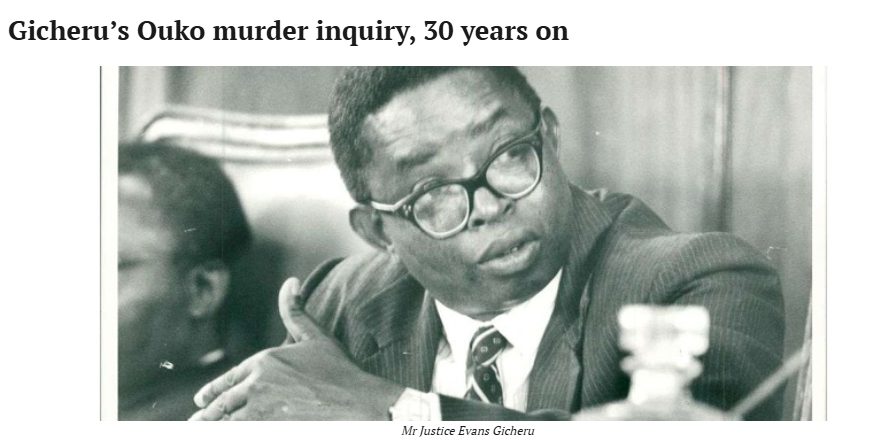
In October 1990 Moi appointed a judicial commission of inquiry chaired by Justice Evans Gicheru. Its hearings drew huge public attention. In November 1991, while Troon was being cross-examined and had named Biwott and Oyugi as suspects, Moi abruptly dissolved the commission. Troon did not return to Kenya, and the commission never produced a final report.
Shortly afterward, several officials were detained and questioned, among them Oyugi and Biwott. Biwott was released after about two weeks without charge, as no evidence was found to support the allegations. Oyugi died of illness in 1991 without ever being charged.
The Trial of Jonah Anguka
The only person ever tried
The only person ever put on trial for the murder was Jonah Anguka, who had been the District Commissioner of Nakuru. He was acquitted, and he has always denied any involvement. He later went into exile in the United States and wrote a book about the case, Absolute Power: The Ouko Murder Mystery. With his acquittal, the case was left officially unsolved.
The Parliamentary Select Committee
A new government, a new inquiry, the same dead end
After the 2002 election ended KANU’s long rule, Mwai Kibaki’s government reopened the matter. In March 2003 Parliament set up a select committee, chaired by Kisumu Town East MP Gor Sunguh, to investigate the circumstances of Ouko’s death. The committee heard dramatic testimony, including claims that Ouko had been sacked and stripped of his security after the Washington trip, and allegations that he had been killed at a presidential residence. These claims were strongly disputed, and several critics accused the committee of relying on hearsay.
The committee was plagued by resignations and disputes, and its work ended in 2005 amid claims of interference. Its report recommended further investigation of several people, including Oyugi, Anguka and Biwott. When the report was finally tabled in Parliament in December 2010, MPs rejected it by a large majority, citing concerns about its accuracy.
The Truth, Justice and Reconciliation Commission
Questioning the most famous theory
Kenya’s Truth, Justice and Reconciliation Commission also reviewed the case. Its 2013 report cast serious doubt on the Washington trip theory, noting that it rested on a private meeting between Ouko and President George H. W. Bush that never actually took place. Like every inquiry before it, the TJRC did not resolve who killed Ouko.
Theories That Refuse to Die
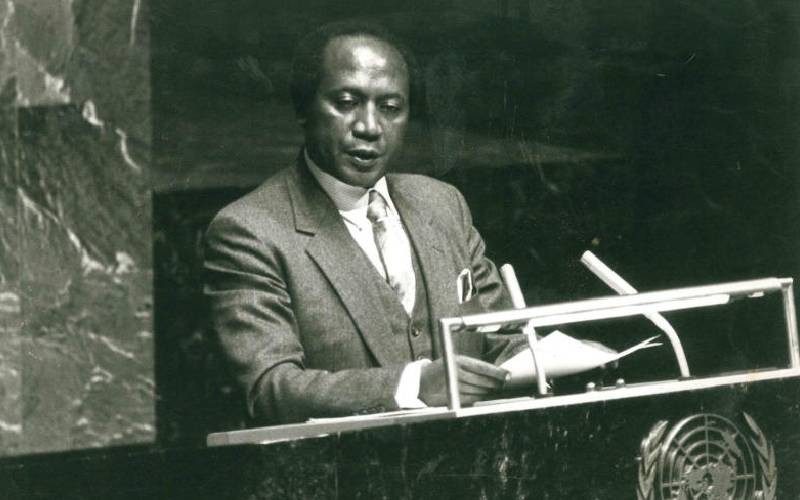
Why speculation persists
Over the years many explanations have circulated: a quarrel during the Washington trip, Ouko’s stance against corruption in the Kisumu Molasses Project, rivalries within government, or rumours that foreign governments saw him as a future leader. Investigators and researchers have challenged almost every one of them, and some writers argue that fabricated or exaggerated stories have buried the hard evidence. What is clear is that each investigation was cut short, flawed or rejected, and that several witnesses died in the years that followed, fuelling public suspicion.
Why the Ouko Case Still Matters
The murder came at a turning point. Within two years of Ouko’s death, mounting domestic and international pressure forced the return of multiparty politics in Kenya. For many Kenyans the case became a symbol of the Nyayo era’s darkest side, alongside detentions and torture. Read more about that period in our articles on the Nyayo House torture chambers and the birth of Kenya’s multiparty democracy.
Today Ouko lies buried at his farm in Koru, within sight of Got Alila Hill. More than three decades after his death, his family and many Kenyans are still waiting for the truth about who killed him and why.
Sources
- Wikipedia: Robert Ouko (politician)
- The Star: Murder of Robert Ouko 25 years on
- The Standard: Why speculation on Ouko death persists
- Daily Nation: Inquiry hearings, 2005
- Christian Science Monitor: Kenya probe targets high-level coverup (1991)
- The Star: Why the Washington trip theory of Ouko murder is rubbish
