
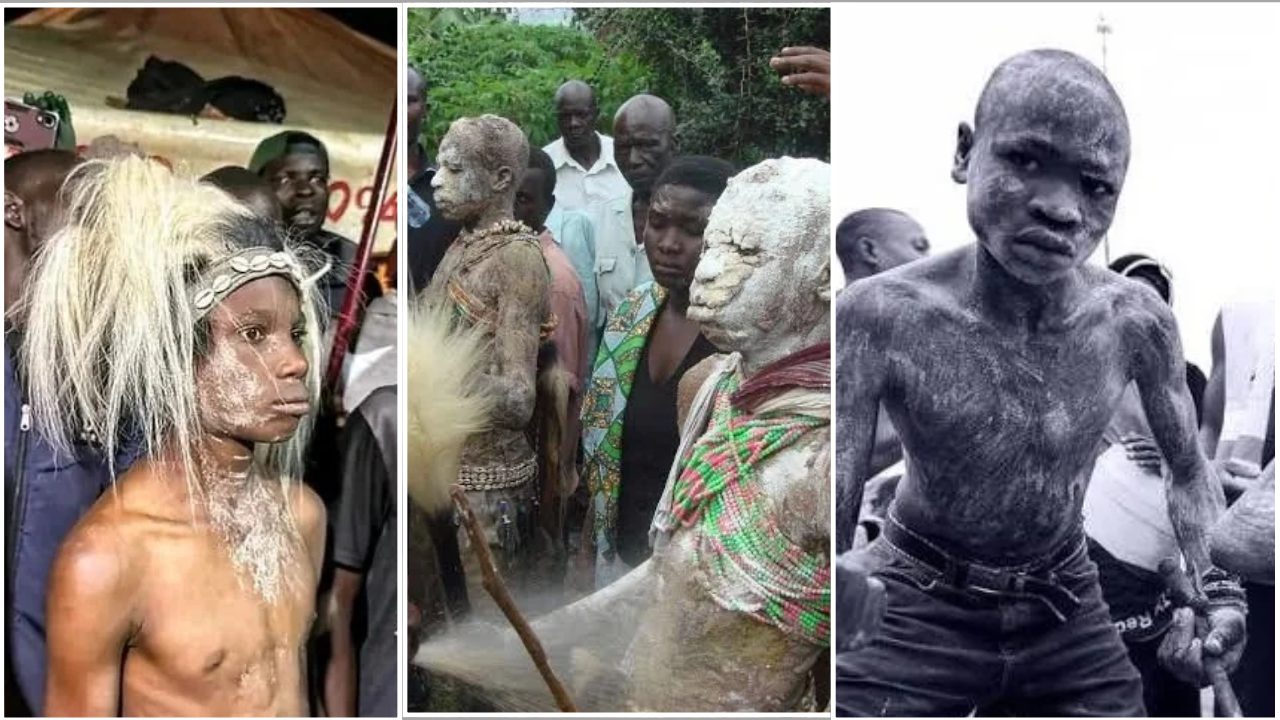
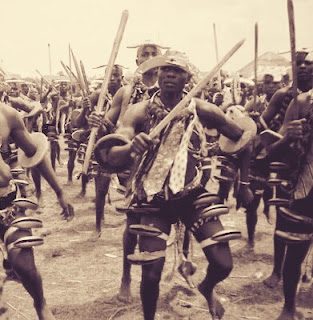
Every even-numbered year, the hills and villages of Bungoma County fill with a sound that is hard to forget: the rhythmic clang of metal bells, drums and the chanting of crowds escorting young boys through the countryside. It is the season of embalu (also called sikhebo), the Bukusu circumcision ceremony, one of the best-known and most public rites of passage in Kenya.
For the Bukusu, the largest of the Luhya sub-groups, circumcision is far more than a medical procedure. It marks the moment a boy becomes a man, places him in an age set he will belong to for life and ties him to his clan, his ancestors and his community. This article explains where the tradition comes from, how the ceremony unfolds step by step, what the age sets mean and how the practice is changing today. For background on the wider community, see our article Who are the Luhya, really?
Who Are the Bukusu?
The Bukusu (Babukusu) are a Bantu-speaking people who live mainly in Bungoma and Trans Nzoia counties in western Kenya, with communities in Kakamega, Busia and Uasin Gishu. The 2019 Kenya census recorded about 1.19 million people identifying as Bukusu, making them the largest of the Luhya sub-groups. Their homeland sits on the southern and western slopes of Mount Elgon, a landscape they share with the Sabaot and other Kalenjin-speaking neighbours, and with the Teso. Our guide to the seventeen Luhya sub-groups places them within the wider Luhya family.
Circumcision has long been universal among Bukusu men. Unlike some neighbouring Luhya groups who perform the cut in private, the Bukusu hold it in public, in the open courtyard of the family home, before relatives and neighbours. Enduring it without flinching has traditionally been seen as the ultimate proof of courage.
Origins of Embalu
Like many ancient customs, the origins of Bukusu circumcision are explained through oral tradition. The most widely told story concerns a hero named Mango (sometimes given as Mango Maalule), who is said to have killed a giant python that had been terrorising people on Mount Elgon. In recognition of his bravery, the story goes, Mango was circumcised, and the custom was taken up by others as a mark of courage. Journalists and elders note that this is one of several origin stories rather than a single fixed history.
Historians also point to the close contact between the Bukusu and the Kalenjin-speaking peoples around Mount Elgon, who practise circumcision and use age sets. Several Bukusu age-set names are widely described as having been adopted from Kalenjin neighbours, a sign of how deeply the two communities’ histories are intertwined. For more on those neighbours, see our profile of the Kalenjin people.
When Does the Ceremony Take Place?
Bukusu circumcision is held in even-numbered years. The main season traditionally begins in early August, when crops are harvested and food is plentiful for feasting, and continues into the school holidays. Modern ceremonies often extend into December so that schoolboys can heal during the long holiday. Boys are usually circumcised in their early teens, although historically some were older.
The timing has social as well as practical meaning. Because the whole community knows when the season falls, families prepare months in advance, brewing traditional beer, setting aside animals for slaughter and inviting relatives from far and wide.
The Stages of the Ceremony
Practices vary between clans and families, but most Bukusu ceremonies follow a similar sequence. The names below are those commonly used in Lubukusu.
1. The Boy Declares He Is Ready
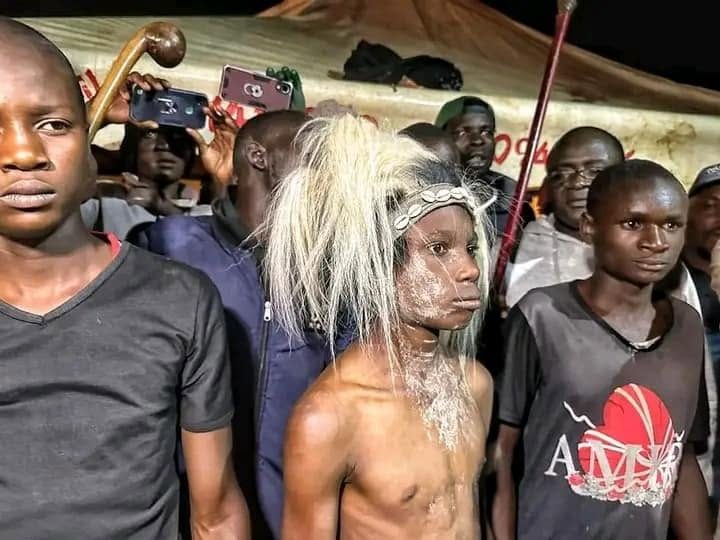
The process traditionally begins with the boy himself. A young man who wants to be circumcised signals his readiness to his father and family. Once the family agrees, preparations begin, and the initiate, now known as omusinde (an uncircumcised boy), starts to practise the songs and dances of the season.
2. Ringing the Bells (Khuminya)
In the weeks before the cut, the initiate travels around the neighbourhood and to the homes of relatives wearing metal bells called chinyimba on his wrists or thighs, often with a headdress and few clothes. The ringing announces to the whole community that he is ready to face the knife and invites relatives to attend. The night before the ceremony is usually an all-night vigil of singing and dancing, sometimes called khuminya, with traditional beer (busaa) shared among the guests.
3. Feasting and the Maternal Uncle
The day before the cut, animals are slaughtered. A bull is often killed at the boy’s home, and another at the home of his maternal uncle, who plays a central role in the ceremony. Pieces of meat or intestine from the animal may be placed around the initiate’s neck as a blessing. The maternal uncle’s involvement reflects the importance of both sides of a boy’s family in his transition to adulthood.
4. The Trip to the River (Sitabicha)
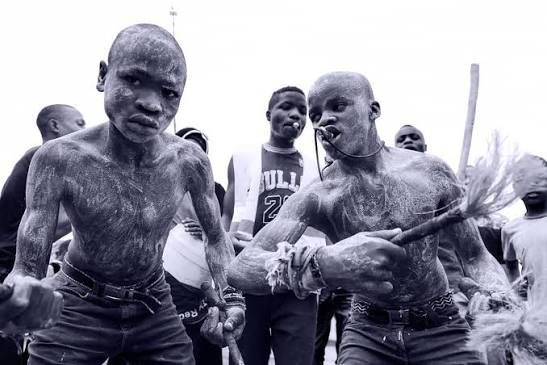
Before dawn on the day of the cut, the initiate is taken to a river or sacred spring, usually accompanied by a large crowd. There, his body is smeared with clay or mud and a special grass is placed on his head. The clay is said to calm the boy and to numb the skin against the cold morning air, while the procession itself is a powerful public display. The initiate leaves his bells behind, and the crowd returns home singing, often by a different route.
5. The Cut
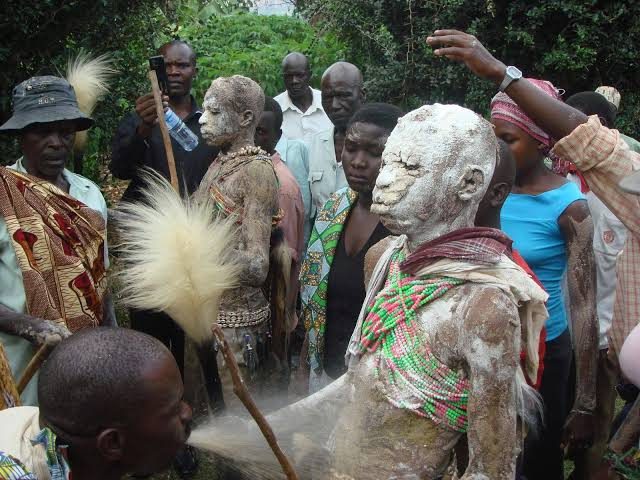
Back at home, the initiate stands in the open courtyard of his father’s compound, facing the crowd, while the circumciser, called omukhebi, performs the cut with a traditional knife. It takes only seconds. The boy is expected to remain still and silent; showing fear brings shame on the family, while bravery brings praise. A whistle or ululation often signals that it is over, and the crowd erupts in celebration.
6. Seclusion and Healing
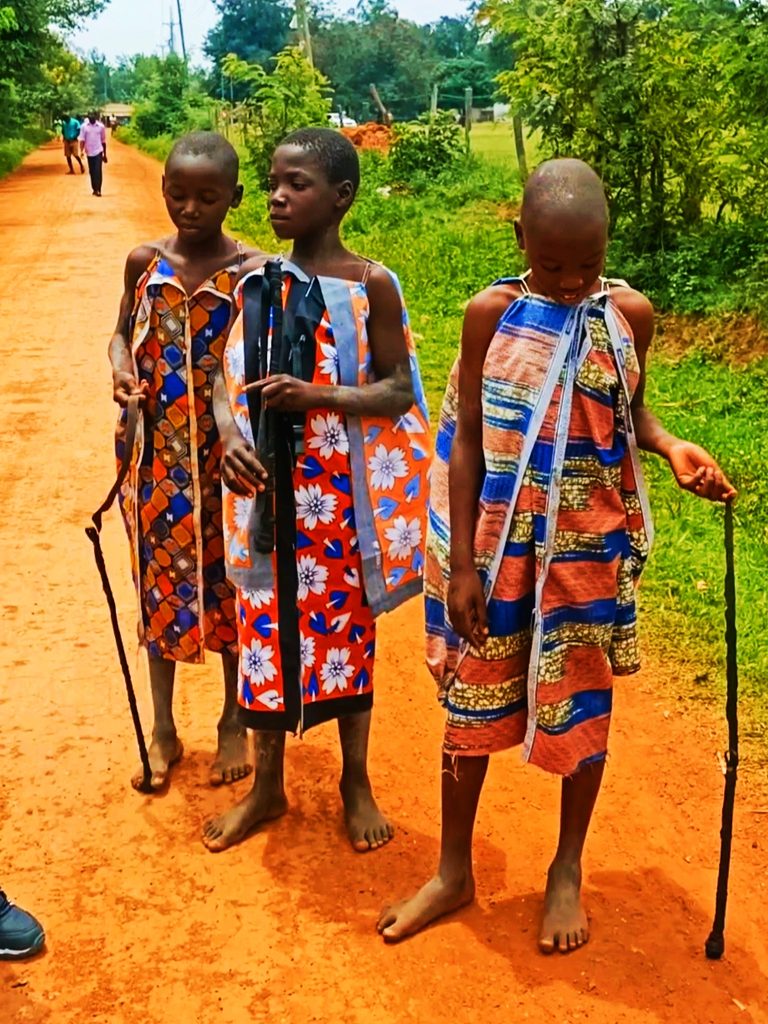
After the cut, the boy, now called omufulu, enters a period of healing and seclusion, traditionally in a special hut. During this time he receives special food and is cared for by older men. The healing period also serves as a time of instruction, when elders teach the young men about their new responsibilities.
7. Counselling (Khubita)
A few days after the cut, the initiates are formally counselled. Elders and the circumciser teach them how to behave as men: to respect their elders, care for their families, work hard, stay away from other men’s wives and uphold the customs of the clan. This moral instruction is considered just as important as the cut itself.
8. Coming Out (Khualukha)
Once the initiates have healed, a graduation ceremony called khualukha marks their return to society. They are given new clothes, gifts and, traditionally, a new status within the community. Today this graduation is often held in December, before the new school year begins.
Roles in the Ceremony
| Person | Role |
|---|---|
| Omusinde | The uncircumcised initiate preparing for the cut |
| Omukhebi | The circumciser, who performs the cut and often counsels the initiates |
| Maternal uncle | Leads the visit to the river and smears the initiate with clay; hosts a feast |
| Father | Hosts the cut in his compound and gives gifts to the new man |
| Elders | Teach and counsel the initiates on adult responsibilities |
| Omufulu | The newly circumcised young man during healing |
The Bukusu Age Sets (Bibingilo)
Circumcision places every Bukusu man in an age set, called kumamwe or libingilo (plural bibingilo). Men circumcised in the same period belong to the same set for life and call one another bakoki, age-mates. Age-mates traditionally owe each other loyalty and respect: they help one another at weddings and funerals, and an age-mate’s wife is treated with great respect.
Most sources list eight age sets that repeat in a cycle, each spanning roughly a decade or more. Spellings and dates vary between sources, but the commonly given order is:
- Bakolongolo
- Bakikwameti
- Bakananachi
- Bakinyikeu
- Banyange
- Bamaina
- Bachuma
- Basawa
When the last set closes, the cycle returns to the first. Because the names repeat, Bukusu historians often add a second name to each set, drawn from a major event of the period, to tell one generation from another. The age-set system gives the community a shared calendar and a way of measuring seniority and history.
Songs and Their Meaning
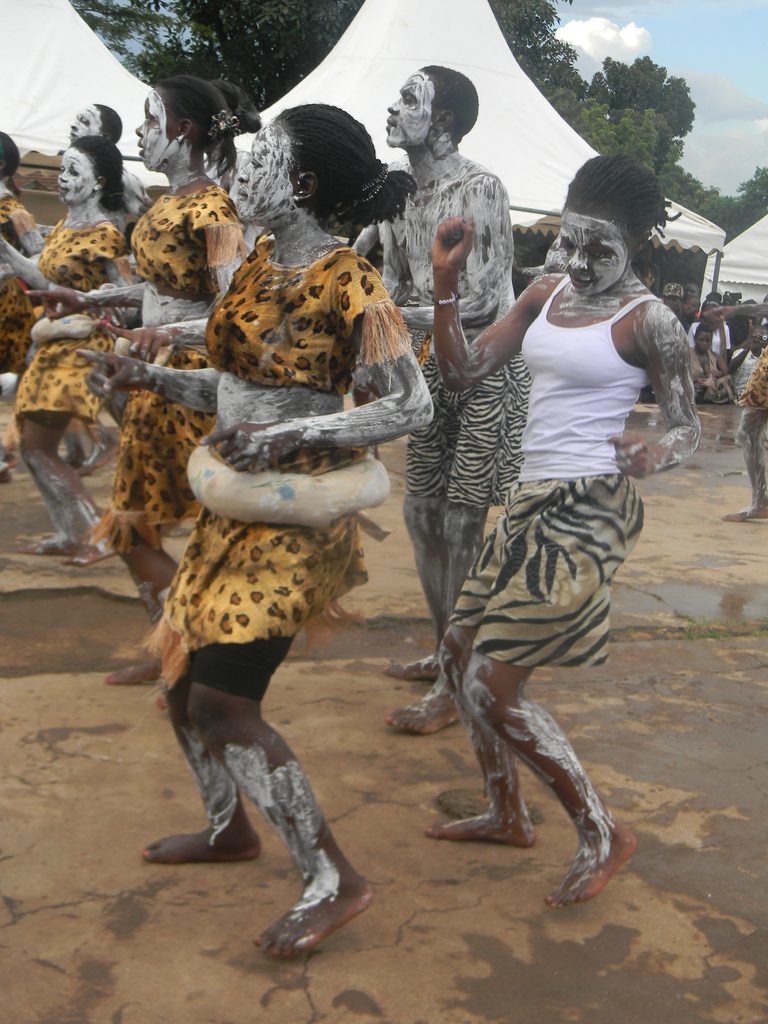
Music is at the heart of embalu. Songs sung during the bell-ringing and the procession encourage the initiate to be brave, praise those who have brought honour to the clan and mock cowardice. Some songs remind the boy of his ancestors and the heroes of the community, while others carry warnings about the shame of fleeing the knife. The best-known chant, sung on the way back from the river, is “Sioyayo,” a call that echoes across the hills throughout the season.
What the Tradition Means
- Transition to manhood. Circumcision marks the end of boyhood and the start of adult responsibilities.
- Courage. Facing the knife in public without flinching proves bravery.
- Belonging. The ceremony binds the young man to his clan, his age set and his ancestors.
- Moral education. Counselling teaches respect, responsibility and good conduct.
- Community. Feasts, songs and processions bring entire villages together.
Controversies and Modern Changes
Like many rites of passage, embalu has faced challenges in modern Kenya.
- Health and safety. Infections and injuries from unhygienic practices have led county governments to train and certify traditional circumcisers. In Bungoma, hundreds of circumcisers have been trained in hygiene, given certificates and required to use a separate knife for each boy, with ambulances on standby during the season.
- Hospital circumcision. A growing number of families choose to have boys circumcised in hospital, then hold traditional celebrations at home, combining medical safety with cultural meaning.
- Forced circumcision. Every circumcision season brings reports of uncircumcised men from other communities being harassed or forcibly circumcised. Such acts are illegal, and leaders and elders regularly warn against them.
- Religion and education. Some Christian families and educated urban parents have adapted or simplified the ceremony, while others insist on preserving it fully.
- Cultural preservation. Cultural festivals, county programmes and elders’ councils now work to document and protect the tradition for future generations.
The debate over circumcision in Kenya has a long history. Our article on the female circumcision controversy explores how colonial missionaries and Kenyan communities clashed over initiation customs in the 1920s and 1930s, a very different practice but part of the same wider history of rites of passage under colonial rule.
Bukusu Circumcision at a Glance
| Feature | Details |
|---|---|
| Name | Embalu or sikhebo |
| Timing | Even-numbered years, starting in August and often continuing into December |
| Typical age | Early to mid-teens |
| Where | In public, in the father’s compound |
| Key symbols | Bells (chinyimba), clay from the river, grass on the head |
| Age sets | Eight repeating sets, from Bakolongolo to Basawa |
| Graduation | Khualukha |
Conclusion
The Bukusu circumcision tradition is one of Kenya’s most vivid living customs. From the ringing of the chinyimba bells and the dawn procession to the river, to the brief, brave moment of the cut and the counselling that follows, embalu turns boys into men in the eyes of their community. Through the age-set system, it also links each new generation to those who came before. While health concerns, religion and modern life have changed how the ceremony is performed, its core message of courage, responsibility and belonging remains central to Bukusu identity. Understanding embalu is a window into how one of Kenya’s largest communities passes its values from one generation to the next.
Sources
- The Star: Naked rituals, feasts and sex advice – untold story of Bukusu circumcision (2018)
- Citizen Digital: Inside the Bukusu circumcision rite of passage
- Bukusu – Wikipedia
- G. B. Mayende, “Age-Set System Among the Babukusu of Western Kenya,” EPRA International Journal of Multidisciplinary Research (2022)
- The Standard: Why August sends shivers among Bukusu “outsiders”
