
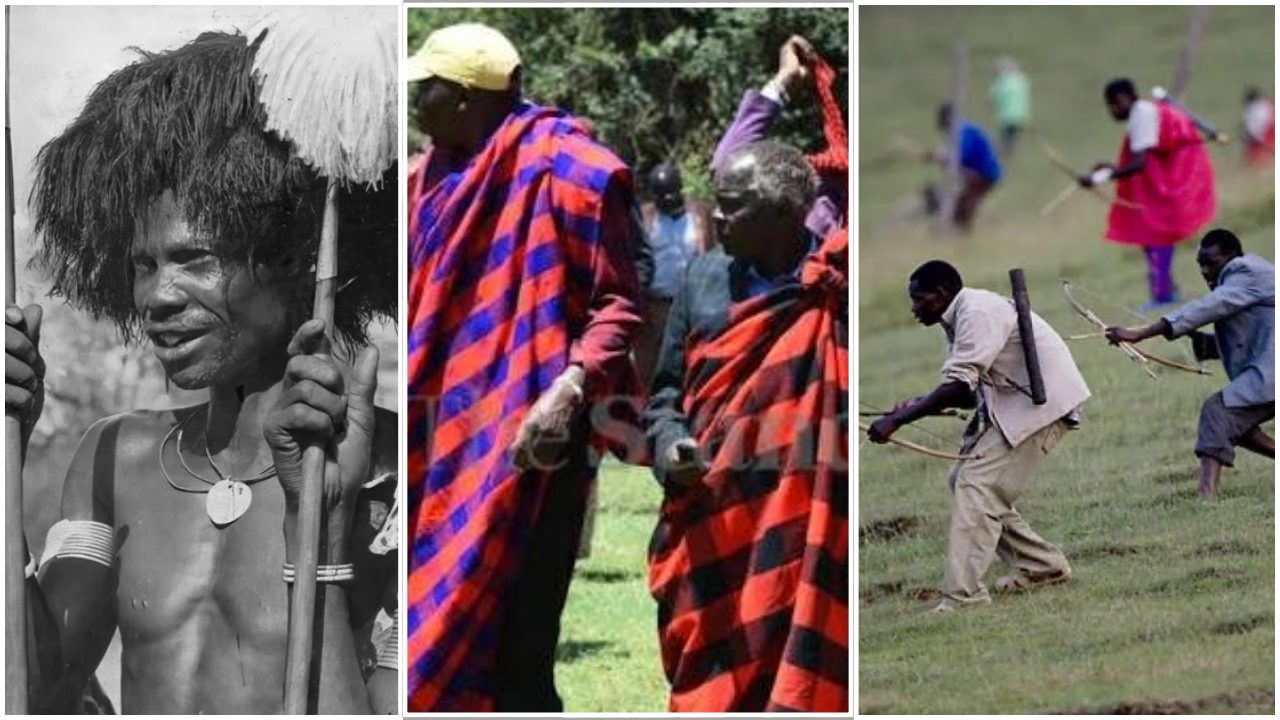
On the slopes of Mount Elgon, the extinct volcano that straddles the Kenya–Uganda border, live the Sabaot, a Kalenjin-speaking people whose story is bound up with one mountain and the land around it. Other Kalenjin communities have long regarded the Elgon area as an ancestral home, and the Sabaot as keepers of an older Kalenjin way of life. Yet in modern Kenya, the Sabaot are better known for something far more painful: a decades-long struggle over land that exploded into armed conflict between 2006 and 2008.
This article traces Sabaot history from their roots among the Southern Nilotic peoples, through their clans and traditions, to colonial forest policy, the Chepyuk resettlement schemes and the rise and fall of the Sabaot Land Defence Force. For the wider family the Sabaot belong to, see our profile of the Kalenjin people.
Who Are the Sabaot?
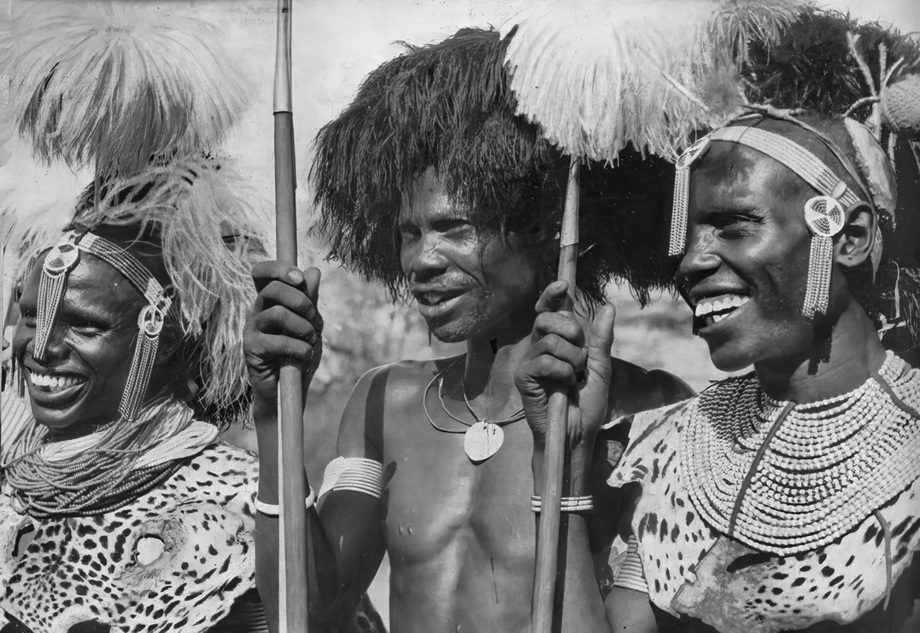
The Sabaot are one of the sub-groups of the Kalenjin, the cluster of Southern Nilotic communities that also includes the Kipsigis, Nandi, Keiyo, Marakwet, Tugen, Pokot and others. They live around Mount Elgon in both Kenya and Uganda. In Kenya, their heartland is the former Mount Elgon District, now part of Bungoma County, with smaller numbers in neighbouring Trans Nzoia. Across the border in Uganda, the closely related Sebei (Sabiny) live on the northern and eastern slopes of the same mountain.
The Sabaot language belongs to the Elgon branch of the Kalenjin languages. It had about 240,000 native speakers at the 2009 Kenyan census, and it is spoken in several dialects, including Koony (Kony), Book (Pok), Bong’omeek (Bong’om) and Sapiiny (Sabiny).
Within Kenya, the Sabaot are usually described in terms of two broad groups that became central to modern politics on the mountain: the Soy (sometimes called Chemwek), who traditionally lived on the lower slopes, and the Mosop, often labelled “Ndorobo” by outsiders, who lived higher up in the forests and moorlands. Ethnographic accounts also list sub-groups by dialect, such as Pok, Somek, Mosop, Koony, Bong’omek and Sabiny.
Origins and Migration
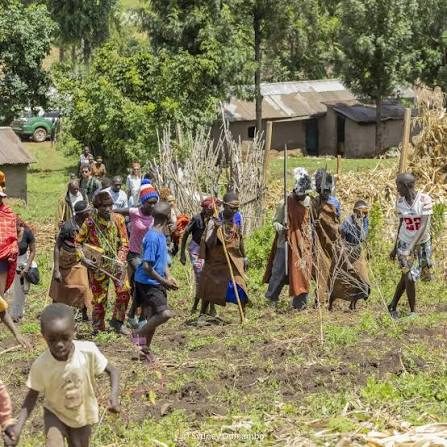
Like other Kalenjin, the Sabaot trace their deep ancestry to Southern Nilotic-speaking peoples who moved into the western highlands and Rift Valley of what is now Kenya more than two thousand years ago, shortly before ironworking spread through East Africa. Linguists and historians generally place the early Kalenjin homeland in the region around Mount Elgon, which is one reason other Kalenjin sometimes call the area Kapkugo, the place of the grandparents or ancestors.
Sabaot oral tradition tells a more personal story. According to one widely repeated account, the community once lived at Sengwer near the Cherangani Hills, and their patriarch, Kingo, moved from there to Kony on Mount Elgon. Kingo had four sons, Chebok, Chepkony, Chesabiny and Chebong’om. After a dispute in which the father’s gourd was broken, the sons were sent away, scattering toward present-day Bungoma and beyond. They founded clans of their own and later returned to the mountain, and their names live on in the main Sabaot divisions. Like many founding stories, it explains how a set of related clans came to share one territory and one identity.
Mount Elgon itself shaped that identity. Its slopes offered rich volcanic soils, high pastures, forest for hunting and honey, and natural defences. The mountain’s caves, including the well-known salt caves visited by elephants, also gave shelter to people and herds in earlier times.
Traditional Society and Economy
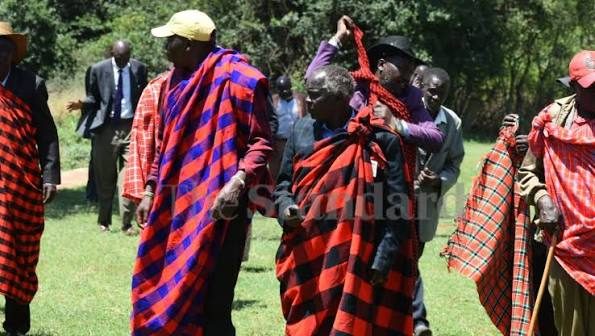
For most of their history, the Sabaot were cattle people. Large areas of grazing on the lower slopes and plains supported herds that measured a family’s wealth, paid bridewealth and anchored social life. Higher up, the Mosop combined livestock keeping with hunting, honey gathering and the use of forest resources, a pattern that later led colonial and national authorities to class them with other “Ndorobo” forest peoples.
As grazing land shrank in the twentieth century, the Sabaot steadily shifted toward farming maize, beans, vegetables and later coffee and other cash crops. Land and cattle, however, remained the core of Sabaot identity, which helps explain why land disputes on the mountain have been so bitter.
Socially, the Sabaot shared many institutions with other Kalenjin:
- Clans traced descent through the male line and regulated marriage, land use and inheritance.
- Initiation marked the passage to adulthood. Like several Kalenjin and other East African communities, the Sabaot historically practised circumcision for both boys and girls. Female circumcision has since been outlawed in Kenya and is opposed by many within the community. Our article on the female circumcision controversy covers the wider colonial-era debate.
- Age sets grouped men who were initiated together and organised duties such as herding, defence and, later in life, elderhood and dispute resolution.
- Religion centred on a supreme being associated with the sun, alongside respect for ancestors. Today most Sabaot are Christians, though traditional beliefs persist.
Neighbours on the Mountain
The Sabaot have never lived in isolation. On the lower western and southern slopes they border the Bukusu, the largest of the Luhya sub-groups, and to the south and west the Iteso. Relations involved trade, intermarriage and borrowing of customs, but also cattle raiding and competition for land. The former Mount Elgon District had about 135,000 residents in the 1999 census, and it was home to Sabaot, Bukusu and Iteso communities. For more on the Sabaot’s largest neighbours, read our guide to the seventeen Luhya sub-groups.
Colonial Rule and the Forest
British rule brought two changes that shaped modern Sabaot history. First, much of the surrounding plains were opened to European settlement as part of the White Highlands, especially in Trans Nzoia, squeezing the grazing lands the Sabaot had used. Second, colonial authorities treated the upper slopes of Mount Elgon primarily as a forest and water catchment, to be protected from settlement. On the Ugandan side, parts of the mountain were declared a forest reserve in 1938, and further restrictions in the 1950s criminalised hunting and gathering by the communities who lived there. The Mosop on both sides of the border were repeatedly pressured to move out of the forest.
The result was a long-running tension between conservation and people that independence did not resolve. Land alienated in colonial times was rarely returned, and forest boundaries stayed largely in place. Our article on the history of land ownership in Kenya explains how colonial land law shaped these conflicts across the country.
The Chepyuk Settlement Schemes
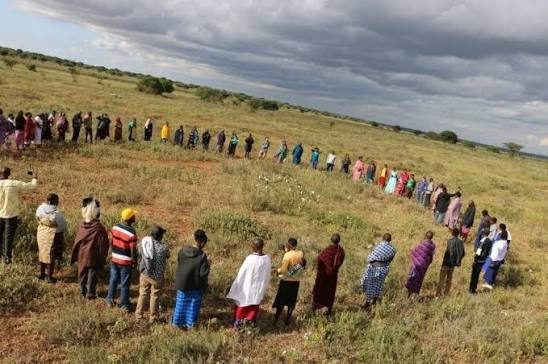
After independence, the Kenyan government tried to resolve the Mosop question through resettlement. In the mid-1960s it planned to move the Mosop out of the upper forest and moorland. Officials gave several reasons: protecting them from raids from across the border, bringing them within reach of state services and preserving the mountain as a water catchment.
The result was the Chepyuk Settlement Scheme, carried out in phases over several decades:
| Phase | Period | What happened |
|---|---|---|
| Chepyuk I | 1971–1974 | Mosop families moved from the moorland to land south of the forest, near Soy areas; about 1,500 beneficiaries received five acres each |
| Chepyuk II | Announced in the 1980s | About 620 families settled, also with five-acre plots |
| Chepyuk III | 1993–2006 | About 1,732 people allocated land in Emia location, with two and a half acres each |
Figures from Kenyan officials, as reported by The Standard.
The schemes created as many grievances as they solved. Poor planning, delays in issuing title deeds and allegations of corruption left many Mosop dissatisfied, while some Soy felt that land near their homes was being handed to others. Population growth meant that plots allocated decades earlier no longer met families’ needs. Politicians on all sides used the land question to rally support. By the early 1990s, armed groups linked to local politics had already appeared on the mountain.
The Sabaot Land Defence Force
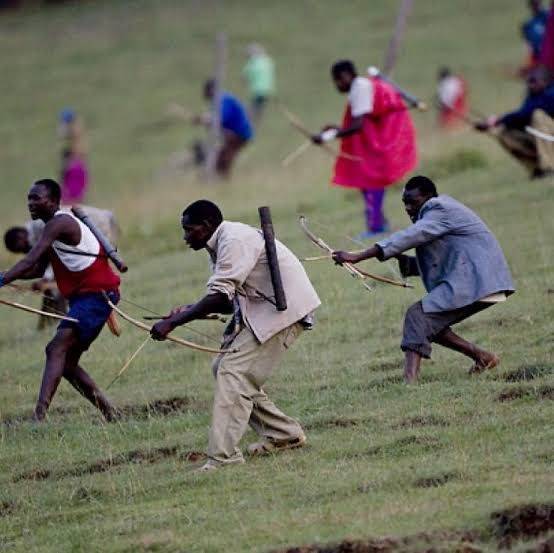
The crisis came to a head after the third phase of Chepyuk. In 2006, the government moved to evict people it considered to be illegally occupying land in the Chepyuk area and to reallocate plots. A militia calling itself the Sabaot Land Defence Force (SLDF) emerged to resist the evictions, drawing support mainly from those who felt the allocation had cheated them.
From late 2006, the conflict was largely fought between Sabaot themselves, with violence between Soy and Mosop supporters over who should get land. The SLDF set up what amounted to a parallel administration, collecting “taxes,” punishing opponents and intimidating local officials. Human Rights Watch reported that Kenyan rights groups blamed the SLDF for more than 600 deaths from 2006 onward, along with kidnapping, torture and rape. Tens of thousands of people fled their homes. The Kenya National Commission on Human Rights estimated 66,000 displaced by April 2008, while the army put the figure far higher.
The violence overlapped with the national crisis that followed Kenya’s disputed December 2007 election, and the SLDF was also accused of using intimidation for political ends during that period.
Operation Okoa Maisha
In March 2008, the Kenyan army and police launched a joint operation on the mountain called Operation Okoa Maisha (“Save Lives”), beginning on 9 March. It succeeded in breaking the SLDF as an organised force, and its leaders were killed or arrested. But it came at a heavy cost to ordinary people. Human Rights Watch documented that security forces rounded up almost all the men and boys in many villages, some as young as ten, and that detainees were beaten and tortured at military camps, most notably at Kapkota.
Local human rights groups recorded 72 people dead and 34 missing between 9 March and the end of June 2008. The army said it had detained nearly 4,000 people. The operation left deep scars, and many families on the mountain still ask what happened to relatives who disappeared during those months.
The Sabaot Today
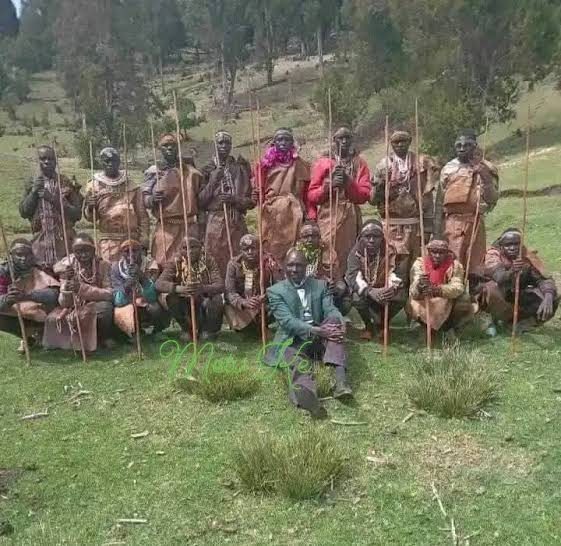
Since 2010, the former Mount Elgon District has been part of Bungoma County, under Kenya’s devolved system of government. The Sabaot remain a distinct community with their own language, churches, cultural associations and political representatives. They have also produced a remarkable number of athletes, part of the wider Kalenjin running tradition.
The land question, however, has not gone away. Officials have continued to vet and resettle families in Chepyuk, and disputes over who qualifies remain sensitive. On the Ugandan side of the mountain, the Mosop (Mosopisyek) continue their own long legal struggle over forest land in the Mount Elgon National Park. For the Sabaot, as for many Kenyan communities, history and land are impossible to separate.
Key Dates in Sabaot History
| Date | Event |
|---|---|
| Over 2,000 years ago | Southern Nilotic ancestors of the Kalenjin settle in the western highlands, with Mount Elgon as an early homeland |
| Early 1900s | Colonial land alienation opens surrounding plains, including Trans Nzoia, to European settlement |
| 1938 | Parts of Mount Elgon (Uganda side) declared a forest reserve |
| 1971–1974 | Chepyuk I resettles Mosop families from the moorland |
| 1980s | Chepyuk II announced |
| 1993–2006 | Chepyuk III allocations in Emia location |
| 2006 | Sabaot Land Defence Force emerges to resist Chepyuk evictions |
| March 2008 | Operation Okoa Maisha begins (9 March) |
| 2010 | Mount Elgon District merged into Bungoma County |
Conclusion
The Sabaot story begins with an ancient migration of Southern Nilotic herders to the slopes of Mount Elgon, a place so central to Kalenjin memory that other communities still call it the land of the ancestors. It continues through clans, initiation and cattle, through colonial forest rules and post-independence resettlement schemes, and into the tragedy of the Sabaot Land Defence Force and the military operation that crushed it. Through all of it, land and identity have been inseparable. Understanding that history is the key to understanding why Mount Elgon’s land question still matters, and why peace on the mountain depends on settling it fairly.
Sources
- Sabaot people – Wikipedia
- Sabaot language – Wikipedia
- Mount Elgon District – Wikipedia
- The Standard: Why land remains an emotive issue that could reignite violence in Mt Elgon (2015)
- Human Rights Watch: “All the Men Have Gone” – War Crimes in Kenya’s Mt. Elgon Conflict (2008)
- Current Conservation: How the Mosopisyek lost their forest home
