
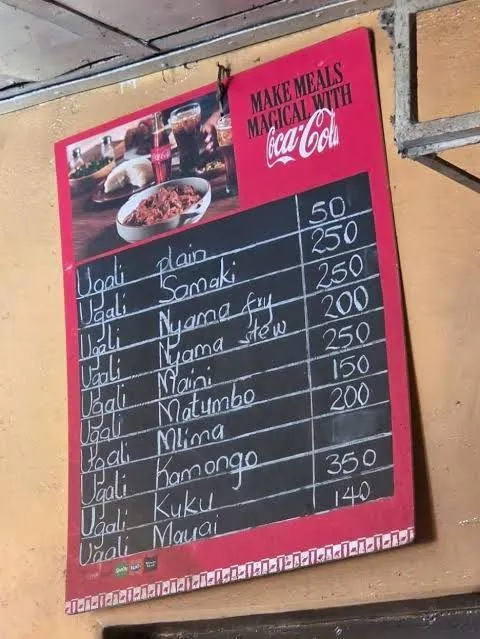
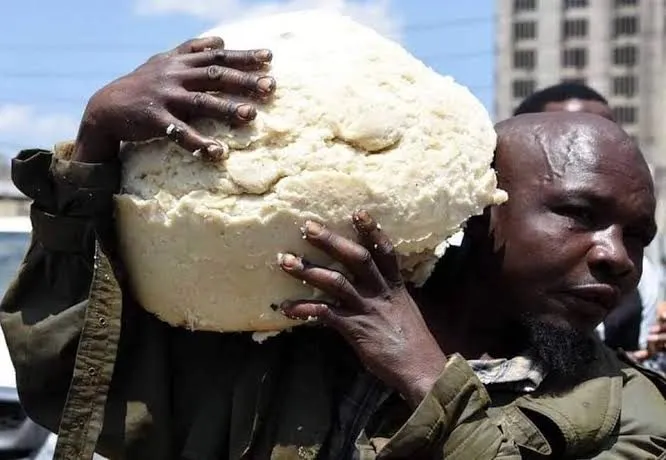
Few foods feel more Kenyan than ugali. A plate of stiff maize-meal porridge with sukuma wiki, beans or nyama choma is part of daily life in homes, schools and roadside kibandas across the country. Yet maize is not native to Africa, and for most of Kenya’s history people ate something else. Ugali’s rise was not simply a matter of taste. It was shaped by trade routes, cattle plagues and famine, and above all by a colonial economy that wanted cheap food for labourers and a cash crop it could tax. This article traces that journey, and its cost to Kenyan diets and soils.
Before Maize: Millet, Sorghum and Tubers
Before the twentieth century, Kenyan communities relied mainly on finger millet, sorghum, yams, sweet potatoes, beans and other legumes, depending on the region. Many made a stiff porridge, but from millet or sorghum flour rather than maize. Pastoral communities leaned on milk, blood and meat. These food systems produced real surpluses: the historian B. D. Bowles points out that European explorers and Arab traders in the 1880s had little difficulty buying food as they travelled, whereas by the early 1960s Kenya was importing food. Our article on the history of kunde shows how hardy indigenous crops kept dry areas fed.
Maize Arrives Along the Trade Routes
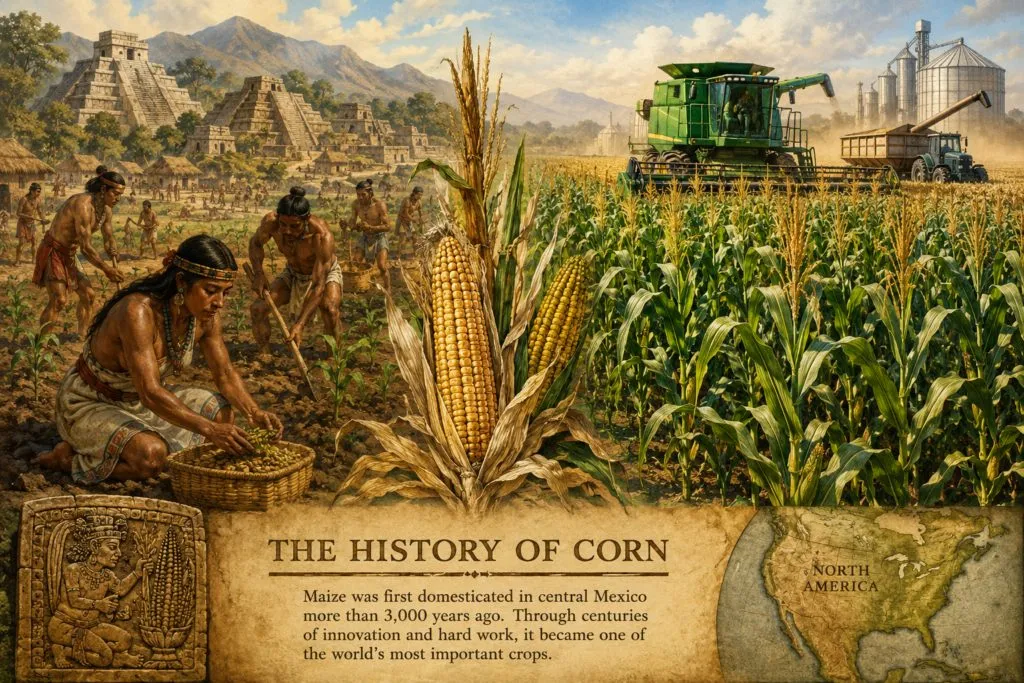
Maize was domesticated in the uplands of Central and North America. It probably reached the East African coast with the Portuguese between the sixteenth and eighteenth centuries, and from there it spread inland along trading routes. By the mid-nineteenth century it was common in parts of Tanganyika and had reached Buganda.
In what became Kenya, however, maize stayed a minor crop. Bowles notes it was much less common among the Kikuyu before colonial rule, and was grown mainly in the south-east and around the shores of Lake Victoria, areas on or near trade routes. That pattern suggests it was first grown as a crop traders would buy or barter, not as a household staple.
Disaster in the 1880s and 1890s
A series of catastrophes then weakened the old food systems. Rinderpest and other cattle diseases in the 1880s and 1890s killed up to 90% of livestock in some areas, and the Great East African Famine followed. Communities that had depended on cattle and traditional grains were left vulnerable just as British rule was taking hold. For the wider story, see colonialism in Kenya.
Posho: Cheap Food for a Labouring Class
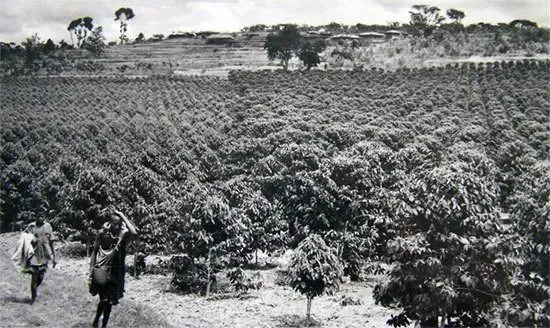
From about 1905, European settlers established farms and plantations, and they needed to feed their workers. Planters did not expect to grow this food themselves; they expected to buy it. Many paid labourers partly in a daily ration of maize meal called posho, so workers grew used to eating it.
Why maize? Bowles argues that settlers saw it as the ideal food for a labouring class, as it had been for enslaved people in the southern United States. He cites an 1846 letter from an American, John Bartlett, to the British aristocrat Lord Ashburton, recommending maize because “the labouring classes and the poor of Great Britain require a cheaper article of food than wheaten bread.” The aim, in short, was to feed workers as cheaply as possible. Read more about the settler economy in Kenya’s White Highlands.
Spread by Force and by the Market
The colonial administration did not just wait for maize to spread. It pushed it, often hard:
- Kisii, from 1919: colonial officials introduced maize cultivation, provided seed and told chiefs to set up communal farms and enforce work on them.
- Pokot, 1920s: the administration introduced maize by force and met resistance from people who recognised that sorghum and millet suited their dry area better. The district officer gave as his reason an increase in the Pokot contribution to Kenya’s economy, and complained of the people’s “laziness.”
- Nyanza, 1932: maize was growing near the railways but little near the Uganda border, where an agricultural officer called it “uneconomic.” Another noted that maize in Kisii was grown largely for export.
Tax completed the picture. Africans had to pay hut and poll tax in cash, and maize was the crop the colonial state would buy. Bowles calls the extra labour of producing it the peasant’s “tribute.” His conclusion is blunt: maize reached many Kenyan communities as a cash crop introduced by the colonial administration, much as cotton was in Uganda. Famines in 1917–18, 1919–21 and 1929–30 pushed even more households toward it. See how this fitted the wider system in Kenya’s colonial administration.
White Maize Replaces Yellow
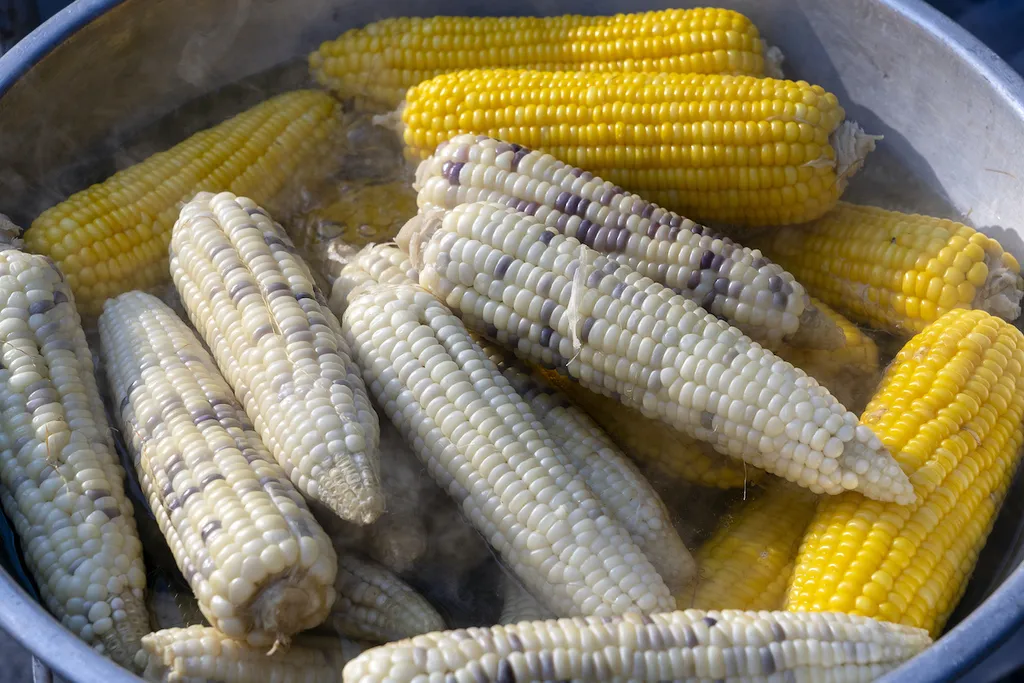
The maize Kenyans eat today is mostly white, and that too was a colonial choice. Settlers imported white varieties from South Africa, and the administration tried to replace the earlier yellow maize. An agricultural officer explained the reasoning in 1932: yellow maize might have “a better food value, but white maize is much more prolific, and so a greater surplus is created which sets off any lack in food value.” Quantity was put ahead of nutrition.
The Cost to Diets
Maize out-yields millet and sorghum only in the right conditions. It needs about 30 inches (760 mm) of rain a year, and Bowles notes that under 20% of Kenya reliably gets that. It also suited a labour system that took men away for long periods, since the husk protects the cobs from pests while they wait in the field.
Nutritionally, it was a step down. Compared with sorghum and millet, maize is lower in protein, calcium, iron and several B vitamins, including niacin; diets built almost entirely on maize can cause pellagra. Kenyan farmers softened the worst effects by planting beans among their maize, against the advice of agricultural officials who thought pure maize stands looked more “advanced.” The ugali-and-beans plate many families still eat is, in part, a legacy of that farmer wisdom.
The Cost to the Land: Machakos and Kitui
Maize also takes a lot out of the soil, and its shallow roots do little to hold it. In Machakos and Kitui, where most land was never well suited to maize, it spread anyway: by 1934 Machakos had about 600 ploughs in use and was producing some 60,000 bags of surplus maize. Soil erosion followed. After the Second World War, officials denounced maize growing there and promoted sorghum and millet, but there was no market for those grains, and farmers who needed cash could not afford to stop. By the 1960s many holdings planted maize twice a year, with yields varying from two bags an acre down to as little as three-quarters of a bag.
Mills, Markets and Marketing Boards
As towns grew, hammer mills ground maize into fine white flour that kept well and suited workers living away from home. African maize production rose from about 750,000 bags in 1920 to nearly 2 million by the 1940s. The state also controlled the trade: maize marketing boards were set up in the 1930s, and during the Second World War settlers were paid KSh13 a bag while African farmers received KSh6, which drove many to black markets.
Maize After Independence
In the 1960s, maize research around Kitale produced new hybrid varieties that spread quickly. By the famine of 1984–85, maize made up about 40% of the national diet, and the government imported yellow maize to close the gap. Ever since, the price of unga has been a political issue watched as closely as fuel.
Ugali Timeline
| Period | Event |
|---|---|
| Before 1500s | Millet, sorghum, tubers and legumes are the main staples |
| 1500s–1700s | Maize reaches the coast, probably with the Portuguese |
| Mid-1800s | Maize spreads along trade routes to Tanganyika, Buganda and Lake Victoria |
| 1880s–1890s | Cattle diseases and famine weaken traditional food systems |
| From 1905 | Settler farms feed workers on posho (maize meal) |
| 1919 | Officials introduce maize in Kisii through chiefs and communal farms |
| 1920s | Maize forced on the Pokot; famines push more households to maize |
| 1932 | Officials favour white maize over yellow for higher yields |
| 1930s | Maize marketing boards formed; erosion spreads in Machakos |
| 1960s | Hybrid maize research expands around Kitale |
| 1984–85 | Famine; maize is about 40% of the national diet |
Ugali Across Kenya Today
Ugali goes by many names, among them kuon in Dholuo, obusuma in Luhya and ngima in Kikuyu, and it is eaten with greens, fish, beans, meat or sour milk. Some families still mix in sorghum, millet or cassava flour, a link back to the grains that came before maize.

Conclusion
Ugali is younger, and more political, than many Kenyans assume. Maize arrived along the trade routes centuries ago, but it became the national meal through cattle plagues and famine, posho rations on settler farms, forced planting in places like Kisii and Pokot, cash taxes and colonial marketing boards. That shift brought a less varied diet and eroded soils in places like Machakos and Kitui. Today’s plate of ugali carries all of that history, and the older grains of millet and sorghum still deserve a place beside it.
Sources
- B. D. Bowles, “Underdevelopment in Agriculture in Colonial Kenya: Some Ecological and Dietary Aspects,” in B. A. Ogot (ed.), Hadith 7: Ecology and History in East Africa, Nairobi: Kenya Literature Bureau, 1979, pp. 195–213.
- Cultivation, Commodification and Culture: Maize and Ugali in Kenya, The Elephant (2023)
- Ugali, our national diet, is officially 102 years old, The Standard
