
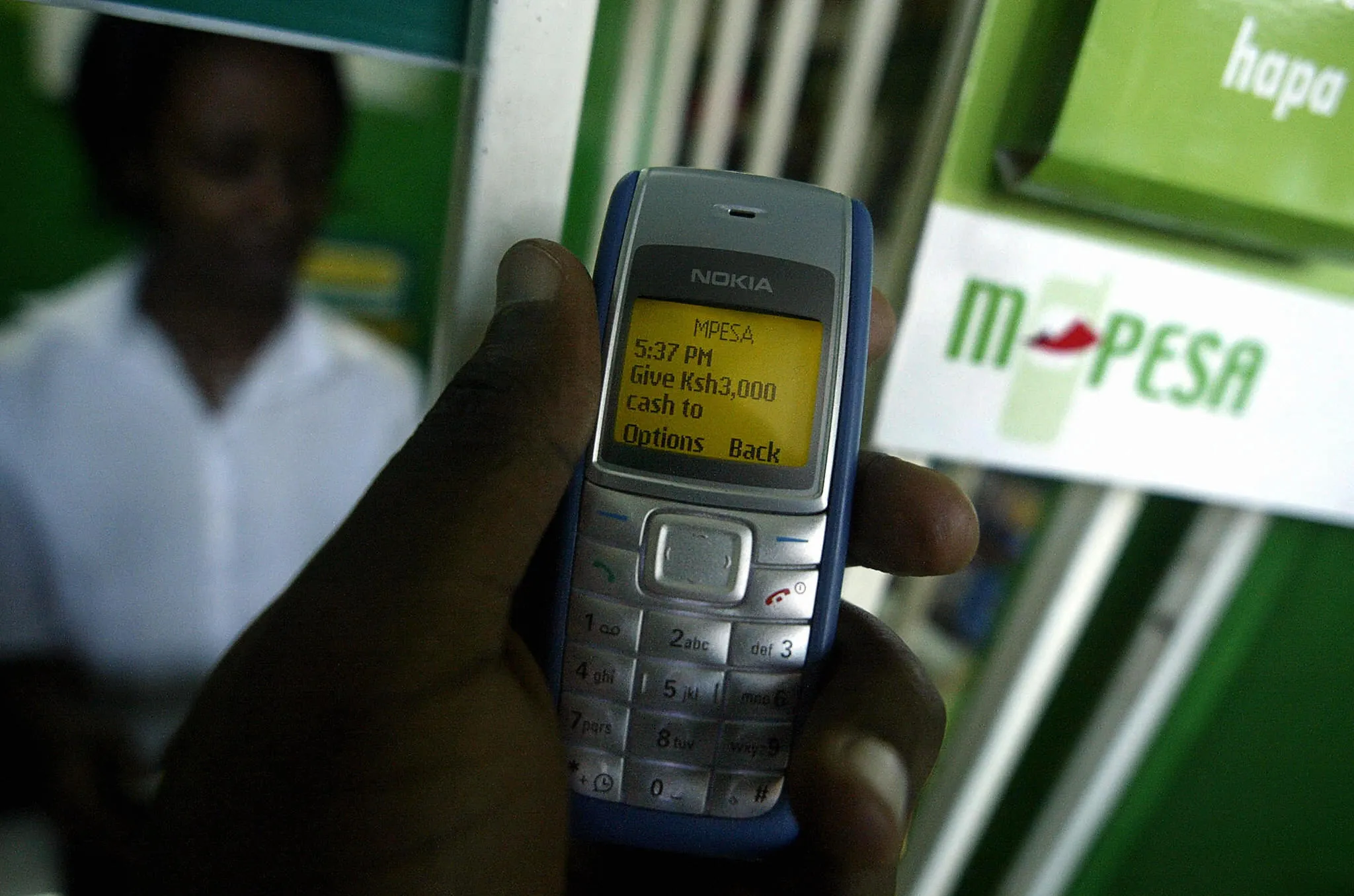
In the early 2000s, Kenya had a banking problem that most of the world had simply accepted as permanent. By 2006, the country’s 41 commercial banks had managed to build just 450 branches and 600 ATMs to serve a population of 36 million people — fewer than two branches per 100,000 Kenyans. Only 18 percent of the population held a formal bank account, and nearly 40 percent had no access to any financial service whatsoever. If a man working in Nairobi wanted to send money to his mother in Kisumu, his options were limited and dangerous: hand it to a bus driver and hope for the best, queue at a post office notorious for losing parcels, or travel home himself.
Within a decade, that world would change entirely. The solution did not come from a bank, a government programme, or an international development fund. It came from a mobile phone network, an unlikely partnership between a British telecoms giant and a Nairobi operator — and, most importantly, from ordinary Kenyans who showed the inventors what the technology could actually become.
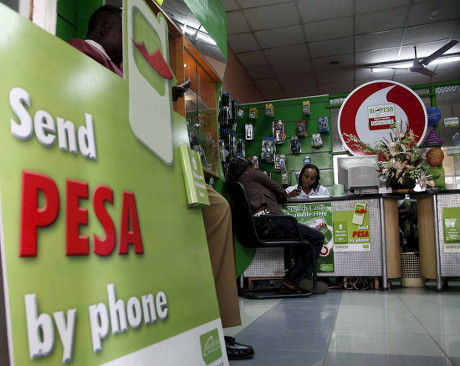
Caption: An M-Pesa agent in a Nairobi market, circa 2008. Within two years of launch, M-Pesa had more outlets than all the country’s banks, ATMs, and post offices combined.
The problem M-Pesa was built to solve
Before M-Pesa existed, sending money across Kenya required either extraordinary trust or physical presence. Research conducted just before the 2007 launch found that the most popular method of transferring money — used by 58 percent of senders — was simply giving cash to a family member or friend who happened to be travelling in the right direction. The second most common method (27 percent) was using public bus companies, which offered money delivery as a side business. Cases of theft by bus employees, fellow passengers, or roadside robbers were routine. Postal money orders and Western Union were options, but both charged high commissions and were largely unavailable in rural areas.
The underlying economic problem was structural. Kenya’s banking sector had retreated from rural areas throughout the 1990s under structural adjustment programmes imposed by the World Bank and International Monetary Fund, leaving wide swaths of the country — home to roughly 70 percent of the population — without any formal financial infrastructure. For those living in cities, banks were theoretically accessible but practically hostile: the average cost to open a current account in 2007 was the equivalent of US$105, with monthly maintenance fees of around $19. For a country where the per capita annual income was under $500, these were prohibitive figures.
This gap between financial need and financial access had created, as economist Scott Burns later argued, “an enormous entrepreneurial opportunity” — a latent demand for cheap, reliable money transfer that existing institutions had simply failed to meet.
A grant, a workshop, and an unlikely pivot
The idea that would become M-Pesa was born not in Nairobi but in London. Nick Hughes, then heading social enterprise at Vodafone, and Susie Lonie, a mobile commerce specialist, conceived of using mobile phones to improve access to microfinance. Their proposal won a £1 million grant from the UK’s Department for International Development in 2003. The original goal was modest: help rural Kenyans borrow and repay microfinance loans without visiting a bank.
In 2005, the team launched a pilot in partnership with Faulu Kenya, a microfinance institution, targeting borrowers in slum areas on the outskirts of Nairobi. What they discovered upended their entire business plan. As Cassim and Ronnie document in their organisational study of the service, customers in the pilot were not primarily using the platform to repay loans — they were using it to send money to one another. The technology had been built for credit, but the people using it had immediately repurposed it as a remittance tool.
The team pivoted completely. Rather than a microfinance platform, they would build a mass-market person-to-person money transfer service. The product would be simple enough to work on any mobile phone, require no bank account to use, and be accessible through a network of small retail agents across the country. They named it M-Pesa — M for mobile, pesa the Swahili word for money.
[For context on why financial exclusion ran so deep in Kenya, see our article on the history of land ownership in Kenya, which explores how structural inequalities shaped access to capital for generations.]

Nick Hughes, the Vodafone team whose microfinance pilot in Nairobi unexpectedly revealed a much larger need: a safe way to send money home. Source:
The regulatory gamble that made it possible
Before a single Kenyan could send a shilling over the platform, M-Pesa faced a problem that had killed similar innovations in other countries: regulation. Neither Vodafone nor Safaricom held a banking licence. Allowing a mobile phone company to hold and transfer customer funds sat in an ambiguous legal space that most regulators in comparable markets had resolved by simply saying no.
The Central Bank of Kenya took a different approach. As Burns documents in his analysis of the enabling regulatory environment, the CBK’s Payment Service Group adopted what he calls a “try-and-see” approach — granting Safaricom a special letter of no objection rather than demanding that the service conform to existing banking law before launch. This exempted M-Pesa from stringent “know your customer” requirements, allowed it to use retail shops as quasi-banking agents, and gave Safaricom the regulatory room to design the product around actual user needs rather than around a pre-existing compliance framework. The CBK did require that all customer funds be held in accounts at formally regulated commercial banks, providing a floor of consumer protection, but otherwise stood back.
The banks were not pleased. In 2008, a consortium of Kenyan commercial banks lobbied the Ministry of Finance to order a full audit of M-Pesa — a transparent attempt to generate regulatory pressure that would slow a service they viewed as a dangerous competitor. The audit found the platform to be entirely sound. The banks had overplayed their hand, and M-Pesa’s position was strengthened rather than weakened.
Ngugi, Pelowski and Ogembo highlight just how consequential this regulatory environment was by comparing Kenya directly to Tanzania. When Vodacom attempted to replicate M-Pesa’s success in Tanzania, it found a far more restrictive regulatory framework and a far smaller market share — Vodacom held only 39 percent of the Tanzanian mobile market compared to Safaricom’s 79 percent in Kenya. Where Kenya’s M-Pesa had reached 2.7 million users by its fourteenth month, Tanzania’s equivalent had reached only 280,000 in the same period. The regulatory openness of the Central Bank of Kenya was not a minor footnote to M-Pesa’s success — it was one of its preconditions.
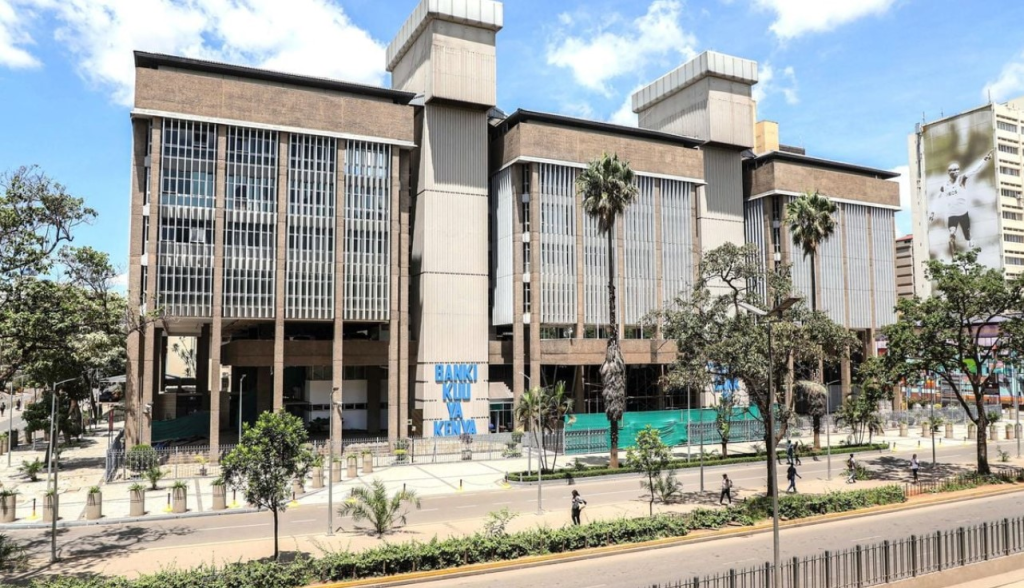
Central Bank of Kenya’s decision to issue a letter of no objection rather than require formal banking regulation gave Safaricom the space to launch. The CBK’s “try-and-see” approach is now studied internationally as a model for enabling financial innovation.
March 6, 2007: send money home
M-Pesa launched officially on 6 March 2007 with a marketing slogan that could not have been more direct: Send Money Home. The technology was stripped to its essentials — a SIM-card application that ran on even the most basic handsets, driven entirely by SMS. Registration required nothing more than a national identity card and a visit to any participating agent. There were no minimum balances, no monthly fees, no paperwork beyond what could be handled by an illiterate customer with the help of an agent.
The practical simplicity of the platform addressed barriers that had excluded most Kenyans from formal finance for decades. Where commercial banks required introduction letters, passport photographs, and minimum deposits, M-Pesa required only an ID card and a phone. Where banks charged $19 per month in maintenance fees, M-Pesa charged nothing to deposit and small flat fees only when transferring money.
Safaricom’s CEO Michael Joseph set an internal target of one million customers in year one, considerably more ambitious than the original business plan had envisaged. He need not have worried. By the end of the first twelve months, M-Pesa had registered 1.2 million customers. By November 2009 — less than three years after launch — the platform had reached 8.6 million users, with transaction volumes of over US$328 million per month. The number of person-to-person transactions had grown at a rate of 718 percent between 2008 and 2009 alone.
One factor that helps explain this explosive adoption, identified by Ngugi and colleagues, was the pre-existing social structure of Kenyan financial life. Urban workers had always supported rural families through remittances; what M-Pesa did was dramatically reduce the cost, risk, and inconvenience of that transfer. Working members of society in Nairobi, Mombasa, and other cities became the early adopters — and by using M-Pesa to send money to rural relatives, they automatically enrolled those relatives in the system too. The sender created demand at the receiving end. Every successful transfer recruited a new user.
A second factor, less often acknowledged, was the near-total dominance of Nokia handsets in the Kenyan market. Survey data collected by Ngugi and colleagues found that approximately 88 percent of Kenyan mobile users relied on Nokia phones. Because all Nokia models shared the same basic button configuration, the knowledge required to operate M-Pesa — itself a menu of simple text commands — spread naturally through social networks. Urban adopters taught rural relatives; the learning curve was shallow, and it moved in the same direction as the money.
[To understand why the rural-urban divide was so sharp in this period, see our piece on the history of Nairobi and how the city’s growth created the migrant worker economy that M-Pesa would eventually serve.]
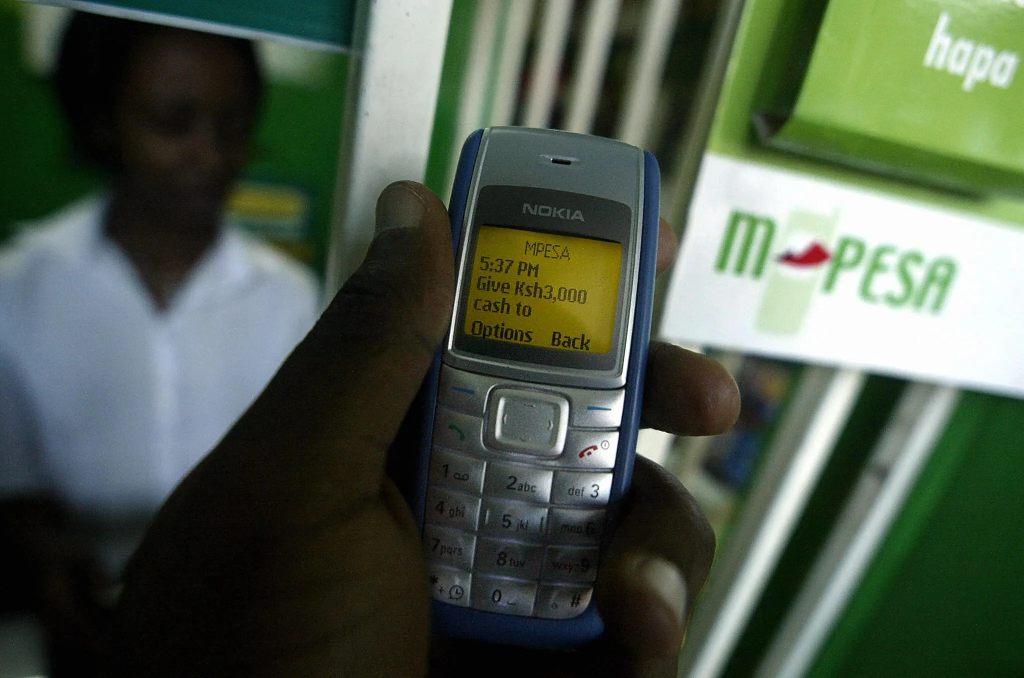
The near-universal adoption of Nokia handsets in Kenya was one of the underappreciated factors in M-Pesa’s rapid spread. A platform that worked on any Nokia phone worked for almost any Kenyan with a mobile.
The agent network: a branch on every corner
The infrastructure that made M-Pesa function was not a server or a satellite — it was a network of small shops, market stalls, and neighbourhood retailers who agreed to act as M-Pesa agents. Customers would walk into any participating agent, hand over cash, and receive an equivalent balance credited electronically to their M-Pesa account. To withdraw, they would do the reverse. The agent maintained a float of both cash and electronic money to facilitate these transactions, earning a commission on each.
Building and managing this network was the most operationally demanding aspect of the entire enterprise. In Tanzania, as Vodacom’s own executives later admitted, the failure to establish sufficient agent density was one of the primary reasons the platform struggled — at one point the South African team estimated they needed 40,000 distribution agents to achieve comparable penetration, against an existing network of only 4,000. In Kenya, Safaricom had the advantage of an existing retail network built for airtime sales, and the company moved aggressively to expand it. The number of agents grew from 335 at launch in April 2007 to over 14,000 by November 2009 — maintaining a customer-to-agent ratio of around 600, which proved sufficient to sustain trust and usability.
Burns explains the economic logic that made agent banking so transformative for financial inclusion. Setting up a full bank branch in a rural area carries enormous fixed costs — regulatory compliance, physical infrastructure, qualified staff, and the liquidity reserves needed to serve predominantly cash-based customers. An M-Pesa agent, by contrast, could be set up at roughly 0.5 percent of the cost of a bank branch, and the agent’s idle cash inventory was itself converted into a productive asset through the commission structure. The agent model did not merely extend financial services into underserved areas — it restructured the entire economics of doing so.
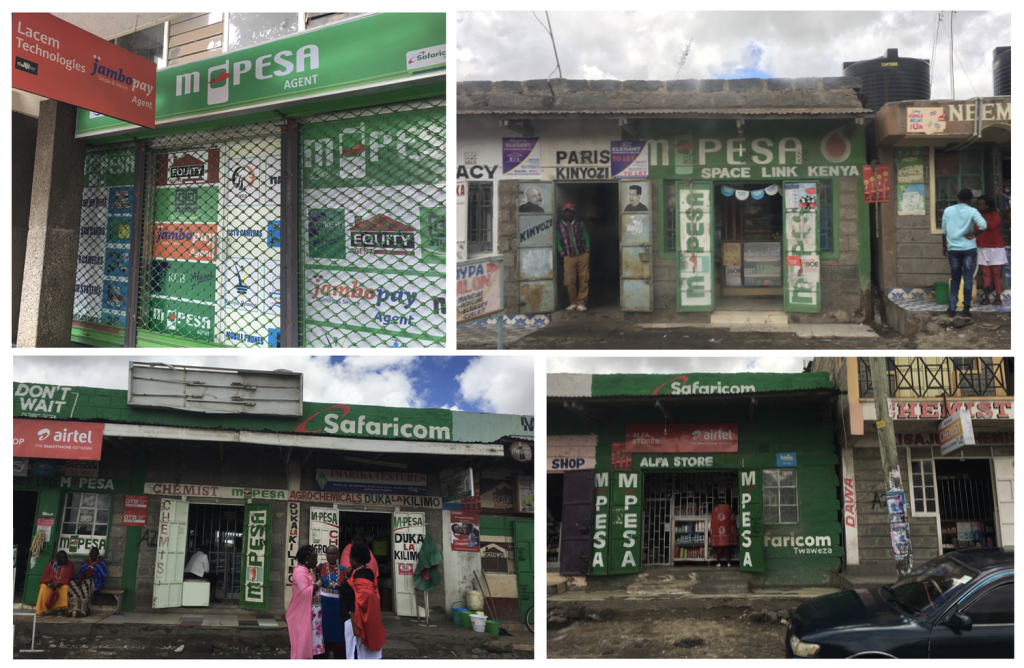
By 2009, M-Pesa agents outnumbered Kenya’s banks, ATMs, post offices, and all other money transfer services combined. In many rural areas, the agent kiosk became the first financial infrastructure residents had ever encountered.
A Kenyan technology in a British framework
The question of who invented M-Pesa has never been fully resolved, and is worth examining carefully rather than accepting the simplest version of events.
The official story credits Nick Hughes with the founding grant application and the conceptual framework, Susie Lonie with the technical development, and Michael Joseph with the commercial vision to scale it. The DFID funding, the Vodafone corporate infrastructure, and the Cambridge technology partner Sagentia were all British. By this reading, M-Pesa was a British development intervention that happened to be deployed in Kenya.
Jacob’s scholarship on M-Pesa in the context of Kenyan nationalism offers a more nuanced framing. He argues that it was precisely the Kenyan environment — the acute absence of formal banking, the strong rural-urban remittance culture, the widespread mobile penetration, and the regulatory flexibility of the CBK — that made M-Pesa possible at all. The technology had been tried in other markets with far less success. South Africa, with a more developed banking sector, saw M-Pesa fail comprehensively on its first launch in 2010 despite Vodacom’s local dominance. India, the UK, and several other markets proved unreceptive to mobile money models that worked transformatively in Kenya.
Ngugi and colleagues add another layer: the social structures that enabled M-Pesa’s adoption in Kenya were distinctly Kenyan. The dense networks of migrant workers sending remittances home, the harambee culture of communal financial support, the widespread use of a single phone brand, and the community ownership of the technology as a homegrown solution — none of these were replicable by corporate design.
The more useful framing may be that M-Pesa was a collaboration: a British funding mechanism and technological architecture delivered into a Kenyan social and economic context that was, uniquely, ready to receive it. The platform was British; the use case was Kenyan; and the decision to pivot from microfinance to money transfer — the decision that made M-Pesa what it became — was driven by the behaviour of ordinary Kenyans in Nairobi and Thika who simply used the technology as they needed to, rather than as it had been designed.
[For the broader context of how British interests shaped Kenya’s economic infrastructure, see our history of colonialism in Kenya and our piece on Kenya’s White Highlands and the economics of exclusion.]
What M-Pesa changed
The impact of M-Pesa on Kenya’s financial system was not merely one of convenience — it restructured the relationship between ordinary Kenyans and the formal economy.
The landmark academic study of M-Pesa’s long-term impact, by economists Tavneet Suri and William Jack published in the journal Science in 2016, estimated that access to M-Pesa lifted approximately 194,000 Kenyan households — around 2 percent of all households — out of poverty. The effects were concentrated among female-headed households and worked primarily through changes in labour market behaviour: women near M-Pesa agents were significantly more likely to move out of subsistence farming and into business and retail occupations. Suri and Jack estimated that approximately 185,000 women changed occupations as M-Pesa expanded in their area.
The financial inclusion numbers tell a stark story of transformation. When M-Pesa launched in 2007, 23 percent of Kenyans had access to any form of financial service. According to the GSMA, that figure had risen to over 67 percent by 2013, with much of the growth driven by the formal non-prudential sector that includes mobile money — which alone grew from 4 percent coverage in 2006 to 33 percent by 2013. The proportion of Kenyans excluded entirely from any financial service fell from 40 percent to under 25 percent in the same period.
Burns documents the parallel transformation of Kenya’s formal banking sector. The ratio of private bank deposits to GDP rose from roughly 33 percent to 44 percent in the five years following M-Pesa’s emergence, a rate of financial deepening that had taken more than a decade to achieve in the period prior. The number of bank accounts in Kenya grew from 2.5 million in 2007 to 8 million by 2010. Banks that had initially lobbied against M-Pesa rapidly reversed course: by the end of the decade, at least seven major banks had introduced mobile banking products built on the M-Pesa platform, including Equity Bank’s M-Kesho and the Commercial Bank of Africa’s M-Shwari, which offered interest-bearing savings and credit products to customers who had never held a formal bank account.
Jacob’s scholarship highlights an impact that economic analysis alone does not fully capture: the role of M-Pesa in knitting together a country divided by geography, ethnicity, and the colonial-era rural-urban split. With 42 ethnic groups, a history of political violence along communal lines, and a population spread across terrain that made physical connection expensive, Kenya’s national cohesion had always been fragile. Jacob argues — drawing on theories of nationalism from Benedict Anderson and Karl W. Deutsch — that M-Pesa functioned as a form of national infrastructure, not merely a financial one. When migrant workers in Nairobi sent money to Nyanza, when Kamba traders in Mombasa paid suppliers in Eldoret, when a mother in Kisii received school fees from her son in Nairobi without either of them needing to visit a bank, the service was building what Deutsch called “the intensification of social communication” — the connective tissue of nationhood.
[For more on the political divisions that shaped Kenya’s post-independence period, see our profiles of Jaramogi Oginga Odinga and Tom Mboya, whose rivalry encapsulated the ethnic and regional tensions M-Pesa would later help bridge economically.]
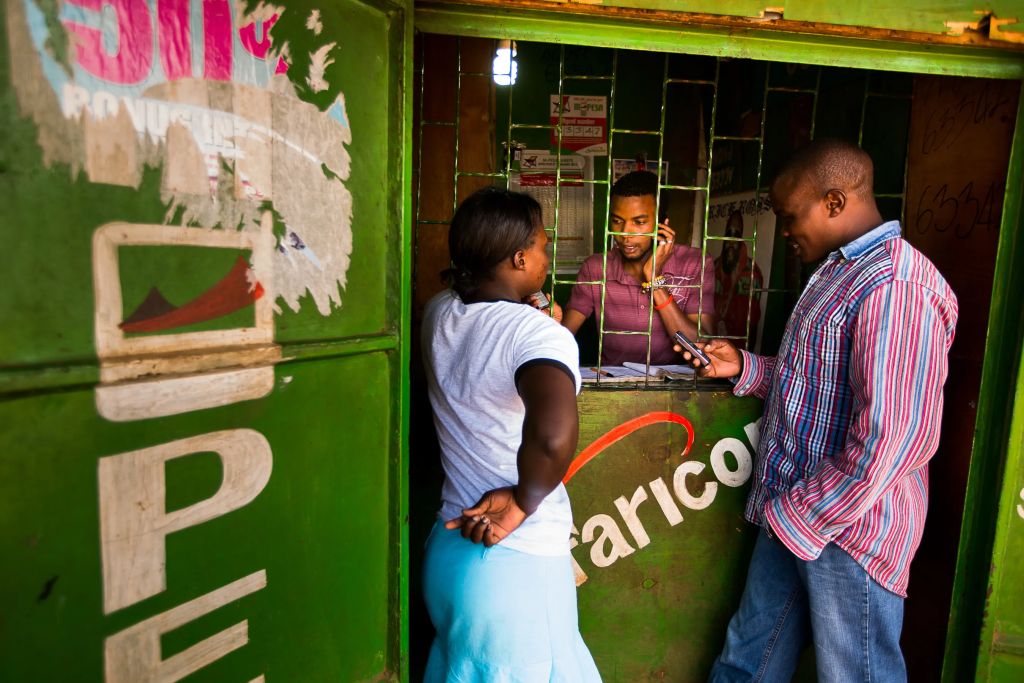
M-Pesa’s most profound impact was on women and rural households. Academic research estimated the service lifted nearly 200,000 Kenyan households out of poverty, with the strongest effects among female-headed households who gained independent financial access for the first time.
The critical voices
Not every assessment of M-Pesa has been unconditionally celebratory, and a historically honest account requires engaging with the criticisms.
The fee structure, while cheaper than alternatives, has drawn consistent scrutiny. Withdrawing the equivalent of KES 300 incurs a KES 29 fee — roughly 10 percent — which falls disproportionately on the poorest users making the smallest transactions. For a service marketed on financial inclusion, the transaction cost burden on the most vulnerable users sits in tension with its developmental claims.
Safaricom’s near-monopolistic position in Kenyan mobile money has also attracted concern. The company’s decision to make its agent contracts exclusive — preventing M-Pesa agents from simultaneously serving competing platforms — effectively locked competitors out of the agent network that was the most valuable asset in the market. The result has been a concentration of market power that critics argue has prevented the competition-driven reduction in fees that consumers might otherwise have benefited from.
Jack and Suri’s own work, while broadly positive, acknowledges a structural critique: the remittance flows M-Pesa enabled may in some cases have weakened incentives for rural household members to seek employment or innovate, since reliable transfers from urban relatives could substitute for local economic activity. Financial inclusion, in other words, does not automatically produce financial empowerment.
From Kenya to the world
The figures that describe M-Pesa’s eventual scale are almost difficult to absorb. By 2013, the total value of M-Pesa transactions in Kenya alone exceeded $24 billion — more than half the country’s GDP. M-Pesa was handling more annual transactions than Western Union globally. By the time Safaricom and Vodacom completed their full acquisition of the M-Pesa brand and product infrastructure from Vodafone in 2020 — creating a jointly owned, Africa-controlled entity — the service had grown to more than 70 million customers across Kenya, Tanzania, the Democratic Republic of Congo, Mozambique, Lesotho, Ghana and Egypt, processing over 61 million transactions per day.
Attempts to replicate M-Pesa in other markets have produced mixed results, and the pattern of these failures is instructive. South Africa, despite sharing Vodacom’s corporate infrastructure, saw the service fail twice — once in 2010 and again in 2013 — largely because the formal banking sector was already accessible to enough of the population that the urgency driving Kenyan adoption simply did not exist. India’s regulators proved too restrictive. Europe had no use case. The lesson that emerged from these failures, which Cassim and Ronnie document in their organisational analysis, was that M-Pesa’s success in Kenya was not a formula that could be transplanted. It was the product of a specific convergence: a massive unbanked population, a dominant mobile network, a technically accessible handset, a clear cultural use case, and a regulator willing to step back and watch what happened.
[For the full picture of Kenya’s economic transformation since independence, see our history of tracing Kenya’s treasury since independence and our article on how Kenyan banks create money.]
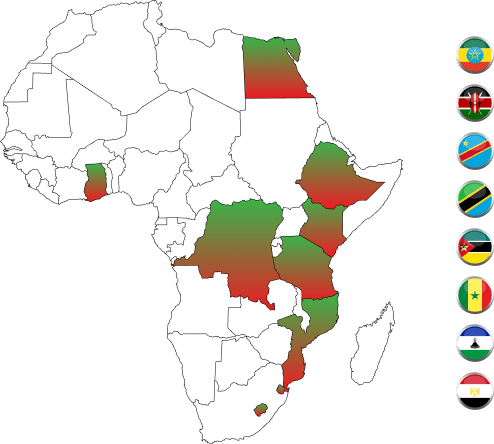
From a single market in 2007, M-Pesa has expanded to seven African countries and processes over 61 million transactions per day. In 2020, the service passed fully into African ownership when Safaricom and Vodacom completed their acquisition of the brand from Vodafone.
A Kenyan invention?
The debate over M-Pesa’s origins will probably never be fully settled. The grant money was British. The lead technologist was British. The corporate structure that launched it belonged to a British parent company. A Nairobi resident named Nyagaka Anyona Ouku registered a concept titled Mobile Cash Transfer with Kenya’s Copyright Board in 2003 and claimed to have pitched a similar idea to Safaricom that year — a claim that has never been tested legally and remains disputed.
But the question of origin matters less than the question of authorship through use. The decision to pivot from microfinance to money transfer was not made in London. It was made in response to what Kenyans in Thika and Nairobi actually did with the prototype — which was not repay loans, but send money to their families. Safaricom’s investment of approximately $10 million to rebuild the platform around that use case, to construct the agent network, and to push for a million customers in year one was a Kenyan commercial decision. The CBK’s decision to say yes, and to trust that a mobile phone company could be a responsible custodian of customer funds, was a Kenyan regulatory decision.
The technology arrived from Britain. The country that made it transformative was Kenya.
Sources:
- Cassim, M. & Ronnie, L. (2015). M-Pesa: an evolution in organisational strategy. Emerald Emerging Markets Case Studies, 5(8).
- Jacob, F. (2016). The Role of M-Pesa in Kenya’s Economic and Political Development. In Koster et al. (eds.), Kenya After 50. Palgrave Macmillan.
- Ngugi, B., Pelowski, M. & Ogembo, J.G. (2010). M-PESA: A Case Study of the Critical Early Adopters’ Role in the Rapid Adoption of Mobile Money Banking in Kenya. Electronic Journal on Information Systems in Developing Countries, 43(3).
- Burns, S. (2015). Mobile Money and Financial Development: The Case of M-PESA in Kenya. George Mason University / SSRN.
- Suri, T. & Jack, W. (2016). The long-run poverty and gender impacts of mobile money. Science, 354(6317).
- Jack, W. & Suri, T. (2010). The Economics of M-PESA. MIT Working Paper.
- Hughes, N. & Lonie, S. (2007). M-PESA: Mobile Money for the Unbanked. Innovations, 2(1/2).